How to Make Wood Pellets With a Small Home Use Biomass Wood Pellet Mill: Step-by-Step Production Guide
1. Why Produce Your Own Wood Pellets?
Investing in biomass pellet production offers multiple advantages:
- Significant Cost Savings: Convert free or low-cost waste (sawdust, agricultural residues) into high-value fuel.
- Environmental Sustainability: Divert waste from landfills and contribute to a circular carbon-neutral economy.
- Energy Independence: Reduce reliance on volatile fossil fuel prices by using locally sourced materials.
- Customization: Produce specific grades for premium heating, high-absorbency animal bedding, or industrial energy.
2. Essential Raw Materials for Wood Pelletizing
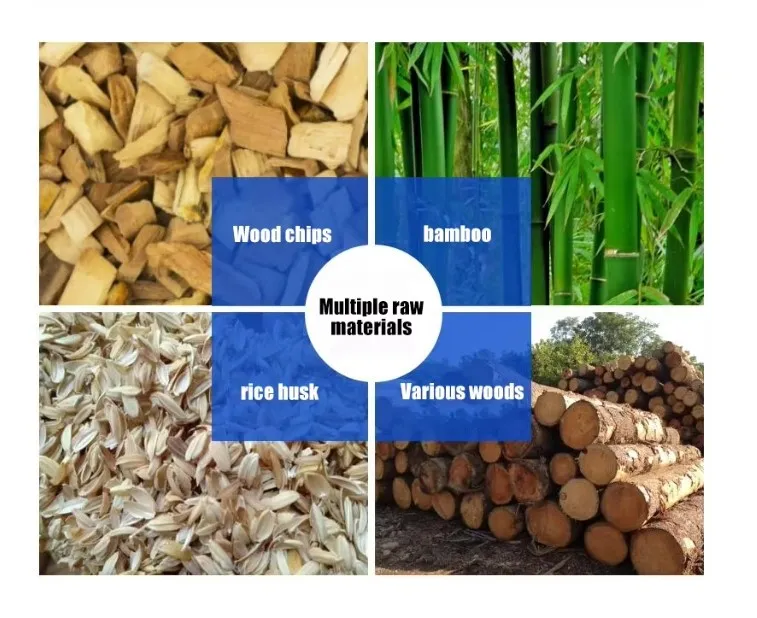
The quality of your final product depends on the biomass feedstock. Most organic materials can be pelletized, provided they contain lignin (a natural binder).
- Wood Waste: Sawdust, wood shavings, forestry residues (branches/tops), and untreated wood chips.
- Agricultural Residues: Corn stover, rice husks, wheat straw, bagasse (sugarcane), and peanut shells.
- Energy Crops: Miscanthus, switchgrass, and other fibrous plants.
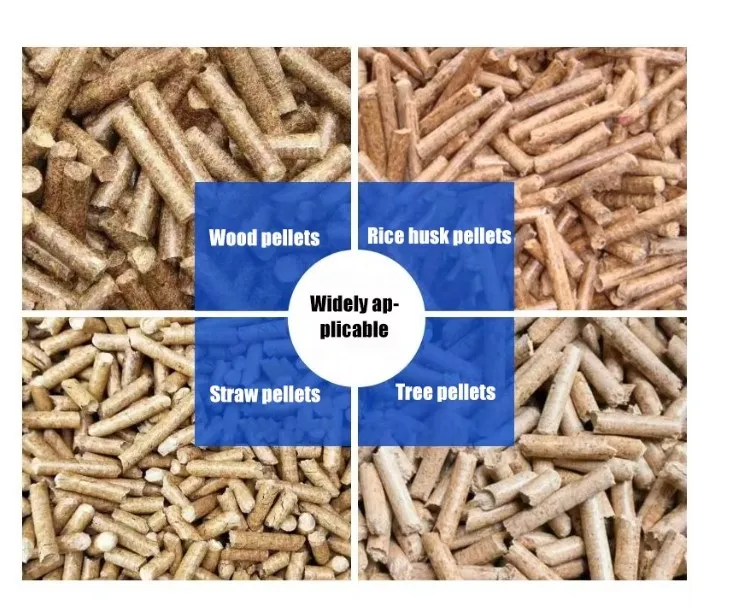
3. The 4-Step Wood Pellet Production Process
To ensure high Pellet Durability Index (PDI), the production process must follow these specific stages:
Step 1: Size Reduction (Grinding)
- Equipment: Hammer Mill.
- The Target: Raw material must be ground into uniform particles less than 6mm (1/4 inch).
- Tip: Inconsistent particle size is the #1 cause of pellet mill blockages and poor density.
Step 2: Moisture Control (Drying)
Equipment: Rotary Drum Dryer or Flash/Air Dryer.
- The "Golden Range": Feedstock moisture must be between 10% and 15%.
- Too wet (>15%): Pellets will be soft, steam-cracked, or fail to form.
- Too dry (<10%): High friction can burn the material and cause excessive wear on the die.
Step 3: Pelletizing (The Core Process)
- Equipment: Flat die Biofuel Sawdust Pellet Machine or Ring Die biomass fuel Pellet making Machine.
- Mechanism: Extreme pressure and heat (generated by friction) melt the natural lignin in the wood, which acts as a glue to bind the fibers into a dense, cylindrical shape.
Step 4: Cooling and Screening
- Equipment: Counterflow Cooler & Vibrating Screen.
- Why it matters: Pellets leave the mill at 70°C–90°C. Cooling hardens the lignin, ensuring the pellets don't crumble during transport. Screening removes "fines" (dust), which can be recycled back into the mill.
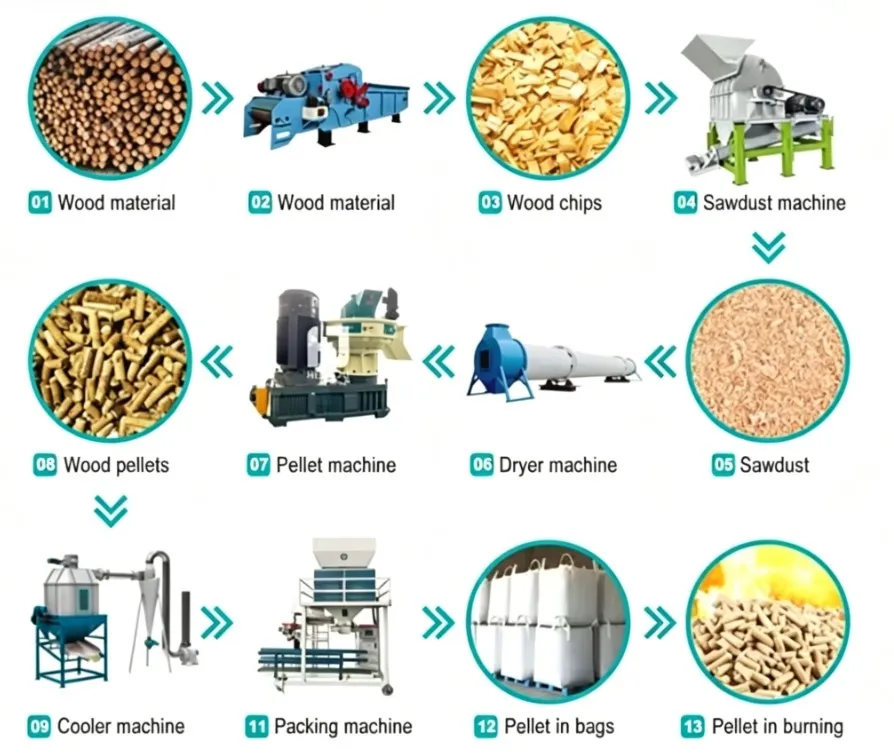
How a Small Home Use Pine Sawdust Pellet Production Line Works
4. Equipment Comparison: Flat model vs. Ring model biomass granulator
Choosing the right scale is critical for your ROI (Return on Investment).
| Feature | Small Pellet Mill (Flat Die biomass sawdust pellet machine) | Commercial Pellet Plant (Ring die Wood Chip Pellet maker Machine) |
| Best For | Home use, small farms, DIY projects | Industrial production, commercial sales |
| Output Capacity | 50 kg/h – 400 kg/h | 500 kg/h – 10+ tons/h |
| Initial Investment | Low ($2,000 - $10,000+) | High ($20,000 - $500,000+) |
| Durability | Moderate | High (Designed for 24/7 operation) |
| Key Advantage | Compact, portable, easy to operate | Energy efficient, high automation |
5. Critical Success Factors for High-Quality Pellets
To produce pellets that meet ENplus or premium standards, pay attention to:
- Compression Ratio: Different materials require different die thicknesses. Hardwoods (like Oak) require a lower compression ratio than softwoods (like Pine).
- Die-to-Roller Gap: Proper adjustment (usually 0.1mm to 0.3mm) prevents premature wear and ensures consistent density.
- Lubrication: Regular maintenance of bearings and rollers is non-negotiable for machine longevity.
- Testing: Regularly test your pellets for bulk density and moisture content.
View more maintenance tips for Wood Chip Pellet Making Machines.
FAQ:
Q1: What is the typical startup cost for a small home use wood pellet maker machine?
A basic flat die pellet mill starts around $2,000 - $5,000 USD. However, remember to factor in the cost of a hammer mill and dryer if your raw material isn't already "pellet-ready."
Q2: Can I make pellets without a binder?
Yes. Most wood types contain enough natural lignin to bind under pressure. For agricultural waste with low lignin, some producers add 1-2% vegetable oil or starch as a binder.
Q3: What is the best moisture content for wood pellets?
The ideal range is 10% to 15%. Investing in a professional wood moisture meter is the best way to ensure consistency.
Q4: How long does a small ring die wood pellet making machine last?
A high-quality alloy steel or stainless steel die typically lasts 300 to 500 hours of production, depending on the abrasiveness of the material
For more details, please contact us 👉 Contact us for more details
Company Profile