

Biomass Briquettes machine
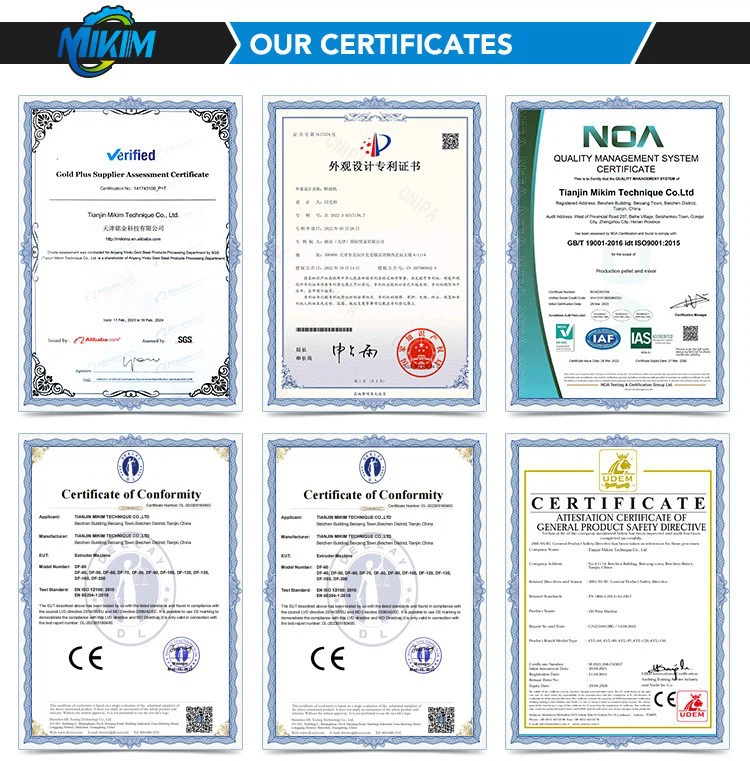
Mikim Machinery is a high-tech enterprise integrating scientific research, design, manufacture, installation and commissioning, and after-sales service. 13 years have been dedicated to the design and production of feed machinery industry, and passed many certifications such as CE, ISO, etc. At present, we are mainly engaged in two fields: wood pellet mill production line and rod making machine production line.We specialize in biomass fuel industry.
Why Choose Us
Rich Experience
The key electronic components, pneumatic and hydraulic systems of MIKIM machinery are all made of well-known brands. The company owns dozens of production patents, and its output products are world-renowned, making it a leader in the industry. With hundreds of employees, the company is strategically located at the junction of three provinces. MIKIM has won the recognition and trust of customers with its excellent performance, advanced technology and good reputation.
Professional Team
Before the sale we seriously answer customer questions, to provide customers with reliable programs and quality up to standard equipment, at the same time we support on-site inspection, in the sale we guarantee delivery, for you to choose a reliable mode of transportation, instantly update the logistics information, after the sale we provide technical support, to protect your subsequent use, we strive to exceed the customer's expectations with quality after-sales service.
High Quality
MIKIM's machines are widely used in various fields in China and exported to Southeast Asia, Europe, Africa, South America, Middle East countries and other regions. The quality of the products can stand the test of the market, and the parts are all adopted the world famous brand, MIKIM is your trustworthy machinery supplier.
Competitive Price
Our price is reasonable, the purpose is committed to let the global customers to use the quality of qualified machinery and equipment, at the same time, we also look forward to cooperating with the majority of customers, recruiting agents around the world, win-win cooperation.


With the increase in the demand of energy. The natural conventional resources are diminishing very fast. This can be controlled by using non conventional sources like sunlight, wind energy, water energy. But these sources cannot be used as fuel. So the best non conventional fuel is Biomass briquettes.
Biomass briquetting, also known as biomass briquette pressing, is a process by which biomass material such as woodchips and agricultural waste is converted into compressed briquettes. This beneficial technique utilizes specialized machines, known as biomass briquetting presses, to produce these solid blocks of biomass. These briquettes can then be used as a fuel source to generate heat or electricity. The benefits of this technology are numerous; not only does it allow for efficient energy use, but it also helps to divert waste material away from landfills and recycle it into useful products.
Benefits of Biomass Briquettes Machine
Environment Friendly
Briquettes made from biomass are a great substitute for coal, since they are made of natural materials and do not add to the pollution in the world.
Efficient Energy
Briquettes are better than loose biomass since they are compressed. This compression allows them to burn for a lot longer than if it was loose.
Renewable
Coal is one of the most dangerous ways to produce energy nowadays because of its pollution to our environment. This is why it is necessary for us to limit our use of charcoal and find another way to get energy. Biomass briquette is a great way to do this since it is easy to get, use and easily renewable.
Clean Energy
Coal and is one of the most dangerous ways to produce energy nowadays because of its pollution to our environment. Usually, the briquettes are made from plants and natural waste from animals. It recycles them and turns them into an energy source, so they are an ideal material. It does not emit green house gases or any toxic chemicals.
Types of Biomass Briquettes Machine
Mechanical Stamping Biomass Briquette Machine
The mechanical stamping biomass briquette machine is popular because of its multi-functions: it can produce 8/10mm diameter biomass pellets as well as 22/30/70mm diameter round biomass briquettes! It is a very good help for farmers since it can turn the crop waste into valuable fuel briquettes. It is also a good choice for biomass briquetting plant and biomass briquettes production business. With this mechanical stamping briquette machine, you won’t worry about your energy bill anymore!
Screw Press Briquette Machine
The screw type biomass briquette machine is usually used to produce briquettes with a hole in the center, so that they can have larger contact with air and will be more fully combusted. This machine is also the key component in making charcoal briquettes, especially the BBQ charcoal. When made into charcoal, the briquettes become lighter and no ash. So these briquettes are often sold in supermarkets and welcomed by people.But, for making charcoal briquettes, a carbonization furnace is indispensible since it can turn biomass briquettes into high value charcoal briquettes.
Screw Briquette Machine
GCBA series briquette machine is also a type of screw briquette press that is widely used by farmers, small scale briquette production line. It is designed with automatic temperature control system for easy operation and can be used to process high density woods into biomass briquette fuel. The briquettes it produced is hollow hexagonal or quadrangular cylinder that is carbonization on its outside, so its higher combustion rate.
How Does a Biomass Briquetting Machine Work?
Biomass briquetting is the process of converting low density materials into high density briquettes. Biomass briquetting machine are used to produce briquettes from a wide range of Biomass materials, including sawdust, straw, paper, and more. The Briquetting process involves compressing the Biomass material under high pressure and temperature to create a denser, stronger briquette. Biomass Briquetting Machine can be used to produce a variety of different shapes and sizes of briquettes, depending on the specific application. For example, some Biomass Briquetting Machine are designed to produce square briquettes, while others may be designed to produce round briquettes. The specific design of the Biomass Briquetting Machine will dictate the shapes and sizes of briquettes that it can produce.
Briquetting Press Machines are generally used to create heat as a modern fuel like the steam time in boilers, warming explanation, drying cycle, and gasification plants to replace existing standard fuels like coal, wood, and unreasonable liquid fuel like FO, Diesel, LDO, light oil,etc.
Biomass coal is the head-approaching fuel of the world. It's an unparalleled quality resource for practical, natural, and high-level ecological preservation. Briquetting Press Machines assist in doing with outclassing waste and money from waste and likewise by utilizing briquettes; we make a residue-free and contamination-free climate for our country.
The utilization of Renewable Briquettes as a fuel has shown exceptionally great and promising outcomes. As a general rule, Briquettes are significantly utilized in the accompanying ventures/ units:
Gasifier System Applications, Ceramic Industries, Refractory enterprises, Solvent Extraction Plant, Chemical Industries, Dying Units, Milk Plant, Food Processing Industries, Vegetable Plants, Textile Unit, Spinning Mill, Lamination Industries, Leather Briquetting Plants make briquette from Agriculture waste and ranger service waste. These wastes are changed over serious areas ofIndustries, Brick Making


Briquetting Plants make briquette from Agriculture waste and ranger service waste. These wastes are changed over serious areas of strength into empty shapes. The huge wastes which can be used are Ground nutshell, Cotton tail, Saw dust, Soybean husk, Veneer developments, Coir quintessence, barks, straws ranger service waste, and so forth.Mustard stalks, Wood chips,Soybean husk, Veneer developments, Coir quintessence, barks, straws ranger service waste, and so forth.
An extent of Biomass Briquettes Machine is ready as a substitute of lignite, Coal, and Wood in a cutting edge evaporator and block stove for warm application to deliver heat. Biomass Briquettes Machine are non-customary wellsprings of imperativeness, Eco-obliging, Reusable in nature, non-dirtying, and reasonable. Use of the bio coal is growing bit by bit and has been particularly mentioned as an able business area due to its fuel cost saving and tainting-free traits.
Process of Biomass Briquettes Machine
The Process of Biomass Briquettes Machine: From Raw Material to Finished Product
Biomass briquettes are an increasingly popular and sustainable source of energy, offering a cleaner and greener alternative to traditional fossil fuels. The manufacturing process of biomass briquettes involves several key steps, from sourcing the raw materials to transforming them into the final product. Let's explore the process in detail.
Raw Material Selection
The first step inBiomass Briquettes Machine is selecting suitable raw materials. Common biomass feedstocks include agricultural residues (such as crop straw, husks, and shells), wood waste (sawdust, wood chips), and other organic materials. The choice of raw material depends on its availability, cost, energy content, and compatibility with the briquette making process.
Raw Material Preparation
The selected raw materials are processed to ensure their suitability for briquette production. This may involve grinding, shredding, or drying the biomass feedstock to reduce its moisture content and size. Proper preparation of the raw materials helps enhance the briquette's density, combustion efficiency, and overall quality.
Briquette Making Machines
Once the raw materials are prepared, they are fed into briquette making machines. These machines come in various types and designs, but they all serve the same purpose of compressing the biomass feedstock to form solid briquettes. The machines apply pressure and heat to bind the biomass particles together, resulting in compact and uniform briquettes.
Binding Agents
In some cases, binding agents are added to the biomass feedstock to improve the briquette's cohesion and stability. Common binding agents include starch, lignin, molasses, and other natural substances. These agents help hold the biomass particles together during the compression process and ensure the briquettes maintain their shape and integrity.
Briquette Drying
After the briquettes are formed, they need to be properly dried to reduce their moisture content. Drying can be done through natural air drying or using mechanical drying techniques. Proper drying is essential to enhance the briquettes' combustion efficiency and prevent spoilage or degradation during storage and transportation.
Quality Control
Quality control measures are implemented throughout the manufacturing process to ensure the final product meets the desired standards. This includes checking the briquettes for size, shape, density, moisture content, and overall quality. Any substandard briquettes are discarded or reprocessed to maintain consistency and reliability.
Packaging and Distribution
Once the briquettes pass quality control, they are packaged and prepared for distribution. Packaging can be done in various forms, such as bags, boxes, or bulk packaging, depending on the target market and customer requirements. Proper packaging ensures the briquettes remain intact and protected during storage and transportation.
Biomass briquettes offer a sustainable and renewable energy source, reducing reliance on fossil fuels and contributing to environmental preservation. They find applications in various industries, including power generation, cooking, heating, and even as a source of fuel in certain industrial processes.
How To Maintain The Biomass Briquette Machine
Biomass densification is the bonding together of waste biomass product, such as wood chips or sawdust, peanut husk, rice husk, sunflower seed husks, bagasse (sugar cane or sugar beet residue), coffee shells, coconut husks, etc. The bonding is achieved by the pressure and heat of the biomass briquette machine utilizing the natural resins in the biomass waste product.
The guiding principle behind the production of biomass briquette machine is that natural biomass material is essentially a waste material, i.e. the natural by-product of, for example, the timber industry: chippings, sawdust, offcuts, slabwood, etc or agricultural products: sunflowers, rice, peanuts, etc. The material is prepared for the biomass briquette machine by chipping or milling and drying before being fed into individual biomass press.
In the production process at no time are any additives, chemicals or foreign bodies introduced. The biomass briquette is a natural wood or biomass product. As a result of the materials preparation and the heat and pressure used in production, the briquette is dense and dose not expands at all when burning and has very low ash content.
In order to make the machine in good condition, the biomass briquette machine should be maintained regularly. There are several points that we should pay attention to during production.
Check up the electrical components in the electricity cabinet is well-connected, sensitive and reliable or not, to protect it from moisture and dust and to keep the cabinet clean. The biomass briquette machine should be maintained regularly according to the service condition. Examine the wearing condition of each part and the quick wearing parts should be repaired or replaced of. The bearing of each part should be cleaned and maintained regularly.
Add lubricating oil to each bearing for the quick wearing of the roller and main bearing due to the lack of oil. The main bearing of biomass briquette machine should be added with grease every half a month, and the bearing of compression roller should added with oil every day. Each of the rotating part should have enough lubricant oil.
The compression roller and the flat die are the main spare parts of the biomass briquette machine, and it is necessary to check up the clearance of the compression roller and the flat die are proper or not, the position is right or wrong, the fastening screws are tight or not, the lubricant oil is enough or not to ensure the normal operation of the biomass briquette machine. In order to prolong the service life of mold of biomass briquette machine, the die should be notices regularly, especially keeping the clearness of the inside of ring die. Don’t use the hammer to unpack the machine to avoid of damage to the smoothness of machine’s outer surface. If the hard things like the metal scraps and stones enter into the chamber of machine, it is necessary to remove the hard things to avoid of damage to the roller and die.
When the production is finished, it is necessary to compress the material with high moisture content to stuff the die to ensure the discharging next time. The fastening parts and the lubricant should be examined every day after finished the whole day’s work.
Biomass briquette machine is mainly composed of feeding conveyor, compressor and discharging machine. Cut or knead the straw and other raw materials that are going to be pressed, keeping the length less than 50mm and the water content moderate.
The produced materials do not need to add any additives or binders during the processing. Straw and other materials contain a certain amount of cellulose and lignin. Lignin is the structural monomer in the material and a phenylpropane-type polymer compound. It can strengthen cell wall and bind cellulose. If the crop straw is burned or discarded directly, it will not only waste resources, but also pollute the environment. If it is pressed into blocks by a briquette machine, its burning effect will increase many times.
The feeder is composed of a variable frequency speed-regulating motor, a transmission device, a reducer, an auger shaft, an auger shell, etc. Its effect is to provide a suitable feeding amount for the conditioner. The conditioner is composed of a motor, the main shaft, a conditioning rotor, a casing, and a steam inlet. Its primary function is to introduce steam to temper a certain amount of mixed material to a certain temperature and humidity to improve the material. The granulation characteristics are then sent to the granulator for granulation. 508 granulator The granulator, also known as the granulation chamber, mainly consists of the main motor, the transmission mechanism, the rotor, the ring die, the pressing roller, the scraper, the cutter assembly, and the fuselage. The quenched and tempered material is evenly fed into the area between the ring die and the two pressing rollers by the deflecting scraper on the front plate and the rotating feeding cone. With the relative rotation of the ring die and the pressing roller, the material is gradually It is extruded into the hole of the ring die, continuously extruded to the outside to form strip-shaped pellets, and finally cut into the required length pellets by the cutter.
Our Factory
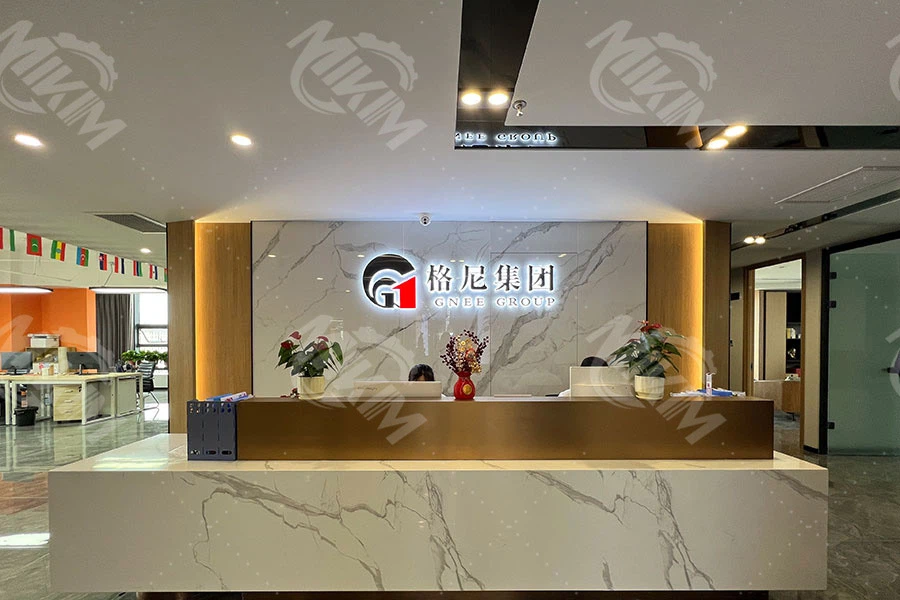
Mikim Machinery is a high-tech enterprise integrating scientific research, design, manufacture, installation and commissioning, and after-sales service. 13 years have been dedicated to the design and production of feed machinery industry, and passed many certifications such as CE, ISO, etc.
Certificate
FAQ
We're professional biomass briquettes manufacturers and suppliers in China, specialized in providing high quality customized service. Please rest assured to buy high-grade biomass briquettes for sale here from our factory.
sawdust brick press, Wood Briquette Manufacturing Making Machine, biomass briquettes machine exporter