

Wood Pellet Mill
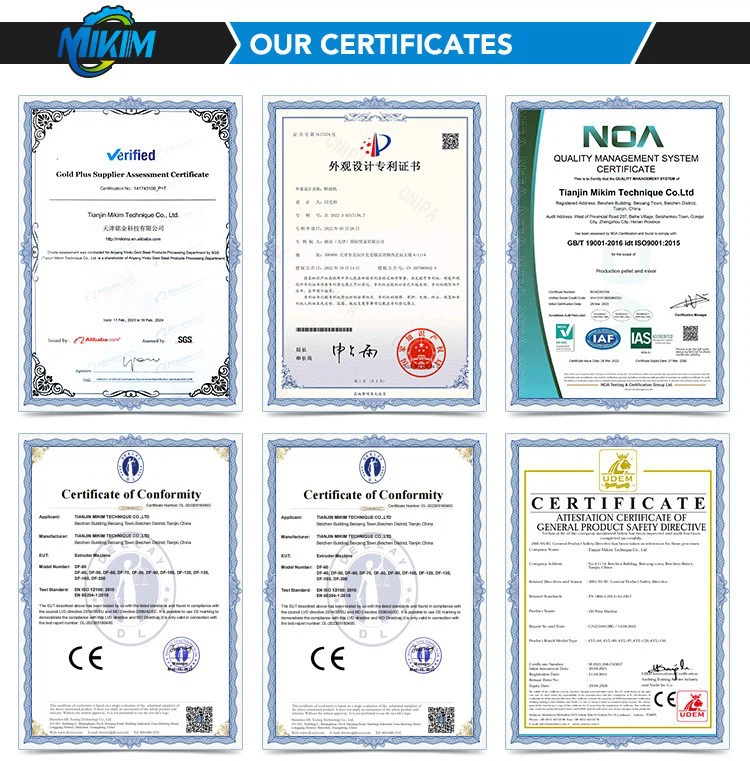
Mikim Machinery is a high-tech enterprise integrating scientific research, design, manufacture, installation and commissioning, and after-sales service. 13 years have been dedicated to the design and production of feed machinery industry, and passed many certifications such as CE, ISO, etc. At present, we are mainly engaged in two fields: wood pellet mill production line and rod making machine production line.We specialize in biomass fuel industry.
Why Choose Us
Rich Experience
The key electronic components, pneumatic and hydraulic systems of MIKIM machinery are all made of well-known brands. The company owns dozens of production patents, and its output products are world-renowned, making it a leader in the industry. With hundreds of employees, the company is strategically located at the junction of three provinces. MIKIM has won the recognition and trust of customers with its excellent performance, advanced technology and good reputation.
Professional Team
Before the sale we seriously answer customer questions, to provide customers with reliable programs and quality up to standard equipment, at the same time we support on-site inspection, in the sale we guarantee delivery, for you to choose a reliable mode of transportation, instantly update the logistics information, after the sale we provide technical support, to protect your subsequent use, we strive to exceed the customer's expectations with quality after-sales service.
High Quality
MIKIM's machines are widely used in various fields in China and exported to Southeast Asia, Europe, Africa, South America, Middle East countries and other regions. The quality of the products can stand the test of the market, and the parts are all adopted the world famous brand, MIKIM is your trustworthy machinery supplier.
Competitive Price
Our price is reasonable, the purpose is committed to let the global customers to use the quality of qualified machinery and equipment, at the same time, we also look forward to cooperating with the majority of customers, recruiting agents around the world, win-win cooperation.
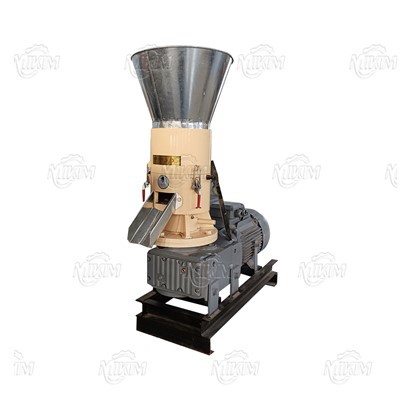
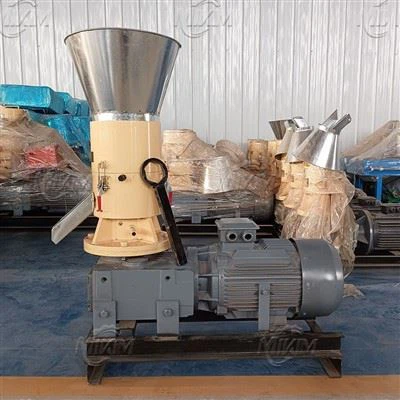

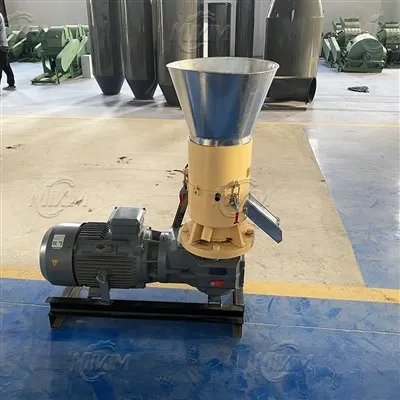


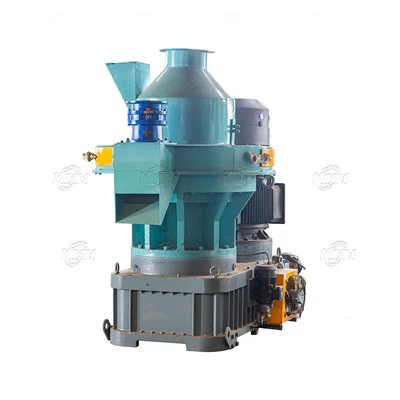
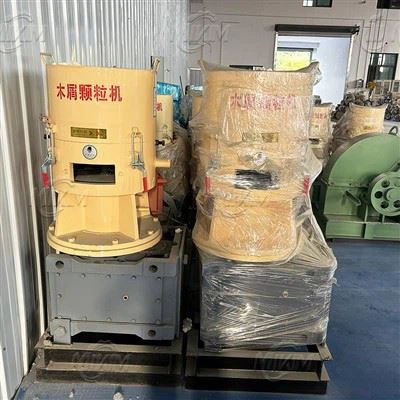


A wood pellet mill, sometimes referred to as a pellet press, is a type of mill that turns wood chips, sawdust, and other powdered raw materials (biomass) into pellets.
The way pellet mills work is the complete opposite of how grinding mills do. Wood pellet machines work by fusing smaller materials to form a single large mass, which is then cut into pellets. However, grinding mills take larger masses and break them down into smaller bits.
While convenient and effective, a wood pellet mill does not run automatically. Therefore, it requires a pellet mill operator, whose job is to make sure that the machine makes the right pellet size and that the pellet is of the highest quality.
Wood Pellet Millcan help farmers to ease the financial burden and increase their income. It can reduce the purchase of commercial coal and reduce cash expenditure by increasing the consumption of biomass energy of farmers. The collection and supply of biomass materials can create a large number of new jobs and bring direct benefits to farmers.
It improves the living quality of farmers and improves rural environmental conditions. The sulfur and ash content of biomass fuels are far lower than coal. The combustion temperature is also lower that it can be used to replace coal to reduce emissions of sulfur dioxide, nitrogen oxides and ash. The application of pellet mill can not only improve indoor hygiene of farmers, but also reduce ash storage and freight volume of the village.
Wood Pellet Millis conducive to ensuring the energy supply and improving the energy efficiency. The coal saved can be used in large capacity generating units or other purposes, which can ease the tight supply of coal, also avoid the waste caused by low using efficiency of coal in the countryside.
Wood Pellet Millcan reduce the emission of carbon dioxide and clean the atmosphere. During the biomass growth - combustion cycle, the net increase of carbon dioxide in atmospheric is zero.
Wood Pellet Millis conducive to sustainable development. Biomass energy is a renewable energy, and its sustainability is better than non-renewable energy sources such as oil, natural gas and coal.
Horizontal Ring Die Pellet Making Machine
The horizontal Ring Die Pellet Making Machine is mainly used in the production of various kinds of pellets from biomass materials and other organic materials, such as animal feed pellet, seedling pellet, fish feed pellet and so on.
The machine consists of a fixed ring die, a moving ring die and a hydraulic system. The fixed ring die is located in the lower part of the machine and has multiple impression dies which are used to compress the biomass materials into pellets. The moving ring die is installed above the fixed one and also has multiple impression dies which can be adjusted according to customer requirements. A hydraulic system is used to drive these two rings to rotate at different speeds in order to squeeze out or extrude out materials from the impression dies by adjusting their relative positions during working process.
Flat Die Pellet Mills
Flat die pellet mills are pretty straightforward. Their components include four wheels, an upper cabinet, an engine base, a feed hopper, an electric motor, a gearbox, and others.
One reason why people enjoy using a flat die pellet mill is its adaptability. Thanks to this characteristic, its electric motor can be replaced with a diesel engine to make it a diesel pellet machine. Alternatively, its motor can be switched out for a PTO connector or gasoline engine.


Ring Die Pellet Mills
The ring die Wood Pellet Millis made up of a screw feed, electric motor, ring die, conditioner, gearbox, roller, pedestal, ring die, and discharge ports.
On a horizontal ring die machine, the ring die is vertically placed. Thus, when biomass drops from the conditioner, it is force-fed horizontally into the ring die.
Conversely, the vertical ring die machine has the ring die placed horizontally. Hence, the feed hopper is directly above the ring die, meaning biomass falls straight into it.
Vertical Ring Die Pellet Making Machine
Vertical Ring Die Pellet Making Machine is also called vertical Ring Die Pellet Mill, which is a kind of advanced equipment for the pellet making process. The Vertical Ring Die Pellet Making Machine is widely used in the field of industrial pellet making, such as chemical industry, food processing, construction material, medicine and so on. The principle of Vertical Ring Die Pellet Making Machine is to compress the raw materials by ring dies and then extrude them into pellets by continuous extrusion presses.
The Vertical Ring Die Pellet Making Machine has the characteristics of energy saving, high efficiency and low power consumption. The fuel consumption is about 1/4 compared with other machines. It is suitable for processing large size raw materials into small size granular materials (pellets).
Application of Wood Pellet Mill
Wood pellets, the utilization of agro-forestry wastes such as straw, sawdust, bagasse, etc. as raw material, are made into biomass pellets fuel by wood crusher, wood dryer and wood pellet mill. Wood pellets are a new green energy fuel, which is mainly used to replace traditional fossil fuel (coal, oil and gas) and are mainly applied to the fllowing industries.
Wood Pellets Fuel Direct Combustion in Mostly Small or Medium- sized Boilers.
Due to the fuel unprocessed, it saves investment costs, so it is for small or medium-size boiler in China. This kind of boiler fuel is based on the industrial wastes, burning feeding extensive with manual.And the furnace has air leakage seriously with security risks. Herewith, the efficiency of boiler is not high overall. However, for boiler user enterprises, it saves significantly investment of fuels and expenditure of wastes disposal, because it utilities the steam or heating from the wastes producing. Wood pellets fuel with less pollution and fully combustion, are favored and applied by many enterprises.
Burning In Small Furnace For Domestic Heating and Hot Water Supply.
This application is mainly used wood pellets as fuel, especially in Northern Europe, because there is no related products development, this application is almost blank. This kind of small furnace is suitable for home use and with small design, simple structure and nice appearance.
How does a wood pellet machine produce high-quality wood pellets?
Wood Pellets Production in Wood Pellet Plant
Because woody material’s density is higher than that of other common biomasses, wood pellet mill usually can make pellets from a wide range of biomass raw materials like agricultural residues. The pellets manufacturing process is determined by the raw material but usually includes the following steps: treatment of raw material, screening, grinding, drying, pelletizing, cooling, sifting, and packaging. How to make wood pellets? Below are the detailed steps of manufacturing wood pellets for large scale production.
Grinding Woody Raw Material
Before pelletizing, it is important to make sure that the woody material is dry and homogeneous. This process is also known as milling, crushing, pulverizing or comminution. In this grinding process, first of all, raw material should be filtered before grinding to remove materials like stone or metal. If the particle of raw material is too big, wood pellet’s quality decreases or even worse you cannot get wood pellets, as the particle’s size is too big to be pressed into the holes in the die. However, it should also be noticed that raw material can be ground too fine, causing the material to lose its ‘fibre’ nature and thus not bind in the pelleting stage. Therefore, a large wood hammer mill is necessary in the grinding process for pulverizing.
Drying Woody Raw Material
Rotary dryerRotary dryer is used to dry woody particles to guarantee that the moisture content is 8-10%. Drum driers are the most common type of equipment used in North America. In the past, natural gas was the most common fuel source. However, with a rise in fossil fuel costs, many producers have been switching to waste wood. In contrast to using natural gas, waste wood is cheaper and provides the opportunity to market environmental benefits associated with green house gas (GHG) emissions. These environmental benefits can be important when selling to markets with significant environmental regulations like the European market. Generally, wood fibre can be pelletized at moisture as high as 17%. However, the optimal level is 12% or less. Raw woody materials can also be too dry to pelletize, so you need to find the right balance between high and low moisture content.
Pelletizing to Make Wood Pellets
Commercial wood pellet millWood pelletizing machine, also known as wood pelletizer and wood pellet extruder. In wood pellet plant, ring die wood pellet maker is used to make wood pellets. The name ring die (also called rotary die) comes from the fact that the two (or more sometimes) rotary rollers push raw woody material from inside a ring die to the outside where it can be cut into the desired same length. Depending on the material being palletized, a delicate refining and balancing of settings is necessary. The most important adjustments are made by changing the die. A die is essentially a metal plate with holes in it. A die works by providing the appropriate amount of resistance as the press wheel attempts to push the raw material through the holes in the plate. The appropriate amount of resistance allows the raw material to heat up and soften so that it can be reshaped and compacted into the desired shape. (Notice: If a die provides too much resistance the material being palletized can become scorched. If too little resistance is provided, the raw material will not be compressed and simply pass through the holes.)
Wood Pellet Cooling
Wood pellet coolerCooling is critical to pellet’s strength and durability. As wood pellets leave pellet extruder, they are hot and soft. And these wood pellets are gradually air cooled, which allows the lignin to solidify and strengthen the pellets. In contrast to the drying process, cooling does not involve the addition of energy. Wood pellet cooler supplied by GEMCO is also reliable. This pellet cooling machine is counter flow designed and cools pellets rationally, and it can avoid the cracking or breaking of wood pellets. The wood pellet cooler includes 1200*1400 grid, has a dwell time of approximately 10-15 minutes, and has a rotary airlock installed on the top of the machine. Cool air flows from bottom to top, while the pellets drop from top to bottom, in this way, the pellets are cooled completely.
Sifting Wood Pellets
Wood pellet screenAfter cooling, wood pellets are passed over a wood vibrating screen to remove any fine material. These “fines” are augured back into the palletizing process to ensure that no raw material is wasted. Sifting, also called screening or sieving, ensures that the fuel source is clean and as near to dust free as possible. Once screened, wood pellets are ready to be packaged for the desired end use.
Wood Pellet Packaging
Wood pellet packaging machinePellets can be distributed in bulk form, by track, rail or ship or bagged in smaller quantities. If they are packed in bags, a wood pellet packaging machine is indispensable. Wood pellets do not degrade over time, as long as they are stored in dry conditions. Therefore, it’s better to pack them in bags that isolate moisture and air.
Process of Wood Pellet Mill
Initial Size Reduction
The majority of the wood pellet manufacturers adopt all sized wooden raw materials, such as the logs, barks, saw dust, wood shavings, etc, which indicates that the size reduction process is not only a necessary step for wood pellet plants, but also extremely costly. The reasons can be seen as follow: firstly, the pellet mill can only process the raw materials with a diameter less than 5mm, obviously, the unprocessed raw materials are way too big to feed in the pellet mill directly. Secondly, for the upcoming drying process, the smaller particles means a shorter drying time and lower energy requirement, and the larger particles means a longer drying time and higher energy requirement. Therefore, the initial size reduction process can help reduce the energy consumption of the pellet plant, and enhance the serve life of the other machines in the pellet plant.
Drying
After the initial size reduction process, the raw materials are moved to the next part, moisture reduction. Normally, the wooden raw materials has a moisture content no more than 50%, but the high quality wood pellet requires a moisture content about 8%-12%. The dryer is one of the most expensive machine in the wood pellet plant, by its obvious energy consumption. To reduce the capital input, we recommend the rotary drum dryer, which consist of a low price and simple operation procedures. In addition, the energy consumption reduction of the dryer can be realized by using the wood products in the wood pellet plant, therefore, connecting to the electric grid would not be necessary.
Initial Sieving
For some pellet plants, the sieving procedure is not a necessary step, but in consideration of the pellet plant safety, it is a recommendable step.
After the initial size reduction process, the raw materials stay in a small particle appearance. Hence, it may easily mixed in some unpurified particles such like stone, metal pieces, which will cause the mechanical failure or even start a fire during the following steps. The machine to manage the initial sieving process would be a magnetic separator, which is an optional part for our customers.
Grinding
During the grinding process, the machine we use is hammer mill, it is also a size reduction machine. Compare with the wood chipper, the raw materials for hammer mill requires a diameter no more than 50mm, and the product it makes contains a diameter about 5mm, so that during the pelletizing procedure, the pellet mill only need to act as a molding machine not a grinding machine to enhance the serve life of the pellet mill and the lower the energy consumption. The price of a hammer mill is more expensive than the price of a wood chipper, but it maintenance costs is lower than the wood chipper.
Pelletizing
The core machine for a pellet plant is the plant mill, which used to form the raw materials into wood pellet. Actually, there are several factors that determined the choice of pellet mills for the pellet plant. Such as: the type of raw materials , the pellet plant capacity, the wood pellet quality requirement, the pellet diameter and length.
For a household application, the flat die pellet mill is our recommendation , which has a suitable capacity, a competitive price and a small footprint. But for large scale business, the ring die pellet mill is definitely the perfect choice for you, as it maintain a large capacity and an automated procedure.
Cooling
As we have mentioned before, the pelletizing procedure will generate a higher temperature and moisture of the wood pellet, which makes the pellet very easy to deformed when it leaves the pellet mill.
In that case, after the pelletizing process, the wood pellet will be send to a cooler immediately. A cooler is used to reduce the temperature and moisture of the wood pellet and after that you can expect a dry pellet with a proper rigidity.
Final Sieving
After the cooling process, the main process of making wood pellet is finished. But for some commercial requirement, there might need another step, the final sieving.
During the pelletizing and cooling process, the fines is a unavoidable by-product. When you shipped the wood pellet to your customers, or wholesalers, there will be a limit of fine content. So before the storage, the finial sieving is a optional choice for wood pellet manufacturers. The different screening degrees depend on the different market conditions and specifications.
Storage
When the wood pellet reaches the storage process, it means that your wood pellet product is ready. For a large pellet plant, the storage process means an automatic bagging machine with different bagging requirements, such like: the retail bagging system that is normally used for local wholesalers, and the bulk bagging system that is normally used for industrial and oversea customers.
To make a wood pellet mill, you’ll need some essential equipment. Here are the items you’ll require:
Pellet Mill Machine: This is the main equipment used to produce wood pellets. It consists of a die, rollers, and a motor that compresses and extrudes the raw materials into pellets.
Hammer Mill: This machine is used to crush the raw materials into smaller particles before they are fed into the pellet mill. It ensures uniform size and consistency of the feedstock.
Dryer: A dryer removes moisture from the raw materials, ensuring optimal pellet production and preventing mold growth.
Cooler: After the pellets are produced, they need to be cooled down to room temperature for storage or transportation. The cooler performs this task by circulating cool air around the pellets.
Screener: A screener separates fines and oversized pellets from the final product, ensuring only high-quality pellets reach your customers.
By having these essential pieces of equipment in place, you can ensure efficient wood pellet production and minimize maintenance issues or troubleshooting common problems.
Now let’s move on to choosing the right materials for your wood pellet mill setup.

How To Use And Maintain Wood Pellet Machine Properly?
Grinding Before Using
Most roller and flat dies in pellet machine are processed by high-heat treatment. After planing, drilling, milling, and quenching process, there are usually many rags inside the die holes, which may influence the pelletizing effects and production. Therefore, before starting a new pellet machine, or after replacing a new die, you need to grind it thoroughly.
Pretreatment Of Raw Materials
The suitable moisture content of biomass materials should between 14% and 20%. Dry materials are hard to take shape, damp materials will make the pellets loose. The size of the raw materials should be less than the hole size of pellet mill dies. Generally, the hole size of the pellet mill die is 6mm and 8mm, and the size of raw materials should be under 5mm, or they may block the holes and reduce pellet production.
The adhesive force determines the forming rate of the pellets. Most biomass materials contain lignin, which would melt under high temperature and serve as binder. But some materials like rice husk has low adhesive force. It need to be mixed with sawdust or binders to make pellets.
The Thickness And Length Of The Wood Pellets
The thickness of wood pellets is determined by the hole size of the die. The length is determined by the slicer. In flat die pellet machine, the slicer is installed under the flat die, while in ring die pellet machine, the slicer is installed outside the ring die. Both of them can be adjusted to achieve different sizes. For your own use, it is better to be short. For transportation and selling, it recommend to be a little long.
Don’t Shut Down The Machine Right After Making Pellets
When you finished making pellets, don’t shut the pellet machine down at once. Add some mixed oil and biomass materials to the pellet machine and let it run for 1-2 min. In this way, we can fill the die holes with oil mixture, so that we can directly start making pellets the next time. With this process, we can not only maintain the mold, but also save time. When the pellet machine stops, loosen the adjusting screw and clear away the left materials.
The Maintenance Of Roller, Die, Shafts And Gearbox
You should eliminate all hard objects and metal blocks in raw materials before feeding them into the pellet machine, or they would cause damage to the roller, die or main shaft. You can install a tubular magnet on the feed hopper.
The heat inside the pelletizing chamber can reach up to 80℃, and the roller sustains high pressure during operation. As there is no dust protector in the pellet machine, so you need to clean up the bearing every 2-5 hours, and lubricate it with oil. After every 8 working hours, the main shaft need to be oiled. The gearbox need cleaning every half a year.
How To Replace Roller And Die
When the rollers wears out, you can replace the roller shell or the whole set of roller. If the bearing get loose or locked, you need to replace the bearing and even the shaft.
In ring die pellet machine, just loosen the hoop chuck, take the old ring die apart and replace it with a new one. If the ring die is fixed with screws, you need to shake the ring die gently, and remove the screw with even strength.
In flat die pellet machine, the flat die is installed with retaining nuts in the keyway. On the 2 sides of the flat die, there are two symmetrical screw holes. You can use the screw driver to push them out, or use a magnet to pull them out. During your pushing or pulling, keep the flat die vibrating with a hammer, so that the screw won’t stuck in the screw hole.
Protection Of The Drive Engine
Choose the matched power according to the required production. If the power is not enough, the production will be low and the pelletizing effect is poor. If the power is too large, it will consume more power, accelerate the weariness, and shorten the service life of roller and die.
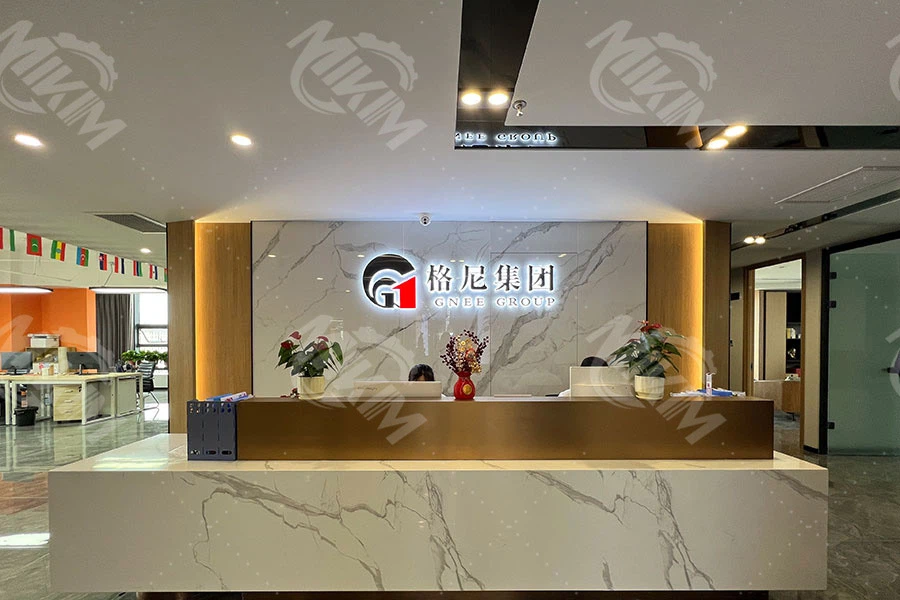
Our factory
Mikim Machinery is a high-tech enterprise integrating scientific research, design, manufacture, installation and commissioning, and after-sales service. 13 years have been dedicated to the design and production of feed machinery industry, and passed many certifications such as CE, ISO, etc.
Certificate
FAQ
We're professional wood pellet mill manufacturers and suppliers in China, specialized in providing high quality customized service. Please rest assured to buy high-grade wood pellet mill for sale here from our factory.
hammer mill pellet maker, straw pellet mill, pellet mill designed for wood