

Products
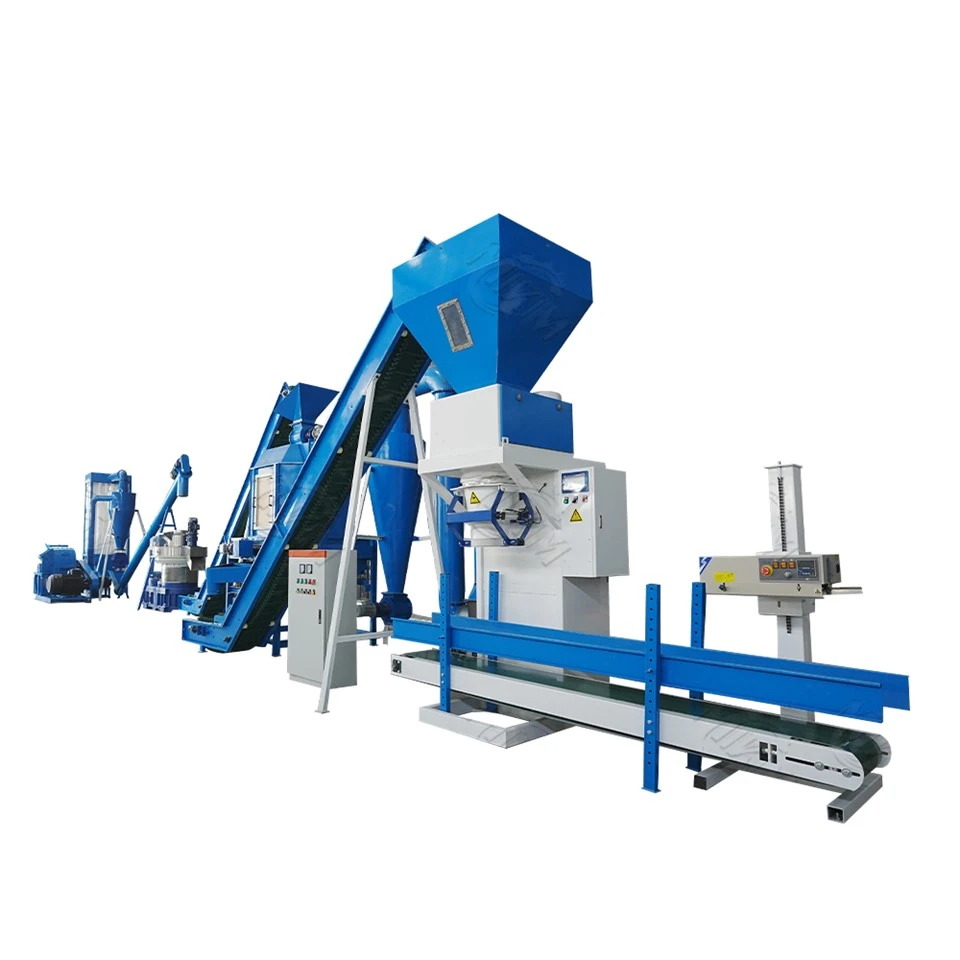

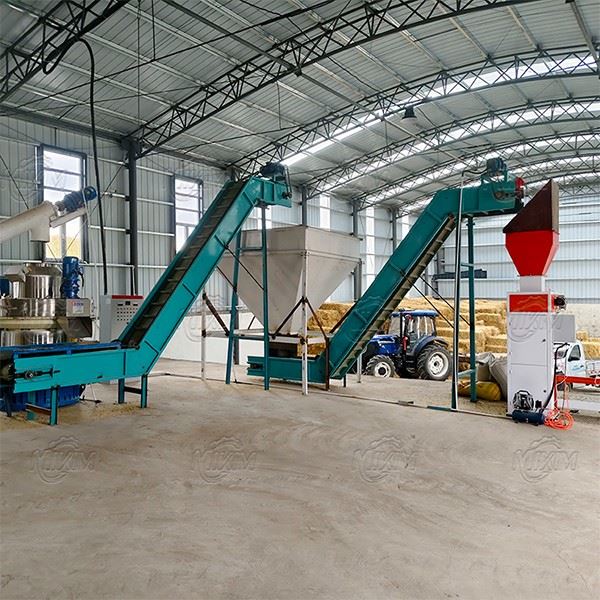
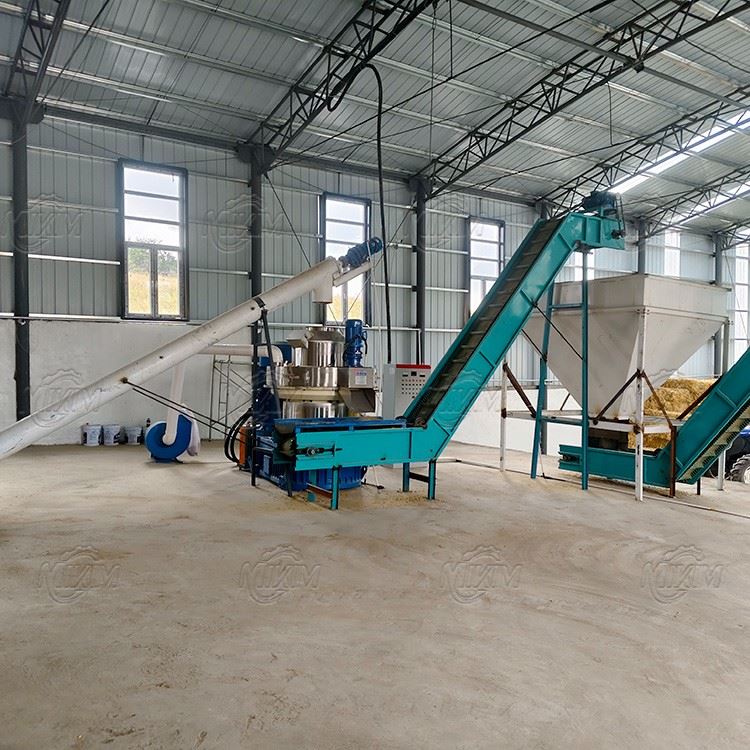
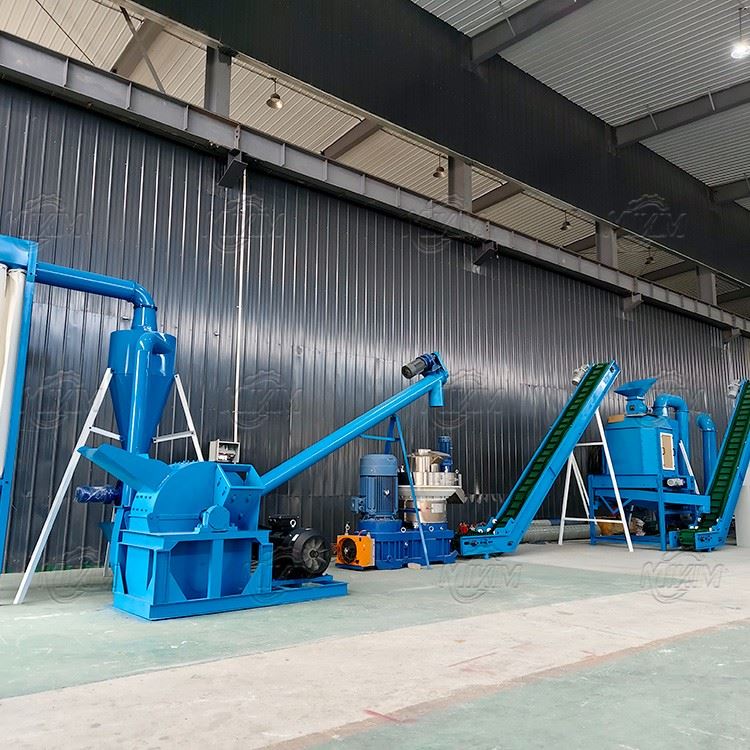
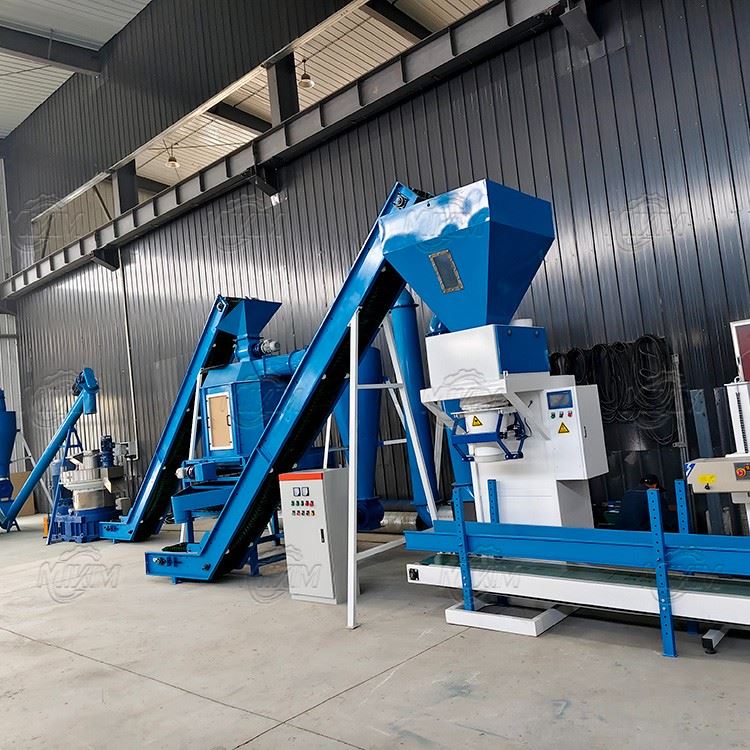
1T/H Large Biomass Pellet Production Line For Indonesia
Pellet Size:4/6/8/10 mm (Customizable)
Main Powe:Customized
Raw Materials: Palm kernel shell, coconut shell, rice husk, and other agricultural wastes
Application: Suitable for biomass fuel production bases, industrial energy consuming enterprises such as thermal power plants, chemical plants, agricultural and animal husbandry scenarios, and environmental energy project sites.
MOQ: 1 pcs
Installation:Factory guidance available
Features
Product Details of 1T/H Ring die Biomass Pellet Plant for Large-Scale Biofuel Production
1T/H Ring die Wood Chip Pellet maker production line test
What is a 1T/H ring-die wood pellet making production line?
A 1T/H Ring die sawdust pellet production line is an industrial-scale production line designed for the mechanical conversion of biomass residues-including sawdust, wood chips, and agricultural straw-into high-density fuel pellets.
The system operates with a rated throughput of 1,000 kg per hour, facilitating commercial-scale pellet production for small-to-medium industrial applications. Structurally, the Ring Die technology utilizes a vertical extrusion mechanism capable of sustaining the high pressures required for large-scale biomass processing. This mechanical configuration typically results in lower component wear rates and higher pellet structural density compared to flat die systems.


001. 1.5-3t Wood Sawdust Crushing Machine
The Wood Crusher Machine is the pivotal equipment for biomass energy and feed production. Engineered for efficiency, it utilizes high-velocity kinetic impact between heavy-duty manganese steel hammers and the raw material. Supported by a precision-engineered, dynamically balanced rotor, it ensures consistent output with minimal vibration. This robust system features wear-resistant liners and interchangeable screens, allowing for precise particle size control (typically 2mm–10mm).
What sets this Wood Crusher Machine apart is its exceptional performance with challenging Indonesian raw materials; it is specifically optimized to process high-tenacity Empty Fruit Bunches , abrasive Palm Kernel Shells , and hard coconut shells without the typical risk of clogging.

Product Specifications
|
Model No. |
FS-420 |
FS-500 |
FS-600 |
|
Disc Dia.(mm) |
420 |
500 |
600 |
|
Knives ( pcs ) |
4 |
4 |
4 |
|
Output ( t/h) |
1.5 t/h |
2.5 t/h |
3 t/h |
|
Motor Power( kw ) |
11-15 kw |
22 kw |
30 kw |
|
Weight ( kg ) |
350 kg |
400 kg |
550kg |
|
Dimension (m) |
1.6*0.8*0.8 m |
2*1.25*0.95 m |
2.1*1.4*1.2 m |
Detail Images:
|
|
|
| Wood Chipper Shredder Machine Crusher | Hammer Crusher On-site Photo |
 |
 |
| Hammer Set: Standard wearing parts for hammer mills. | Screen: Replaceable and interchangeable for precise particle size control. |


002 screw conveyor
In the industrial processing of biomass and animal feed, consistent material conveyance is a fundamental operational requirement. When handling materials with low bulk density and high fiber content-such as fine grass powder or ground biomass-a common physical phenomenon known as "bridging" or "arching" can occur within the feeding hopper, obstructing the material flow.
To address this, the bucket Screw elevator is designed with an integrated mechanical agitator (arch-breaking system) situated at the intake section. This device maintains constant material movement to prevent compaction, facilitating a steady feed into the rotating screw flights. By neutralizing the arching effect, the system enables a continuous and metered discharge of fibrous materials. This consistency is critical for preventing feed starvation in downstream equipment, such as pellet mills or mixers. Engineered for heavy-duty applications, this anti-bridging configuration reduces the necessity for manual intervention and mitigates downtime associated with material blockages, thereby supporting the overall stability and automation efficiency of the production line.
Product Specifications:
| Model | Power | Diameter | Length |
|
MGLX 165 |
1.5kw |
165mm |
3.5m |
|
MGLX 220 |
3.75kw |
220mm |
5.2m |
Detail Images:
|
|
|
| Electric Bucket Elevator Inclined Conveyor | On-site View of Screw Conveyor |
|
|
|
| 3mm heavy-duty blades for high wear resistance | 70mm diameter reinforced main shaft |


003 Airflow Wood Sawdust Drying Dryer
The Sawdust Pipe Dryer also called pipe dryer,sawdust flash dryer, is engineered for the rapid moisture reduction of fine biomass particles. This system is designed to process a wide range of materials, including wood shavings, sawdust, and milled agricultural residues such as wheat straw, corn stalks, and rice husks. Its high-velocity airflow design is particularly effective for processed tropical biomass common in the Indonesian market, such as pulverized Palm Kernel Shells , coconut husks, and shredded Empty Fruit Bunches.
For optimal efficiency, the raw material must be pre-conditioned to a diameter of less than 3mm. The system is capable of reducing moisture content from up to 40% down to the 8-12% range in a single pass, which is the industrial standard for high-quality wood briquette production. Precise moisture control is a fundamental prerequisite for the compaction process; achieving this target range ensures the production of high-density, superior-quality biomass briquettes. Whether handling traditional wood chips or processed Indonesian palm waste, the Pipe Wood Dust Sawdust Dryer Machine provides a cost-effective and stable drying solution essential for any professional biomass fuel production line.
Product Specifications:
|
Product |
wood sawdust hot rotary Airflow pipe dryer CE approved drying machine price biomass dryer | |||
|
Model |
HG- 219 |
HG - 300 |
HG - 350 |
HG - 400 |
|
Initial Moisture |
25%-40% |
25%-40% |
20%-40% |
20%-40% |
|
Final Moisture |
10%-15% |
10%-15% |
10%-15% |
10%-15% |
|
Main Power |
4 kw |
7.5 kw |
11 kw |
15 kw |
|
Drying Speed |
200-250 kg/h |
300-400 kg/h |
600-800 kg/h |
800-1000kg/h |
|
Pipe Diameter |
260mm |
300mm |
350mm |
400mm |
|
Cyclone Diameter |
780mm |
900mm |
1050mm |
1200mm |
|
Fuel Consumption |
40-50kg/h |
60-80kg/h |
80-100kg/h |
100-150kg/h |
|
Dimension |
9*2.5*3.1 m |
16*2.5*3.2 m |
18*3*3.3 m |
20*3*3.5 m |
|
Weight |
1760 kg |
2660 kg |
3200 kg |
4000 kg |
Detail Images:

|
|
|
| Wood Sawdust Powder Pipe Cyclone Drum Dryer | On-site View of Sawdust Rotary Dryer |


004 Ring die Wood Chip Pellet maker Machine
Ring Die Pellet Mill for Sawdust Pellet Production
Vertical Ring Die Granulator Granulation Process
1. Crushing and Pulverizing: Grind raw materials to an appropriate particle size. Larger materials (e.g., corn kernels, wood chips, straw) require processing through crushers, pulverizers, or hammer mills to ensure uniform particle size, typically between 1-6 mm. Excessively large particles hinder molding and cause mold wear; overly fine particles exhibit poor flowability, affecting roller pickup.
2. Batching and Mixing: Achieve nutritionally balanced or uniformly composed formulations. Multiple ingredients (e.g., corn meal, soybean meal, premixes) are thoroughly blended in a mixer according to formula ratios. This pre-treatment enhances plasticity and pellet formation rates.
3. Feeding: The feed screw uniformly and steadily conveys the conditioned material from the top inlet into the internal pelletizing chamber.
4. Distribution and Compaction: Upon entering the vertical ring die, the material is evenly distributed by a distributor or centrifugal force into the compression zone between the rotating ring die and rollers.
5. Extrusion Molding: Power from the main motor is transmitted through a reducer for speed reduction and torque increase, driving the vertical ring die to rotate at high speed. Material is drawn into the narrow gap between the ring die and compression rollers, where it is forcibly squeezed into the die holes under immense line pressure. This process generates temperatures exceeding 90°C, further promoting material maturation and bonding.
6. Cutting: Extruded strands emerge from the ring die's outer wall and are cut into desired-length pellets by blades mounted on the cover.
7. Cooling: Hot pellets are immediately conveyed into an air-cooled dust collector. Cool air passes through the pellet layer, removing heat and moisture to shrink and harden the pellets for storage and transport.
8. Screening: The cooled pellets pass through a vibrating screen, separating well-formed pellets from fines and powder. The screened powder can be returned to the pelletizer for reprocessing, minimizing waste.

Product Parameters
| Model | Capacity | Power | particle size | Product Size | Weight |
| MKLH560 | 1-1.5T/H | 90KW | 4-12MM | 2620*1640*1770MM | 5.2T |
| MKLH560A | 1.5-2T/H | 132KW | 4-12MM | 2680*1560*1770MM | 5.6T |
| MKLH700 | 2-2.5T/H | 160KW | 4-12MM | 2560*1380*2020MM | 7.2T |
| MKLH860A | 3-4T/H | 250KW | 4-12MM | 3150*1550*2240MM | 9.5T |
Detail Images:
|
|
|
| vertical ring die pellet machine | Ring die rice straw pellet maker machine |
|
|
|
| Pelleting chamber in stainless steel | Roller assembly |
|
|
|
| Biomass fuel pellet making machine mould | Reducer |


Ring die rice straw pellet maker machine vs. Flat Die biomass sawdust pellet machine
| Feature | Ring die biomass fuel Pellet making Machine | Flat die biomass pellet machine |
| Feeding Principle | Vertical Gravity Intake: Material is distributed by centrifugal force. Optimized for light-density biomass (PKS, straw). | Pressure-Driven Intake: Material is compressed downward. Best for higher-density feed or pre-compacted biomass. |
| Thermal Dynamics | Open-top venting: Allows thermal convection to release processing heat. Suitable for extended industrial shifts. | Internal Heat Accumulation: Heat remains concentrated within the die zone. Better for intermittent or small-batch use. |
| Material Versatility | Heavy-Duty Hardwoods: Engineered for high-lignin materials requiring intense pressure(Palm shells, coconut shells, etc). | Fibrous & Soft Materials: Highly effective for animal feed and soft biomass (Rice husk, grass). |
| Maintenance & Ease of Use | Professional Grade: Heavy components require specialized handling; higher learning curve for setup. | User-Friendly: Simple mechanical structure; easy for manual adjustment and quick die replacement. |
| Investment vs. ROI | High Output Focus: Higher upfront cost with lower long-term cost per ton in large-scale operations. | Cost-Effective Entry: Low initial investment; ideal for small-scale testing or decentralized production. |
Comparative Analysis of Indonesian Biomass Pelletizing Technologies
| Feature | Vertical Ring Die (Industrial Standard) | Flat Die (Small-Scale / Entry Level) |
| Material Compatibility (Indonesia Specifics) | Optimized for EFB & PKS: Specialized for high-tenacity palm fibers and abrasive shells. Handles Tropical Hardwoods (Rubber wood, Acacia) with ease. | Best for Rice Husk & Soft Biomass: Efficient for lighter agricultural waste; prone to slippage with high-oil palm residues. |
| Feeding Logic & Indonesian Fibers | Centrifugal Gravity Distribution: Prevents "bridging" of light, shredded EFB or rice straw. Ensures uniform chamber pressure. | Compression-Based Intake: Best for materials with higher bulk density; light Indonesian fibers may require manual assistance to feed. |
| Operational Duty in Tropical Climate | Heavy-Duty 24/7 Cycles: Engineered for continuous export-grade production. Superior heat venting suits Indonesia's high-humidity environments. | Intermittent Duty: Designed for small batches or 3–5 hour shifts. Requires frequent cooling breaks in tropical temperatures. |
| Pellet Quality (Export Standards) | High-Density Output (1.1–1.3 g/cm³): Meets European/Japanese export standards for PKS and wood pellets without additives. | Standard Density: Suitable for local domestic heating or animal feed; pellets may be less durable for long-distance shipping. |
| Maintenance & Local Skill Level | Advanced Maintenance: Requires precision alignment and heavy-duty lifting tools for die changes. Best for established factories. | Simplified Maintenance: Easily maintained by local workshops with basic tools. Die and roller replacement is fast and intuitive. |
| Capital Investment (ROI) | Scalable ROI: Higher initial CAPEX; lowest cost-per-ton for large Indonesian biomass export plants. | Low Entry Cost: Ideal for small-scale palm oil mill waste testing or decentralized village-level production. |
Recommended choice:For family-run production or small-scale operations, a Flat die Biofuel Sawdust Pellet Machine is more economical; In view of Indonesia's humid tropical climate and the high-tenacity nature of its raw materials, the Ring die rice straw pellet making machine stands as the superior choice for achieving stable, continuous, and high-efficiency production
Click to explore solutions designed specifically for Indonesia.
The finished pellets is biomass energy as biofuel, which can replace coal, oil, gas, etc., widely used in power plant, boiler, and heating system.

005 Automatic Bag Filling Packing Machine
The powder and pellet packaging machine mainly consists of four components: an automatic weighing system, a conveying system, a bag-sewing unit, and a computer control system.
The machine features a compact structure, stable operation, low energy consumption, easy operation, and high weighing accuracy.
Equipped with an automatic tare function.
Supports automatic zero tracking.
Automatically detects and compensates for weighing errors.
Displays gross weight, net weight, and cumulative bag quantity for convenient production management.
|
|
Power: 1 kW Packaging Dimensions: 1200 × 1200 × 2400 mm 1200 × 1200 × 1200 mm 2400 × 700 × 400 mm Weight: 700 kg Packaging Range: 10–50 kg/bag |

Customize a Production Line That Fits Your Needs
Application
Beyond standard wood pellets, the 300–500 kg/h small wood pellet maker Production Line is a versatile powerhouse capable of processing diverse raw materials for specialized markets:
1. Premium Animal Bedding
This is a high-margin market. Pelleted bedding is increasingly popular for:
Horse Stables: Highly absorbent, dust-free, and easier to clean than traditional straw or wood shavings.
Poultry Farms: Reduces ammonia odors and provides a drier environment for chickens.
Small Pet Litter: Ideal for manufacturing eco-friendly, biodegradable cat litter or rabbit bedding using pine sawdust or recycled paper.
2. Organic Fertilizer Pelleting
Turn agricultural waste into a marketable commercial product:
Composted Manure: Pelletizing chicken or cow manure makes it easier to transport, store, and apply with standard seed drills.
Crop Residues: Mixing straw or husk ash with organic binders to create slow-release soil conditioners.
3. Industrial Waste Upcycling
Many factories use this line to solve waste disposal problems and reduce landfill costs:
Paper & Cardboard Waste: High-density paper pellets are excellent for industrial boilers and have a very low ash content.
Textile & Fiber Waste: Processing cotton or hemp waste into fuel pellets for specialized biomass burners.
Brewery & Distillery Spent Grains: Turning dried hops and grains into nutrient-rich animal feed pellets or fuel.
4. Food Processing By-products
Coffee Grounds: Spent coffee grounds have a 20% higher energy density than wood; they are perfect for high-end "Coffee Logs" or pellets for BBQ and heating.
Fruit Pits & Shells: Processing olive pits, coconut shells, or walnut shells into premium, high-calorific fuel pellets.
5. Mushroom Cultivation Substrate
The pelletizing process sterilizes the material (due to high friction heat). These pellets can be used as a dense, easy-to-transport substrate for gourmet mushroom production.

FAQ
Q1: What is the required particle size for the raw material before entering the 1T/H Pellet Mill?
Answer: For a ring die pellet mill to operate at peak efficiency, the raw material should be processed into a consistency similar to sawdust, with a particle size below 5mm. If the material is too coarse (e.g., large wood chips or long fibers from EFB), it will cause uneven feeding, increase vibration, and potentially damage the ring die. We recommend a Heavy-Duty Hammer Mill upstream to ensure the feedstock is uniform, which is the secret to producing smooth, high-density pellets.
Q2: Does the 1T/H Pellet Plant require an automatic lubrication system?
Answer: For industrial-scale production, yes, it is highly recommended. Our 1T/H plants are typically equipped with an automatic grease lubrication system for the main shaft and pressure rollers. In the high-temperature environment of pelletizing (often exceeding 90°C), manual greasing is often insufficient and carries safety risks. An automatic system ensures 24/7 continuous operation, significantly extending bearing life and reducing maintenance downtime-a critical factor for the profitability of biomass plants in Indonesia's hot climate.
Q3: Do I need to add binders or chemicals to produce wood pellets?
Answer: Generally, no. Wood and most biomass materials (like Palm Kernel Shells) contain lignin, a natural polymer that acts as a binder when heated during the high-pressure pelletizing process. However, if the raw material has very low lignin content or is extremely dry, a small amount of water or vegetable oil may be used to assist the process. Our ring die machines are engineered to maximize the release of natural lignin, ensuring "clean" biofuel pellets that meet strict environmental export regulations.
Q4: How much factory space is required for a complete 1T/H biomass pellet production line?
Answer: A standard 1T/H production line-including the crushing section, drying section, pelletizing section, cooling, and packaging-typically requires a footprint of approximately 400 to 600 square meters. The ceiling height should be at least 6 to 8 meters to accommodate the cyclones, dust collectors, and bucket elevators. For our Indonesian clients, we also suggest considering additional space for raw material storage to protect stock from the monsoon season's high humidity.
Q5: How many operators are needed to run a 1T/H pellet plant?
Answer: Thanks to our PLC-integrated control systems, a 1T/H plant is highly automated. Under normal operation, only 2 to 3 workers are required per shift: one to monitor the feeding and PLC cabinet, one for the packaging section, and one for raw material handling (using a forklift or loader). This low labor requirement maximizes your competitive edge in the biofuel market.
Q6: How do you handle technical support and spare parts for international clients in Indonesia?
Answer: We understand that downtime is costly. As a supplier with 30 years of experience, we provide:
Remote Technical Support: 24/7 video troubleshooting and PLC remote diagnostics.
On-site Commissioning: Professional engineers sent to your site in Indonesia for installation and staff training.
Wear Parts Inventory: We maintain a dedicated stock of ring dies, rollers, and bearings specifically for our international partners, ensuring fast shipping to Jakarta, Surabaya, or Medan.
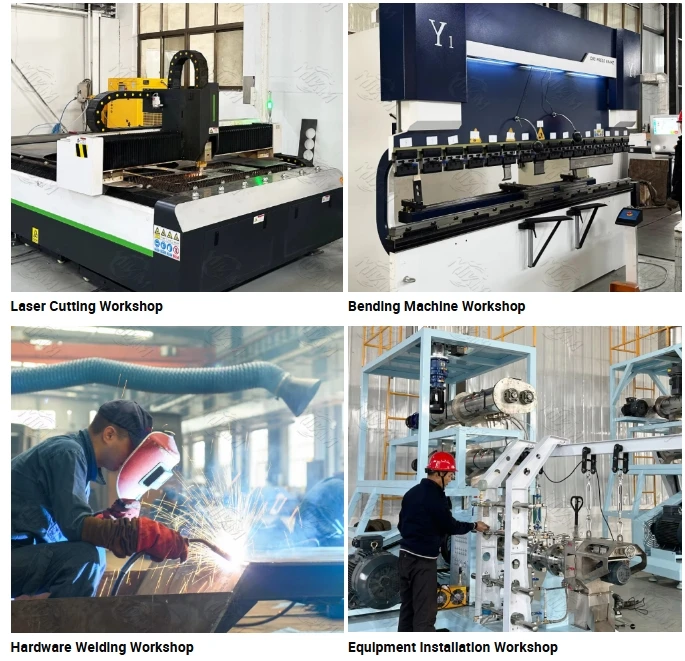
Our factory
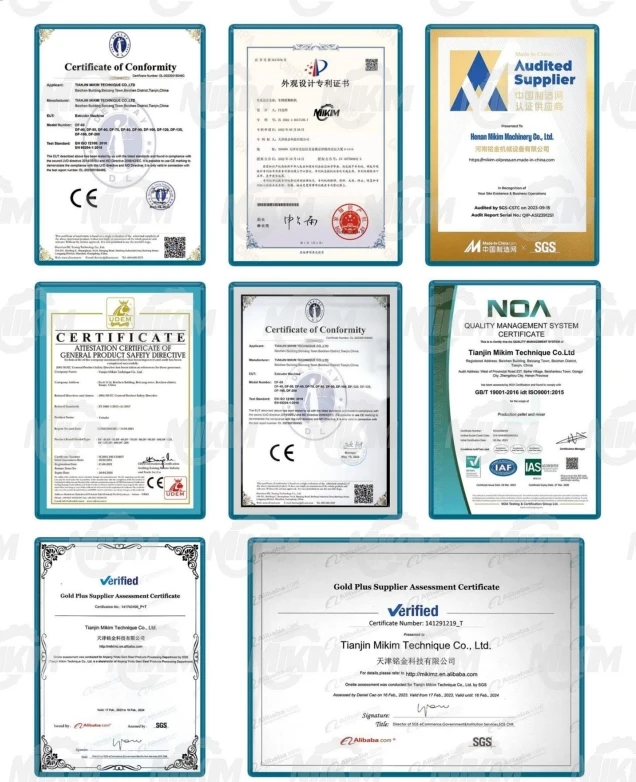
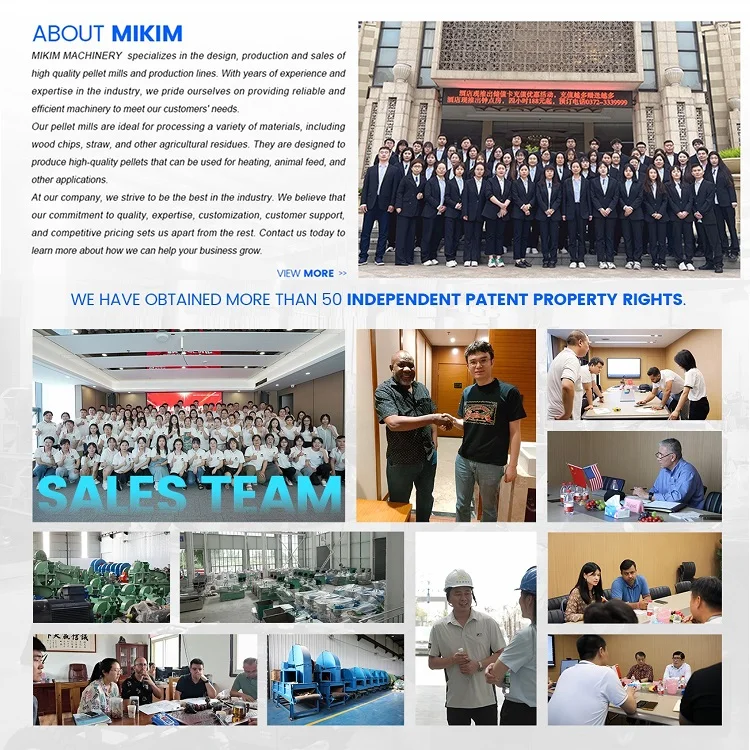
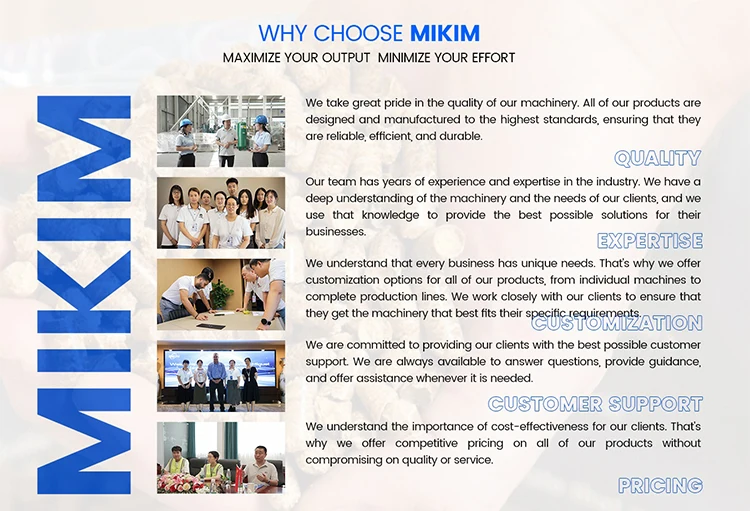
Company Profile

Packaging and shipping

Hot Tags: 1t/h large biomass pellet production line for indonesia, China 1t/h large biomass pellet production line for indonesia manufacturers, suppliers, factory, biomass wood pellet line, home wood pellet line, mini wood pellet line, portable wood pellet line, sawdust pellet line, wood pellet production grilling
No Information
You Might Also Like


Send Inquiry
