

Products
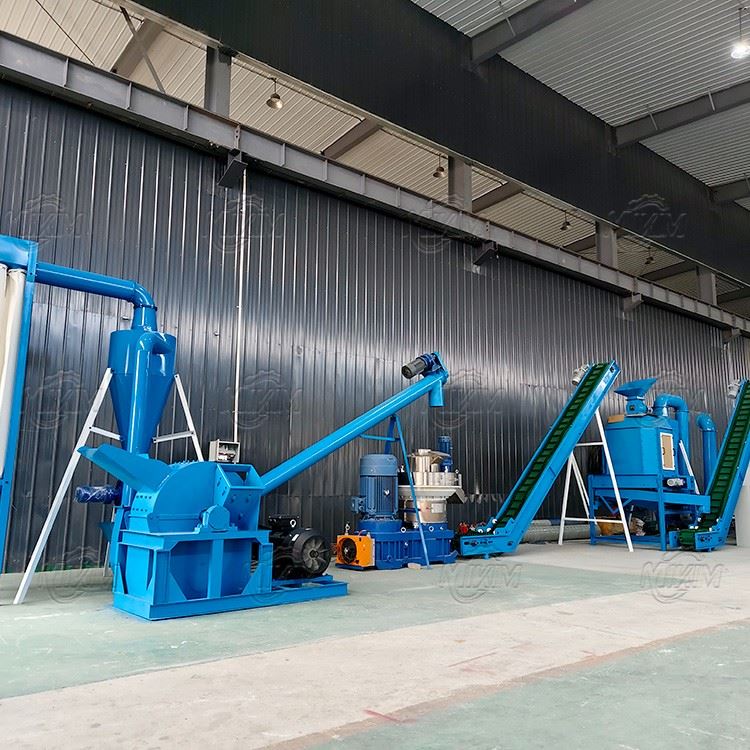


1-1.2 T/H Complete Wood Pellet Production Line
A 1–1.2 T/H complete wood pellet production line is a turnkey, fully automated plant that converts wood chips and sawdust into heating pellets at 1 to 1.2 tonnes per hour with minimal manual handling.
Features
For European buyers, the core machine is our MKLH560 ring model biomass granulator (90 kW main motor, 1–1.5 t/h), built into a line that uses Siemens motors, ABB variable-frequency drives, SKF bearings and SEW gearboxes wherever the buyer specifies. We quote it FOB China and CIF Gdańsk, and we supply European reference projects, installation support, warranty and real commissioning photos and video on request.
You are not buying a catalogue number. You are buying a plant that has to land in Gdańsk, clear customs, and run on Polish voltage with components your maintenance team can source locally. We show you the motor behind every machine, the brand behind every bearing, and the port behind every container.
Key Takeaways
- The MKLH560 Ring Die wood stove pellet maker machine (90 kW, 1–1.5 t/h) is the matched core for a 1–1.2 t/h line; dimensions 2620 × 1640 × 1770 mm, weight 5.2 T.
- European buyers can specify Siemens motors, ABB VFDs, SKF bearings and SEW gearboxes on the main drives; we list brand per item on the quotation.
- A full line runs chipper, hammer mill, rotary dryer, pellet mill, cooler, screener, packing, dust collection, conveyors and one control cabinet.
- We quote FOB China and CIF Gdańsk; typical shipment is 2–3 × 40HQ containers, 30–45 working days production.
- References are given as industry projects (for example SIMEC's Gdańsk deliveries and TIETJEN's Croatian installations) and as our own commissioning records on request, never confused.
This page walks the full automatic flow, the motor power behind each machine, the ring die deep dive, the European brand integration, container and Gdańsk logistics, reference and compliance, and the investment and spare parts picture. For smaller output see our 200–250 kg/h Small Scale Wood Pellet Production Line; for the category overview see the wood pellet production line overview.
Biomass Wood Pellet Machine | Ring Die Pellet Mill for Sawdust Pellet Production line
1 1–1.2 TPH Complete Wood Pellet Production Line: Overview for European Buyers
A complete line at this scale is engineered for continuous, single-operator supervision rather than manual labour at every stage. Material enters as wood chips or sawdust and leaves as cooled, screened, bagged or bulk pellets. The word "complete" means every machine from infeed to outfeed is included, wired to one cabinet, and tuned to the same hourly rate.
For Europe the conversation is less about whether the machine works and more about whether it complies and integrates. Polish and wider EU buyers ask for brand-name components they can service without importing from China, for CE conformity, and for a supplier who can show a plant running in a neighbouring country. We answer all three, and we put the component list in writing before you pay a deposit. If your project is closer to pilot scale, see our small pellet production line for wood.
The 1–1.2 t/h band sits at the lower end of industrial ring die production. It is the entry point to automated pelleting: big enough to supply a region or a mid-size boiler network, small enough to fit a modest hall and a realistic budget. The MKLH560 is the ring die mill that defines this band.
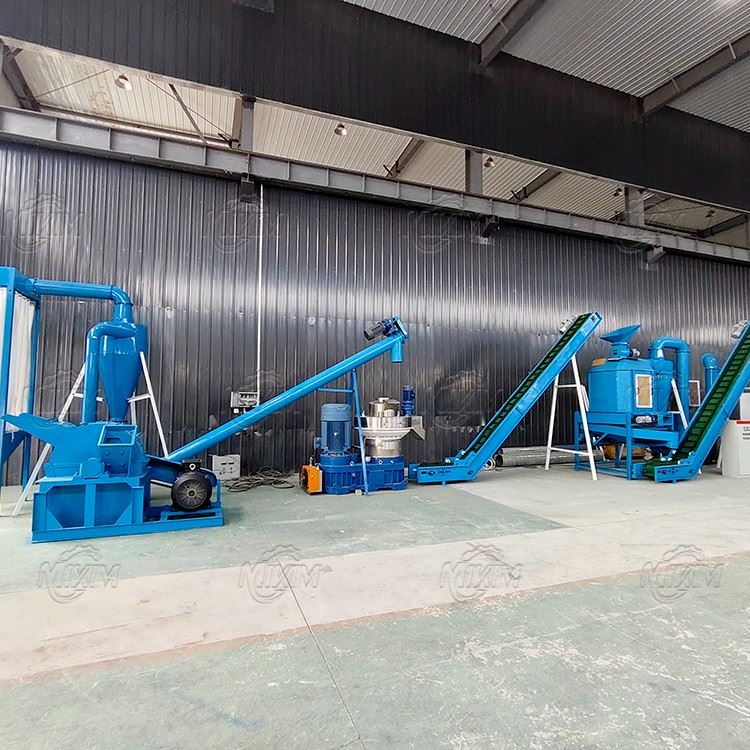
2 Full-Automatic Process Flow: Chipping to Packaging
The automated flow runs the same physical stages as a small line but at ten times the rate and with conveyors, sensors and a central cabinet doing the coordination. Follow the path:
- Chipping: Whole or oversized wood goes through the chipper to chips under 30 mm.
- Crushing: The hammer mill reduces chips to a fibrous 3–5 mm ready for pressing.
- Drying: A rotary dryer drops moisture to 10–15%, fired by biomass or gas, with exhaust dust captured.
- Conveying: Screw and bucket conveyors move material between stages on a timed cycle.
- Pelletizing: The MKLH560 ring die sawdust pellet mill forms pellets at 90 kW, 1–1.5 t/h.
- Cooling: A counter-flow cooler brings pellets from 80–90°C to near ambient.
- Screening: A rotary screener removes fines, which return to the process.
- Packing: An auto scale fills 15–25 kg bags or loads bulk into silos/trucks.
- Dust collection: A central baghouse keeps the hall within workplace limits.
- Control: One cabinet runs the sequence, with stops on overload and moisture fault.
A complete wood pellet line follows this same ten-step sequence; what changes between projects is the chipper size, dryer length and whether packing is bag or bulk.
Automation is what separates this line from a manual plant. Moisture and amp sensors at the dryer and mill feed tell the cabinet to slow the infeed before the die binds, and to pause the cooler fan if pellets are not yet at temperature. One operator walks the floor, checks the screens, and swaps a bag roll; the cabinet does the sequencing. For a European buyer facing labour cost and shift rules, that single-operator design is often the real reason the line pays back, not just the throughput number. We programme the sequence to your site rules, including auto-stop on overload so a jammed conveyor never becomes a burnt motor.

3 Core Equipment Configuration & Motor Power Breakdown (Table)
Every powered machine draws from the hall supply, so the motor list is the first thing a European engineer checks. The MKLH560 figure is our fixed catalogue value; auxiliary motors are typical and confirmed on the quotation.
| # | Equipment | Role | Typical Motor | Brand option |
|---|---|---|---|---|
| 1 | Disc chipper | Chip logs/branches | 30–45 kW | Siemens / local |
| 2 | Hammer mill | Crush to 3–5 mm | 55–75 kW | Siemens |
| 3 | Rotary dryer + fan | Dry to 10–15% | 7.5–15 kW fan | Siemens + ABB VFD |
| 4 | Screw/bucket conveyors | Transfer material | 2.2–5.5 kW each | SEW gearbox |
| 5 | MKLH560 pellet mill | Form pellets | 90 kW main | Siemens motor, SKF bearing |
| 6 | Counter-flow cooler | Cool pellets | 2.2–4 kW | SEW |
| 7 | Rotary screener | Remove fines | 1.5–3 kW | SEW |
| 8 | Packing scale | Bag/bulk out | 2.2–4 kW | Siemens |
| 9 | Central dust collector | Baghouse | 11–18.5 kW | Siemens + ABB VFD |
| 10 | Electric control cabinet | Sequence control | – | Schneider/Siemens parts |
Total connected load is roughly 200–270 kW depending on chipper and dryer choice. The line is not all-on-at-once by design; the cabinet sequences high draws so the incoming supply sees a managed peak. Exact connected and operating loads are stated on the final offer.
Key Takeaways
Need the motor list in Excel for your electrician? We send the itemised power table, starter type and cable section with every quotation. Request the spec sheet ->

4 ring die biomass fuel Pellet making Machine Deep Dive: MKLH560 for 1–1.2 t/h (Table)
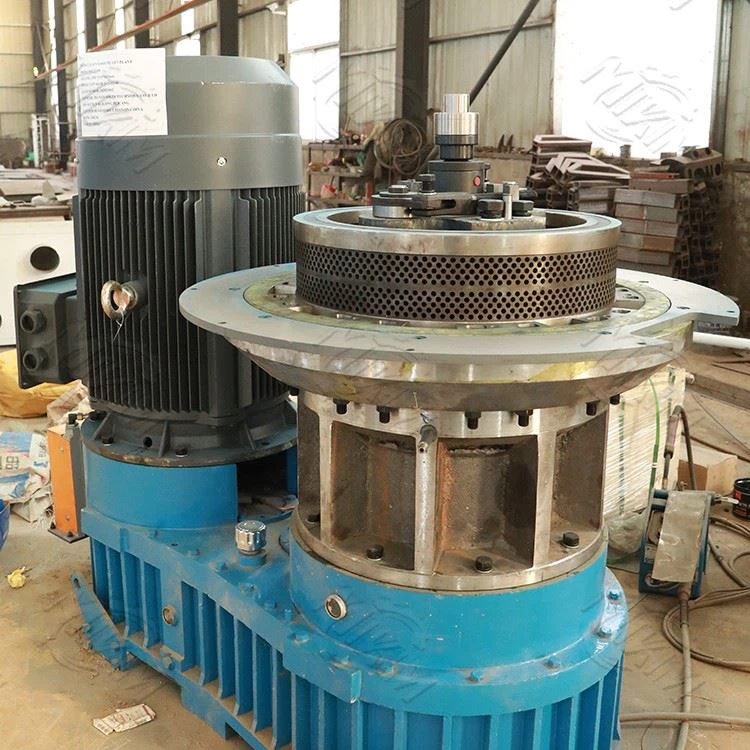
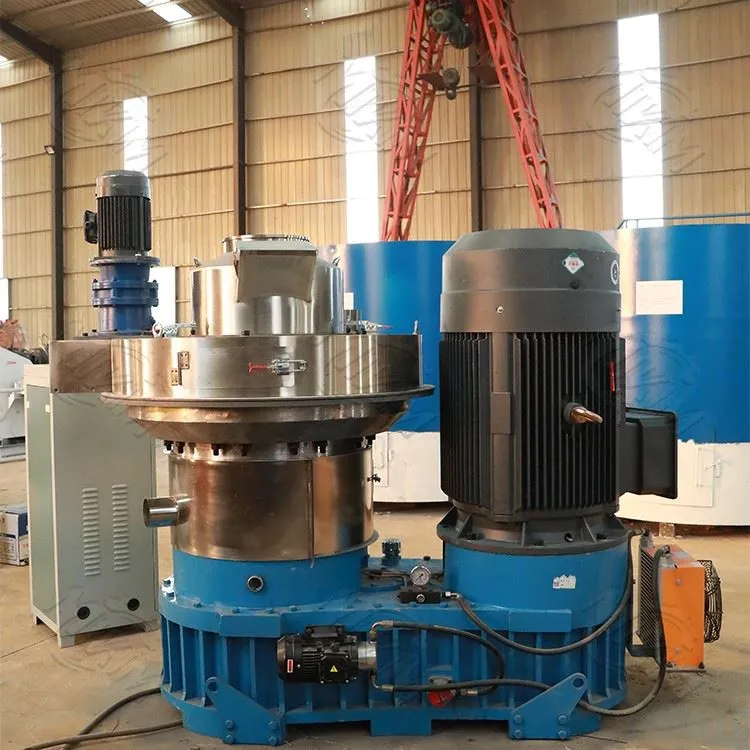
The MKLH560 is the ring die wood pelletize machine matched to this output. Ring die design pushes material through the die from the inside out under high, even pressure, giving uniform, dense pellets at industrial rate. It is the right choice above 1 t/h; a flat die would be undersized and wear too fast at this throughput.
| Model | Capacity | Main Motor | Pellet Size | Dimensions (L×W×H) | Weight |
|---|---|---|---|---|---|
| MKLH560 | 1–1.5 t/h | 90 kW | 4–12 mm | 2620 × 1640 × 1770 mm | 5.2 T |
| MKLH560A | 1.5–2 t/h | 132 kW | 4–12 mm | 2680 × 1560 × 1770 mm | 5.6 T |
For a 1–1.2 t/h target, the MKLH560 runs in the lower part of its 1–1.5 t/h band, which is healthy: it leaves headroom for moisture swings and harder feedstock. The 6 mm and 8 mm heating pellets sit inside the 4–12 mm die range. Full biomass pellet equipment line parameters are on the equipment page. If you later need 1.5–2 t/h, the MKLH560A at 132 kW is the direct upgrade without changing the layout footprint much.
5 European Brand Preference: Siemens / ABB / SKF / SEW Integration
European buyers specify component brands for one reason: serviceability. When a bearing fails at 2 am, your technician wants to walk to a local SKF distributor, not wait three weeks for a crate from Tianjin. We build the line so the named brands are real, fitted parts with traceable numbers, not stickers.
- Siemens motors on the hammer mill, pellet mill, packer and dust collector: IEC frames, 400V/50Hz, locally stocked across the EU.
- ABB variable-frequency drives on the dryer fan and baghouse: smooth start, soft overload, easy commissioning to your supply.
- SKF bearings in the pellet mill main shaft and rollers: the wear items you will actually open up, sourced in any EU city.
- SEW gearboxes on conveyors, cooler and screener: standard European footprints, local service.
Where a brand is not specified, we use CE-marked equivalents and list them honestly on the quotation. You always see what you are buying. A biomass charcoal production line from our range follows the same brand-transparency rule, so your spare-parts shelf stays simple across machines.
6 Typical Plant Indicators & Container Loading (Table)
These are typical figures for a 1–1.2 t/h automatic biomass pellet machine line on dry wood chips. Output varies with moisture and feedstock hardness; container count varies with packing choice (bag vs bulk).
| Indicator | Typical value |
|---|---|
| Throughput | 1.0–1.2 t/h |
| Shift output (20 h) | 20–24 T |
| Monthly output (single shift) | 500–600 T |
| Pellet size | 6 / 8 mm heating |
| Connected load | 200–270 kW |
| Hall footprint | ~18 × 8 m incl. dryer |
| Total weight | ~22–28 T (line only) |
| Containers | 2–3 × 40HQ |
| Production time | 30–45 working days |
The dryer and cooler are the long items that decide container count. With bag packing the line needs one extra container for the scale and conveyor runs; bulk loading saves that space. We confirm the exact count after you choose packing type.


7 Industry References & Third-Party Projects (SIMEC / TIETJEN / Richi)
Some suppliers show a Polish plant photo and imply it is theirs. We do not. As industry reference, SIMEC has published Gdańsk-region pellet deliveries and Richi has documented a large Polish installation; TIETJEN runs a real Croatian beech-wood grinding project. These are public, third-party examples of the European market we serve, not MIKIM installations. Our own commissioning records are shared separately and labelled as ours, so you never confuse a reference with a claim. (Illustration only: a hypothetical buyer's layout is not a real customer.)
8 FOB + CIF Gdańsk Shipping & Lead Time
We quote this line two ways so you control the logistics risk. FOB China (Qingdao or Tianjin) means you handle ocean freight and insurance from the Chinese port; CIF Gdańsk means we book the vessel and cover freight and insurance to Gdańsk, and you handle import clearance and last-mile trucking. Most Polish buyers take CIF Gdańsk to keep one responsible party on the ocean leg.
Lead time is 30–45 working days from deposit to ready-for-ship, plus roughly 30–40 days transit to Gdańsk. Containers are 40HQ, lashed and numbered, with a packing list per box. We pre-clear the commercial invoice and packing list format to Polish customs expectations and can work with your broker on the HS codes for pellet machinery.
Gdańsk is the practical Baltic gateway; from there, trucking reaches Warsaw in a day and most of Poland within two. If your site is far inland, CIF Gdańsk plus a local carrier is usually cheaper and simpler than routing to a secondary port.
Key Takeaways
Shipping to Gdańsk and want the ocean leg on our account? Ask for the CIF Gdańsk offer with transit time and the packing-list template your broker needs. Get the CIF quote ->

9 European Reference Projects & CE / ENplus Compliance
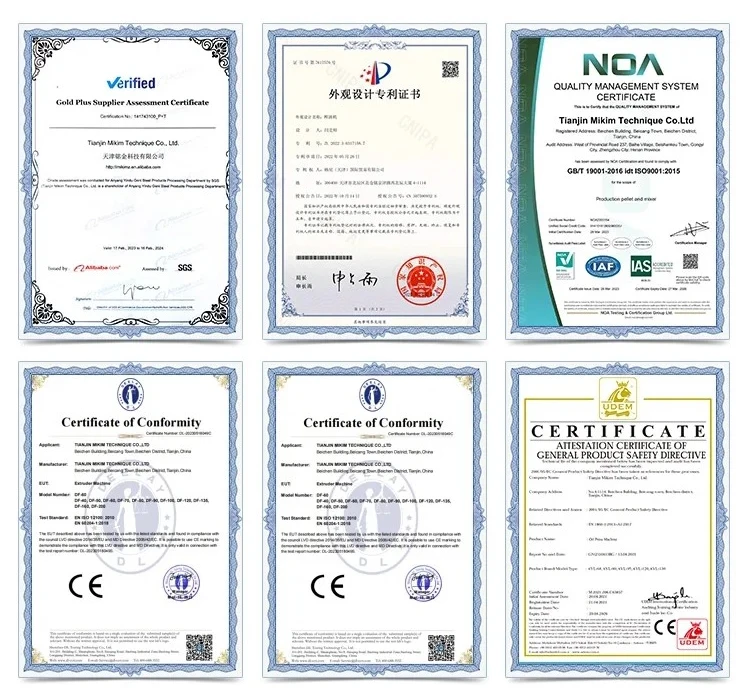
Compliance is not a checkbox, it is your licence to operate and to sell. The line is built to CE machinery directive requirements, with declared conformity on the electrical and safety systems, and we supply the documentation pack: declaration of conformity, electrical drawings, and risk assessment. For pellet quality to ENplus A1, the standard covers raw material, process and lab testing; our mill produces pellets within the 4–12 mm and moisture bands ENplus accepts, but certification is your plant's to obtain with local testing.
On references, we are specific about what is whose. Industry references we cite openly: SIMEC's Gdańsk-region deliveries show the Baltic route works; TIETJEN's Croatian beech project shows hardwood pelleting is active in the region. These are public third-party records. Our own references are commissioning photos and short video from lines we have shipped, shared under NDA-friendly terms when you are a qualified buyer. We will not paste a competitor's Polish photo and call it ours.
Installation and commissioning: our engineer travels to site for mechanical alignment, electrical connection and a production run, typically 7–14 days depending on readiness. You provide the foundation, incoming supply and lifting gear; we provide the plan, the parts and the know-how. Before travel we send the foundation drawing, anchor bolt positions and the cable schedule so your civil and electrical contractors finish ahead of the container arrival, which avoids the most common cause of commissioning delay: a hall that is ready except for the one slab the mill sits on.
A wood pellet production line category page lists the full model range behind these references. We also share the commissioning checklist we run on every line, so your team knows exactly what "accepted" means before our engineer leaves site. That checklist covers die gap, roller preload, cooler delta-T, screener recovery and a 4-hour continuous run at rated load with the bagging weight logged.
10 Investment, ROI & Spare Parts for Poland
Investment for a 1–1.2 T/H complete Wood Pellet Production Line is quoted per configuration because chipper size, dryer type and packing mode move the total. We give you the number as EXW, FOB and CIF Gdańsk so the comparison is honest. A line at this scale typically pays back on imported-pellet replacement and regional sales within a period your finance team can model from local pellet prices; we supply the output table above so the model uses real numbers, not hope.
Spare parts are priced as a bill of materials: ring die, rollers, bearings, screens, belts and seals with part numbers and lead times. For the MKLH560 we recommend holding one spare die and one set of rollers on site, plus the SKF and SEW items your local distributor can also stock. Because we fit brand-name components, your "spare parts" spend splits between our crate and your neighbourhood SKF shop, which is exactly the resilience a Polish operator wants.
We do not bundle vague "one year warranty" fine print. The mechanical warranty and the electrical warranty are stated separately, with what is covered and what is wear-and-tear. You know before you pay what a roller change in year two will cost.
11 FAQ: 1–1.2 TPH Automatic Line for Europe
Q1: What pellet mill do you use for 1–1.2 t/h wood stove pellet maker production line?
A: For a 1–1.2 T/H complete Wood Pellet Production Line we use the MKLH560 ring die mill, 90 kW main motor, 1–1.5 t/h, dimensions 2620 × 1640 × 1770 mm, weight 5.2 T. It runs in the lower part of its band at 1–1.2 t/h, leaving headroom for moisture swings.
Q2: Can you fit Siemens, ABB, SKF and SEW as we require?
A: Yes. We fit Siemens motors, ABB VFDs, SKF bearings and SEW gearboxes on the specified drives and list the brand per item on the quotation. Unspecified items use CE-marked equivalents, also listed.
Q3: Do you quote FOB and CIF Gdańsk?
A: Both. FOB China puts ocean freight on you; CIF Gdańsk puts freight and insurance to Gdańsk on us. Most Polish buyers choose CIF Gdańsk for one responsible party on the sea leg.
Q4: Is the line CE certified and can it make ENplus A1 pellets?
A: The machinery is built to CE machinery directive requirements with a conformity documentation pack. Our mill produces pellets within the ENplus-accepted 4–12 mm and moisture bands; ENplus certification is obtained by your plant with local testing.
Q5: How many containers and how long to Poland?
A: Typically 2–3 × 40HQ containers, 30–45 working days production plus 30–40 days transit to Gdańsk. Exact count depends on bag versus bulk packing.
Q6: Will you install it in Poland?
A: Our engineer travels for mechanical and electrical commissioning, usually 7–14 days, with you providing foundation, supply and lifting gear. Commissioning photos and video are shared as part of handover.
12 Request a European-Tuned Quotation (FOB/CIF Gdańsk)
If you are specifying a 1–1.2 TPH complete wood pellet production line for Poland or the wider EU, send us your feedstock, target output and brand requirements. We return a written offer with the itemised motor list, the brand behind every bearing, and FOB or CIF Gdańsk pricing.
Deutsch sprechend? Wir antworten auch auf Deutsch und liefern die CE-Dokumentation sowie das Angebot CIF Gdansk.
- Email: wood@mikimz.com
- Quote form: Request your European line quote ->
- WhatsApp / WeChat: on the contact page for fast exchange of your site layout
We answer European inquiries in English, German or Polish. Tell us your feedstock and the brand list you need. We'll send the itemised motor table, the CE pack, and a CIF Gdańsk number the same week.
Company Profile

Packaging and shipping

Hot Tags: 1-1.2 T/H Complete Wood Pellet Production Line, China 1-1.2 T/H Complete Wood Pellet Production Line manufacturers, suppliers, factory, portable wood pellet line, pellet mill equipment, wood stove pellet line, home pellet line, Pellet stove wood pellet production line, Biopellet Plant
You Might Also Like


Send Inquiry
