

Products
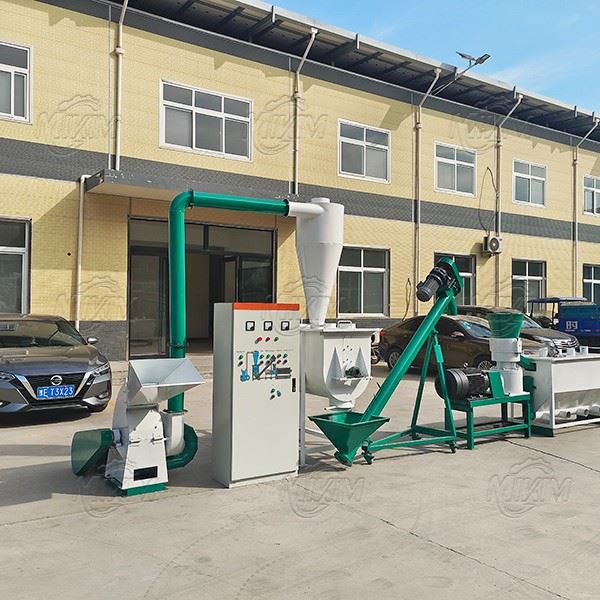


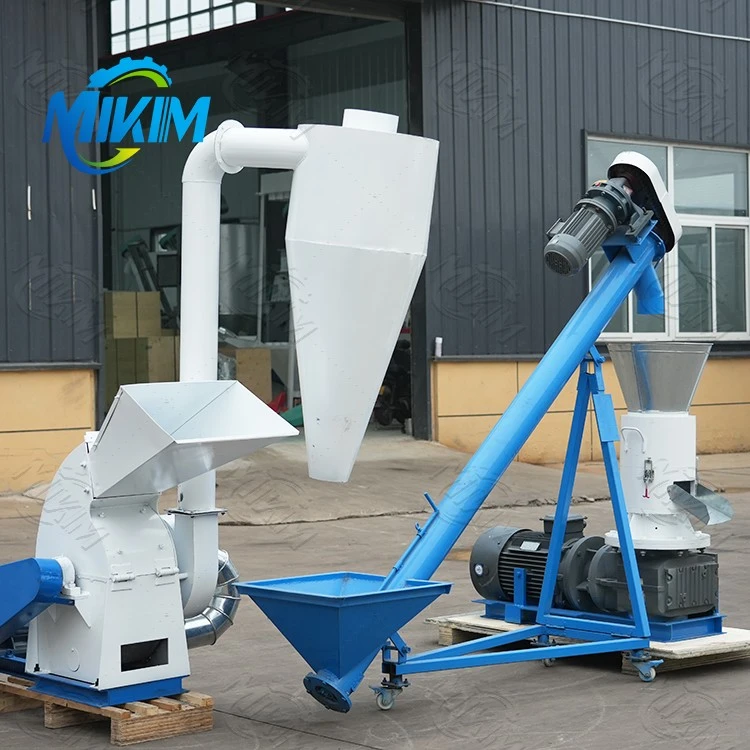
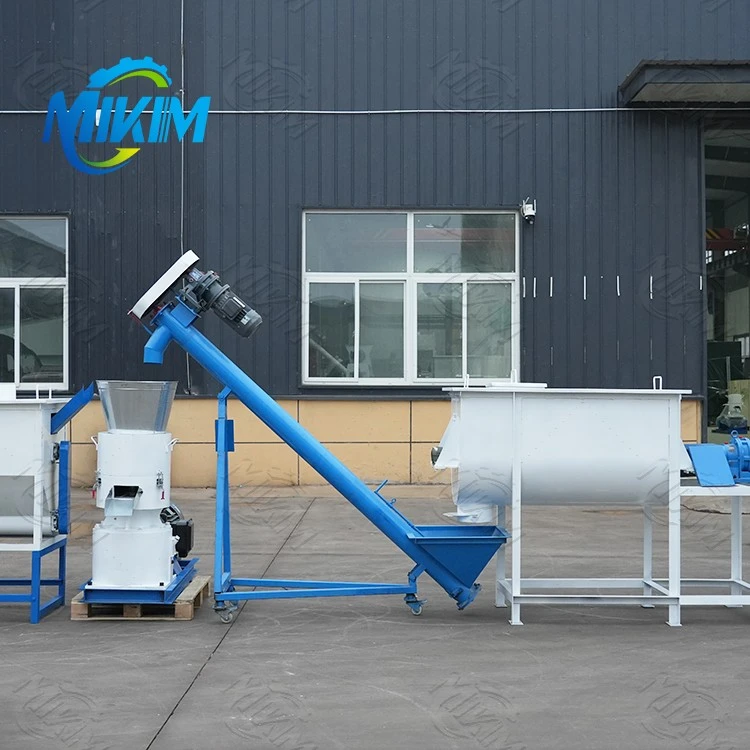
200-250kg/h Small Scale Wood Pellet Production Line for Chilean
A 200–250 kg/h small-scale wood pellet production line is a compact, farm-sized system that turns sawdust, shavings and crop residue into heating pellets at roughly 2–3 tonnes per 10-hour shift.
Features
For Chilean farms and workshops on a 380V/50Hz/3-phase supply capped at 15 kW, the realistic core machine is our RKL-250 flat die pellet mill (15 kW main motor, 100–200 kg/h), with the RKL-300 (22 kW, 150–250 kg/h) as the step up if you can raise the power ceiling. If your inquiry asked for an 11 kW pellet mill, we will be straight with you: the nearest standard model to your 15 kW limit is the RKL-250 at 15 kW, and an 11 kW unit is only possible as a made-to-order single build with its own lead time and price.
You probably asked for 11 kW because your comuna's rural grid simply will not give you more, and a 22 kW machine would trip the breaker before it ever warmed up. That constraint is real, and most suppliers either ignore it or quietly quote you a machine your wiring cannot run. We take the opposite route. We tell you exactly what fits the 15 kW cap, what needs a custom build, and how to run a dryer and a mill on the same limited supply without blowing a fuse.
Key Takeaways
- The closest standard pellet mill to a 15 kW Chile grid is the RKL-250 (15 kW, 100–200 kg/h); the RKL-300 (22 kW) exceeds the cap and needs a higher limit.
- An 11 kW pellet mill is not a catalogue model. It can be built to order as a single unit, but the RKL-250 at 15 kW is the practical, in-stock answer.
- Stay under 15 kW by running the dryer and the pellet mill in rotation, not at the same time, and by heating the dryer with a biomass burner instead of electric elements.
- Chile deliveries run CIF or CFR to San Antonio and Puerto Montt; production is typically 20–30 working days and ships in 1 × 20ft container.
- For continuous operation, budget 2 spare die sets and 4 spare roller sets so a worn part never stops your shift.
This page covers the line that fits a 15 kW rural supply, the honest answer on the 11 kW request, the batch-run method that keeps you legal on power, and what to expect on price, delivery and after-sales for Chile. If you are comparing this against our larger ring die lines, see the complete wood pellet production line category for the full range.
1. What Is a 200–250 kg/h Small-Scale Wood Pellet Production Line?
A 200–250 kg/h small-scale wood pellet production line is the smallest practical system that still produces bagged pellets you can burn or sell. It starts from sawdust or fine wood shavings and ends with cooled, screened pellets in 15–25 kg bags. The whole plant fits in a single workshop bay, runs on three-phase power, and needs one operator once it is set up.
The "200–250 kg/h" figure describes dry, ready-to-press material fed to the pellet mill. It is not the weight of green logs you throw in the front. Raw sawdust at 30–40% moisture must be dried down to 10–15% before it will pellet, and that drying step is where many first-time buyers underestimate both time and power. We cover the power part in detail below because it decides which machine you can actually run.
The line has five working stages: size reduction (only if your material is coarse), drying, pelleting, cooling and screening, then bagging. For a Chilean farm already sitting on planer shavings or sawdust from a small workshop, stages one and two may be light. For a mixed-residue operation, you will want the full chain. Either way, the pellet mill is the heart, and for a 15 kW supply that heart is the RKL-250. Getting that sizing right is the difference between a small biofuel pellet making production line that pays for itself and one that strands you at the fuse box.
Small flat-die wood pellet making production line test
2. Why Chilean Farms & Workshops Choose a 200–250 kg/h small biomass pellet line
Chilean smallholders and workshop owners pick this size for three concrete reasons: power, space and payback. Rural properties south of Santiago often have a transformer rated for 15 kW or less, so a 90 kW ring die line is simply off the table. A 200–250 kg/h line respects that ceiling while still turning a trailer of shavings into a winter's worth of heating pellets.
Space matters too. The RKL-250 measures 1400 × 600 × 1000 mm and weighs 0.5 T, so it slides through a standard door and sits on a concrete pad with no foundation pit. A farm that mills its own residue stops buying bags of imported pellets and starts using what the sawmill, orchard or vineyard already throws away. The payback is not a spreadsheet fantasy; it is lower winter fuel bills and a sellable surplus to neighbours.
A small wood pellet line for wood pellets also suits the trial-and-error reality of a first line. You learn the moisture, the die, the cooling rhythm on a machine that costs a fraction of an industrial plant. When you outgrow it, the RKL-250 becomes the backup or the second shift, not scrap. If you already know you will outgrow it, look at the complete wood pellet production line for higher output instead.
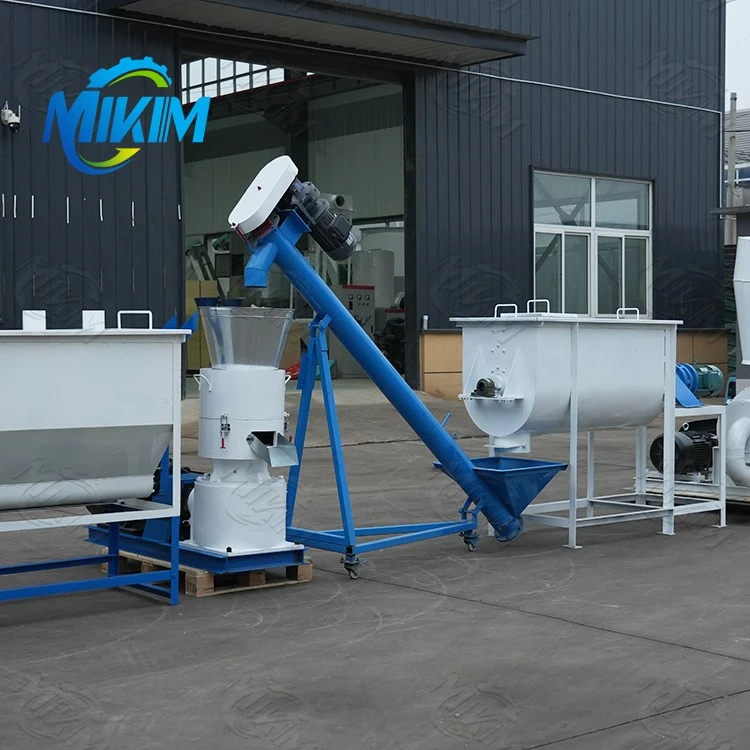
3 Chile's 15 kW Grid Limit & 380V/50Hz/ 3-Phase Requirement Explained
Chile's rural distribution is commonly 380V/50Hz/3-phase, and many properties are capped by a shared transformer or a rural electrification limit. When a buyer says "15 kW max," they mean the instantaneous draw on the workshop must not exceed that, or the protection trips and the whole shed goes dark. This is the single constraint that shapes the entire machine choice.
Here is the honest part most catalogs skip. The RKL-250 pellet mill's main motor alone is 15 kW. That means the mill itself consumes essentially your whole budget when it runs. You cannot also run an electric heating dryer at the same moment. The fix is not a bigger machine, it is smarter scheduling: you dry a batch of material first, then you pellet it while the dryer sits idle. We detail that in the batch-run section.
If your inquiry is named 11 kW specifically, understand the position clearly: we do not list an 11 kW flat die model. The nearest standard machine to your 15 kW ceiling is the RKL-250 at 15 kW. An 11 kW unit would have to be a made-to-order single build, with lead time and price quoted separately. For most Chilean buyers the faster, cheaper, in-stock path is the RKL-250 run on a batch schedule. We would rather sell you a machine your wires can actually start than a "perfect" 11 kW number that lives only on paper.

Key Takeaways
Want to confirm your supply before you quote? Send us a photo of your workshop breaker panel and the transformer rating. We will tell you in plain terms whether the RKL-250 fits or whether you need the custom 11 kW build. Request a power-check review ->
4 Recommended Pellet Mill: RKL-250 / RKL-300 Flat Die Specs (Table)
For a 200–250 kg/h target on a 15 kW cap, the RKL-250 is the match. The RKL-300 reaches the top of your range but draws 22 kW, so it only works if your limit is flexible. Both are flat die machines, which suit low-volume, variable-moisture farm feed better than a ring die because the die is cheaper to replace and the design tolerates intermittent use.
| Model | Capacity | Main Motor | Pellet Size | Weight | Dimensions (L×W×H) |
|---|---|---|---|---|---|
| RKL-250 | 100–200 kg/h | 15 kW | 4–6 mm | 0.5 T | 1400 × 600 × 1000 mm |
| RKL-300 | 150–250 kg/h | 22 kW | 4–6 mm | 0.65 T | 1780 × 670 × 1000 mm |
The 4–6 mm die range covers the 6 mm heating pellet that burns clean in most Chilean stoves and matches the ENplus A1 pellet diameter band. Flat die machines press material between a stationary die and rotating rollers, so the produced pellet is denser on the outside and slightly softer inside, which is fine for residential heating and easy on a small bagging setup. Full RKL flat die pellet mill specifications are on the equipment page.
For your 250 kg/h aspiration, be aware the RKL-250's rated ceiling is 200 kg/h on dry sawdust. If you consistently need 250, you are asking the mill to run at the very top of its band, and the RKL-300 would be the honest recommendation if power allowed. On a hard 15 kW limit, we set expectations at a realistic 180–200 kg/h and design the upstream drying to feed that rate steadily.
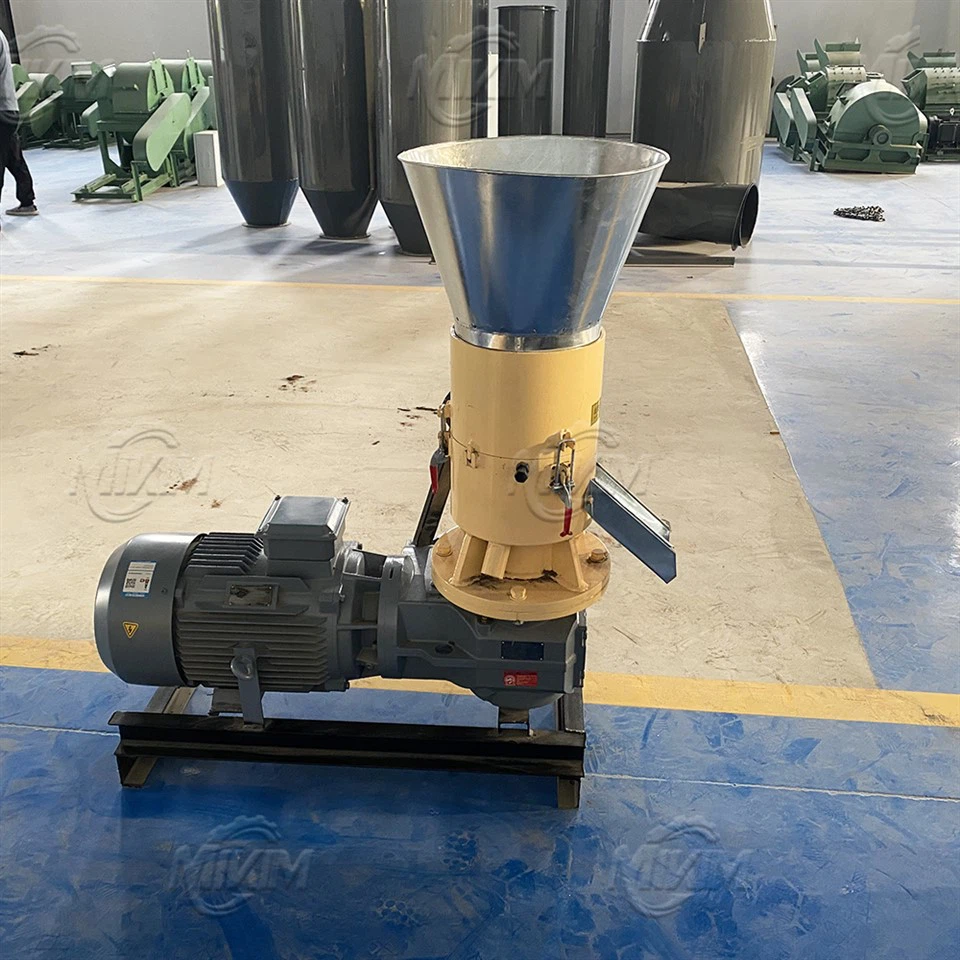
5 Complete Line Equipment List for 200–250 kg/h
Below is the full equipment set for a line starting from sawdust or shavings. Items marked "typical" are configured per your material and confirmed on the quotation; only the pellet mill figures are fixed catalogue values.
| # | Equipment | Role | Typical Motor | Notes |
|---|---|---|---|---|
| 1 | Sawdust crusher (optional) | Reduce coarse chips to <6 mm | 4–7.5 kW | Skip if shavings already fine |
| 2 | Rotary or pipe dryer | Drop moisture to 10–15% | 1.1–2.2 kW fan + biomass burner | Run on biomass, not grid heat |
| 3 | Screw conveyor | Move material between stages | 0.75–1.5 kW | Batch-scheduled with mill |
| 4 | RKL-250 pellet mill | Form pellets | 15 kW main | Core machine, 15 kW cap |
| 5 | Small cooler / drying bin | Set pellets after exit | passive or 0.37 kW fan | Air or passive cooling |
| 6 | Vibrating screener | Remove fines | 0.37 kW | Small footprint |
| 7 | Bagging scale (manual/auto) | Fill 15–25 kg bags | 0.37 kW | Manual option saves power |
| 8 | Cyclone dust collector | Capture dust | 1.1–2.2 kW | Health and housekeeping |
| 9 | Electric control cabinet | Central switching | – | 380V/50Hz/3-phase wired |
The control cabinet is where the batch strategy lives. We wire it so the dryer fan and the pellet mill cannot pull at the same time, protecting your 15 kW supply by design rather than by memory.

6 Process Flow: From Sawdust to Bagged Pellets
The path from loose residue to a stacked pallet of bags is short but unforgiving on moisture. Follow it in order:
- Feed sawdust or shavings (already under 6 mm) into the hopper. If coarse, pass through the crusher first.
- Dry the material to 10–15% moisture in the rotary or pipe dryer. On a 15 kW supply, heat with a biomass burner and run the dryer fan only when the mill is off.
- Convey the dry material to the RKL-250 hopper with the screw conveyor.
- Pellet at 15 kW. The die and rollers compress the mass; pellets exit at 70–90°C and 14–17% moisture.
- Cool the hot pellets in the cooler or drying bin so they harden and stop crumbling.
- Screen to pull out fines, which you recycle back to the hopper.
- Bag the finished pellets in 15–25 kg sacks, stitch or seal, and palletise.
A small pellet production line for wood follows the same seven steps; the only variables are how much drying your incoming material needs and whether you bag by hand or by scale.

7 Batch-Run Strategy to Stay Under the 15 kW Power Cap
This is the section that decides whether your line actually runs in rural Chile. The problem: the RKL-250's main motor is 15 kW, and a dryer fan, conveyor, screener and dust collector would push you well past the cap if they all ran together. The solution is rotation, and it works because drying and pelleting do not have to happen at the same minute.
Morning batch (dryer on, mill off): Start the biomass-fired dryer and process a few hours of material down to 10–15% moisture. The only grid draw is the 1.1–2.2 kW fan and the conveyor, well inside your limit. You build a stockpile of dry material.
Day batch (mill on, dryer off): Switch the cabinet to milling mode. The RKL-250 pulls 15 kW, the feeder and screw conveyor add roughly 1–2 kW, and the screener and cyclone add another 1.5–3 kW. Total peaks near 18–20 kW for short windows. To stay legal, we trim the auxiliaries: run the conveyor in pulses, use a passive cooler, and keep the dryer fully off. If even that edges over, we slow the feeder so the mill draws slightly under nameplate.
Why biomass heat matters: An electric dryer would add 15–30 kW of heating load you can never run alongside the mill. A biomass burner uses your offcut pellets or wood waste for heat and draws almost nothing from the grid. For a 15 kW Chile supply, biomass heating is not a nicety, it is the only way the math closes.
Key Takeaways
Building a line on a tight rural supply? Tell us your transformer rating and we will send a batch-run wiring diagram sized to your exact limit. Get the diagram ->
8 Typical Performance Indicators & Output Table
These are typical results for a 200–250 kg/h line on dry sawdust at 10–15% moisture. Actual output depends on raw material, die size and how strictly you hold the moisture window.
| Indicator | Typical value |
|---|---|
| Dry feed to mill | 180–200 kg/h (RKL-250 realistic) |
| Pellet moisture out | 14–17% after cooling |
| Pellet temperature out | 70–90°C before cooling |
| Die size | 6 mm (heating) standard |
| Shift output (10 h) | 1.8–2.0 T |
| Monthly output (single shift) | 45–50 T |
| Specific energy (mill) | 15 kW |
| Bag size | 15–25 kg |
Hold moisture above 15% and output falls and fines rise. Hold it below 8% and the pellet loses binding and crumbles. The 10–15% band is where the RKL-250 sings, and your batch dryer is what keeps you there.

9 Price, Delivery & After-Sales for Chile
Pricing for this 200–250 kg/h small scale wood pellet production line is quoted per configuration, not from a fixed list, because the crusher, dryer and bagging choices change the total. We quote EXW factory, FOB Qingdao, or CIF/CFR to San Antonio and Puerto Montt so you see the landed cost clearly. Production runs 20–30 working days after deposit, and the full line ships in one 20ft container.
For Chile we recommend budgeting 2 spare die sets and 4 spare roller sets with the first order. A die on a 6 mm heating pellet lasts roughly 300–500 hours of mixed-residue running; rollers wear a little faster. Having spares on the shelf means a weekend swap instead of a two-week wait for a shipment. Spanish-language manuals and a wiring diagram are included, and our engineer can support commissioning by video or, for a fee, on-site.
Spare parts and wear items are priced separately and listed on the quotation so there are no surprises. We do not wrap service in vague promises; you get part numbers, lead times and a price. That is how a small biomass charcoal briquette line buyer and a pellet buyer both get treated: with a bill of materials they can actually read.
10 FAQ: 200–250 kg/h Small Pellet Line for Chile
Q1: Can you really build an 11 kW pellet mill for my 15 kW Chile supply?
A: We do not stock an 11 kW model. The closest standard machine to your 15 kW ceiling is the RKL-250 at 15 kW. An 11 kW unit is possible only as a made-to-order single build, with separate lead time and pricing. For most buyers the RKL-250 on a batch schedule is the faster, in-stock answer.
Q2: What does 380V/50Hz/3-phase mean and do you supply it?
A: It is the Chilean rural standard for a 200–250 kg/h small biofuel sawdust pellet production line: three live wires at 380 volts, 50 cycles per second. Our control cabinet and motors are built for exactly this spec, so the line plugs into your three-phase supply without a transformer.
Q3: How do I stay under 15 kW if the pellet mill alone is 15 kW?
A: Run the dryer and mill in rotation, not together, and heat the dryer with a biomass burner instead of electric elements. Our control cabinet is wired so the heavy draws cannot stack, keeping your peak at or under the cap.
Q4: Which pellet size should I choose for home heating?
A: The 6 mm die is the standard for residential stoves and boilers in Chile. The RKL-250 and RKL-300 both support 4–6 mm, so 6 mm is the default we ship.
Q5: How many containers and how long to San Antonio or Puerto Montt?
A: The full small line ships in one 20ft container. Production is 20–30 working days after deposit, and CIF/CFR transit to Chile adds roughly 30–40 days depending on the port and season.
Q6: Do you include spare parts for continuous running?
A: We recommend 2 spare die sets and 4 spare roller sets with the first order, priced on the quotation. Spanish manuals and a wiring diagram are included, with video or on-site commissioning support available.
11 Get a Custom 380V/50Hz Quote for Your Farm
If your supply is capped at 15 kW and you want a line that actually starts on Monday morning, send us your breaker panel photo and the raw material you plan to use. We will confirm whether the RKL-250 fits as-is or whether the custom 11 kW build makes sense for you.
¿Habla español? Escríbanos y le responderemos en español con el diagrama de conexión y la cotización CIF a San Antonio o Puerto Montt.
- Email: wood@mikimz.com
- Quote form: Request your Chile line quote ->
- WhatsApp: available on the contact page for fast photos of your workshop
We answer Chile inquiries in English or Spanish, usually within one business day. Send us a photo of your breaker panel and tell us your material. We'll reply in plain terms: yes, the RKL-250 starts on your 15 kW supply, or no, here is the custom 11 kW path and lead time.
Company Profile


Packaging and shipping

Hot Tags: 200-250kg/h Small Scale Wood Pellet Production Line for Chilean, China 200-250kg/h Small Scale Wood Pellet Production Line for Chilean manufacturers, suppliers, factory, wood pelletizer for moisture control, pellet mill for wood pellet quality control, pelletizer for biomass pellet safety, large wood pellet mill, wood pellet mill, pelletizer for wood pellet packaging
You Might Also Like


Send Inquiry
