

Products


500-2000 kg/h charcoal briquette extruder machine
A charcoal briquette extruder is a press that compacts powdered charcoal into hexagonal briquettes at 300–400 kg/cm² without binder. Mikim's Extruding Type (CCX, hex) covers roughly 500–1 000 kg/h for charcoal (ET-1 and ET-2), plus a 1.5 t/h coal-only model (ET-3), serving BBQ fuel and household heating markets across the Middle East, Africa, South America, Europe and the Gulf.
Features
1. A hex briquette weighs 800–950 kg/m³ against 200–250 kg/m³ for the lump charcoal it replaces - smaller bags, lower freight.
2. Charcoal extrudes binder-free above 70% fixed carbon; below 60% add 1–2% starch.
3. A die-sleeve change on a CCX unit takes about 30 minutes for re-length or re-profile.
4. Run a biomass briquetter on charcoal powder and the screw burns out in roughly 50 hours - match the press to the feedstock.
- What Is Charcoal Briquette Extruder Machine And How Does It Work?
- CCX Extruding models (spec table)
- How To Pick The Right Charcoal Briquette Extruder Machine
- How a charcoal extrusion line runs in five stages
- Plant layout for a 500 kg/h line
- Buyers also compare these Mikim units
- FAQs on capacity, screw life and payback
01 What Is charcoal briquette extruder machine and How Does It Work?
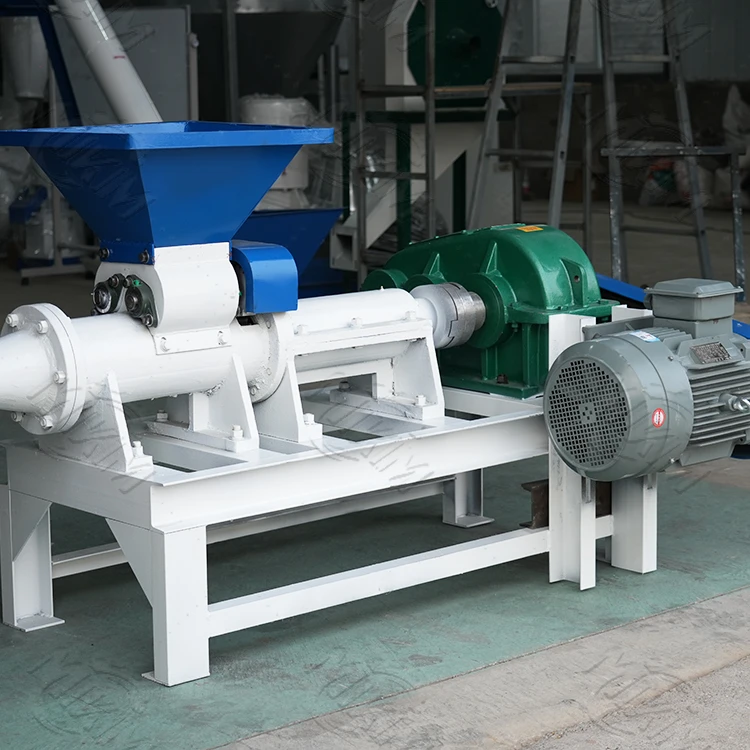
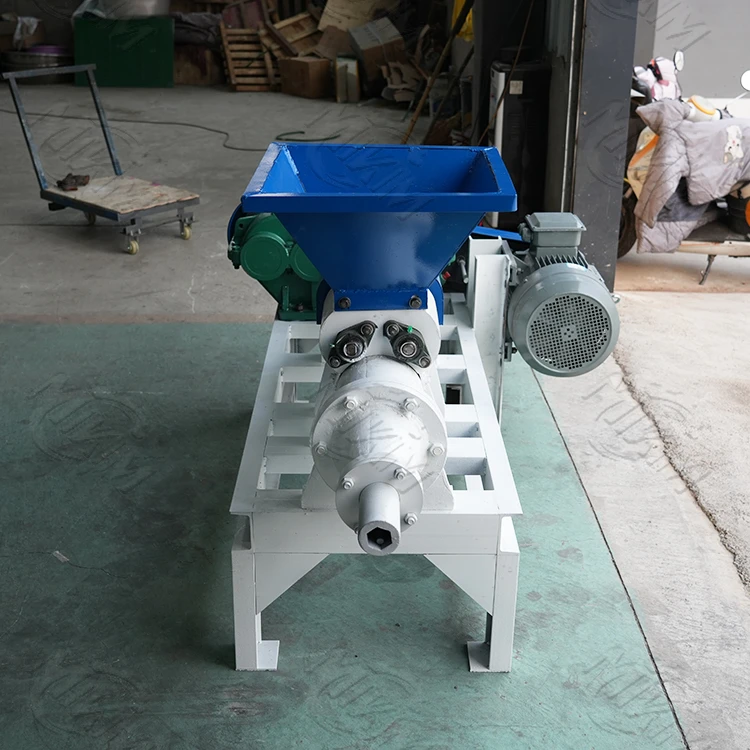
A charcoal rod making machine is a press with a fixed die geometry. Charcoal powder is fed into a hopper, a rotating screw pushes it through a tapered die sleeve, and the compacted hexagonal briquette exits at the far end at a controlled length.
- Extruding Type (CCX) uses a hexagonal die for the BBQ and household-heating market.
- A die-sleeve change (re-length or re-profile) is a 30-minute job on a given extruder.
1-4T/H charcoal rod making machine testing in our factory
I am interested in this product
How charcoal extrusion differs from biomass briquetting
Biomass briquetting compresses a fibrous material with binder. Charcoal extrusion compresses a granular material without binder, because charcoal already has fixed carbon above 70% and the particles interlock under pressure. A biomass briquetter is built for fibre; a charcoal extruder is built for granular flow. A CCX running on sawdust makes a poor briquette; a biomass unit (e.g. the BKY) running on charcoal powder burns out the screw in ~50 hours. The press technology is matched to the feedstock, not the other way round.
Where hexagonal briquettes sell
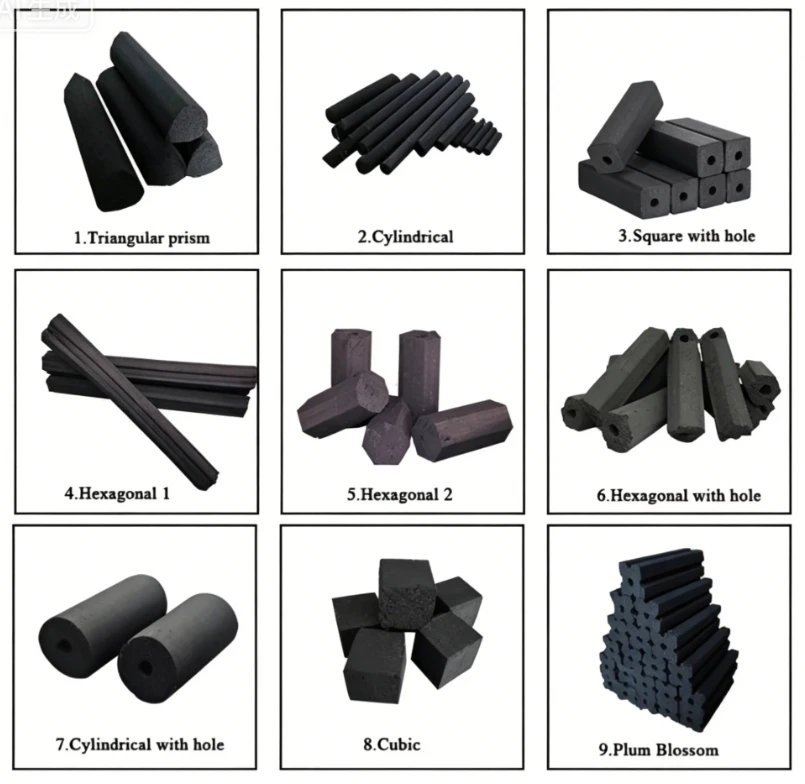
Hexagonal briquettes are the standard for the Middle East BBQ market and are also used for household heating across Africa and South America. Briquette length is adjustable from 30 mm to 200 mm on the same CCX extruder, so one machine covers both retail 10 kg packs and wholesale 25 kg packs.
02 CCX Extruding Charcoal Extrusion Models
Mikim's Extruding Type makes hexagonal charcoal briquettes, badged CCX with the technical model code ET-. The spec table below shows the confirmed ET models.
| Working Type | Model | Briquette shape | Capacity for Coal | Capacity for Charcoal | Power |
|---|---|---|---|---|---|
| Extruding (CCX) | ET-1 | Hexagonal | 200–250 kg/h | 500 kg/h | 11 + 0.55 kW |
| Extruding (CCX) | ET-2 | Hexagonal | 250–500 kg/h | 500–1 000 kg/h | 18.5 + 1.1 kW |
| Extruding (CCX) | ET-3 | Rod (coal only) | 1 500 kg/h | Not suitable for charcoal | 22 + 3 kW |
The charcoal stick-making machine is the most popular configuration in the Middle East and Africa. A single extruder ships in a 20-foot container, needs a 15 m × 8 m building and a 3-phase 380 V supply. The full line - hammer mill, binder-free mixer, extruder, dryer and bagger - ships in a 40-foot container.
Charcoal powder preparation before the extruder
Charcoal powder must be below 3 mm and below 12% moisture. A hammer mill with a 2–3 mm screen is the right choice; a flash dryer is required if the charcoal is fresh from a carbonization furnace. A 200-mesh screen yields a smoother surface but cuts throughput by 30–40%. Most export buyers prefer 3 mm and accept the slightly rougher surface.
03 How to Pick the Right charcoal briquette extruder machine
Selection comes down to your target charcoal output and whether you also process coal. All three are Extruding Type (CCX, hex); ET-1 and ET-2 make charcoal, and ET-3 is a higher-capacity coal-only unit.
ET-1 (500 kg/h) for a starter or single-shift line
The ET-1 is the entry point: 500 kg/h of charcoal on 11 + 0.55 kW, compact footprint, easy for a first-time briquette maker. It suits a farm-scale or pilot export line.
ET-2 (500–1 000 kg/h) for growing export volume
The ET-2 lifts the ceiling to 1 000 kg/h of charcoal on 18.5 + 1.1 kW and also reaches 250–500 kg/h on coal. It suits a buyer moving from local sales to container export.
Where hex briquettes sell
Saudi Arabia, the UAE, Egypt, Jordan, consume hex briquettes for household BBQ and restaurants. The hex shape stacks well in a 10 kg bag and lights evenly. Mikim's CCX extruder matches the dominant Saudi and Egyptian specification.
04 How a Charcoal Extrusion Line Runs in Five Stages
A charcoal extrusion plant is a five-stage process, mechanically simpler than a pellet plant or an MSW briquette plant.
Stage 1 - Crush the charcoal to powder.
Lump charcoal from a carbonization furnace is crushed in a hammer mill with a 2–3 mm screen. Size the hammer mill with headroom above the extruder rating - e.g. a ~1 t/h mill comfortably feeds a 500 kg/h extruder with margin for screen wear.
Stage 2 - Dry below 12% moisture
Furnace-fresh charcoal is usually below 5% moisture and needs no drying. Charcoal stored outdoors in humid weather may reach 15–18% and needs a flash dryer to return below 12%.
Stage 3 - Mix and pre-heat
A pre-heat stage at 60–80 °C is recommended: hot charcoal extrudes more smoothly and the surface is cleaner. The pre-heater is a simple paddle conditioner with a steam port.
Stage 4 - Extrude
The CCX extruder compacts the charcoal into the hexagonal shape. Throughput is set by feed-screw speed and die geometry. Motor current is the key parameter; an experienced operator reads the current and adjusts the feed.
Stage 5 - Cool, screen and bag
Briquettes leave the extruder at 80–100 °C and must cool to within 5 °C of ambient before bagging. A 20 m natural-conveying cooling belt suffices. A vibrating screen removes broken pieces (returned to the hammer mill). Finished briquettes are bagged in 5 kg retail, 10 kg household or 25 kg wholesale packs.
| Stage | Equipment | Target parameter | Common mistake |
|---|---|---|---|
| Crushing | Hammer mill, 3 mm screen | <3 mm particle size | 6 mm screen → rough surface |
| Drying | Flash dryer (if needed) | <12% moisture | Skipping dryer in humid season |
| Pre-heating | Paddle conditioner | 60–80 °C | Cold feed → screw wears twice as fast |
| Extrusion | CCX extruder | Motor current 70–90% | Over-feeding → screw seizes |
| Cooling & bag | Cooling belt + screen + bagger | Ambient + 5 °C |
Bagging hot → moisture damage |

05 Charcoal Extrusion Plant Layout for a 500 kg/h Line
A CCX 500 kg/h line needs a 15 m × 8 m single-storey building at 5 m eaves height.
- The hammer mill sits at one end, the extruder in the middle, and the cooling and bagging line at the other.
- A 3 m × 3 m control room, a 3-phase 380 V supply and a basic dust-collection cyclone are sufficient.
- A 2-ton forklift handles charcoal and finished briquettes.
06 Buyers Also Compare These Mikim Units
Buyers evaluating charcoal extrusion equipment also look at the upstream and alternative Mikim machines below.
- Self-Heating Sawdust Carbonization Furnace (CF Series)
- Biomass Briquetter Built for Fibrous Raw Material
- Complete Charcoal Making Machine Line for Export
- Charcoal Powder Extruder Range by Briquette Shape
- Wood Shredder for Pre-Crushing Lump Charcoal
07 Charcoal Extrusion Equipment FAQs
No. Charcoal powder at 70% fixed carbon and below 12% moisture compacts under pressure without binder because the particles interlock. A CCX extruder runs binder-free. If fixed carbon is below 60% or ash is high, add 1–2% starch binder.
A hex briquette runs 800–950 kg/m³ versus 200–250 kg/m³ for lump charcoal - a 10 kg bag of briquettes is smaller and ships at lower volume cost.
Yes. ET-1 and ET-2 process both charcoal (500 and 500–1 000 kg/h) and coal (200–250 and 250–500 kg/h); ET-3 is a coal-only unit at 1.5 t/h and does not process charcoal. See the spec table for the exact power of each model.
On low-ash, low-silica charcoal the screw lasts 1 500–2 000 hours; on high-ash or high-silica charcoal it drops to 600–800 hours. The die sleeve lasts 2 000–3 000 hours. Screws and sleeves are stocked at the Tianjin warehouse.
For a 500 kg/h CCX unit selling at USD 600–900/t in the Middle East or Africa, payback is 10–18 months. Mikim includes a payback worksheet in every quotation.
A biomass briquetter is built for fibrous feedstock with binder. Run it on charcoal powder and the screw burns out in ~50 hours. Match the press to the feedstock.
Get a quote for charcoal briquette press machine for your market
Tell us your target charcoal output, whether you also process coal, and the destination port. Mikim replies within one working day with a CCX model (ET-1 or ET-2 for charcoal, ET-3 for coal), the matching hammer mill and bagger, and an indicative CIF price. A commissioning engineer trains your operators for 3–5 days, and the 12-month warranty covers the extruder, gearbox and motor.
Get a Quotation →
About us

Machining and Testing Workshop

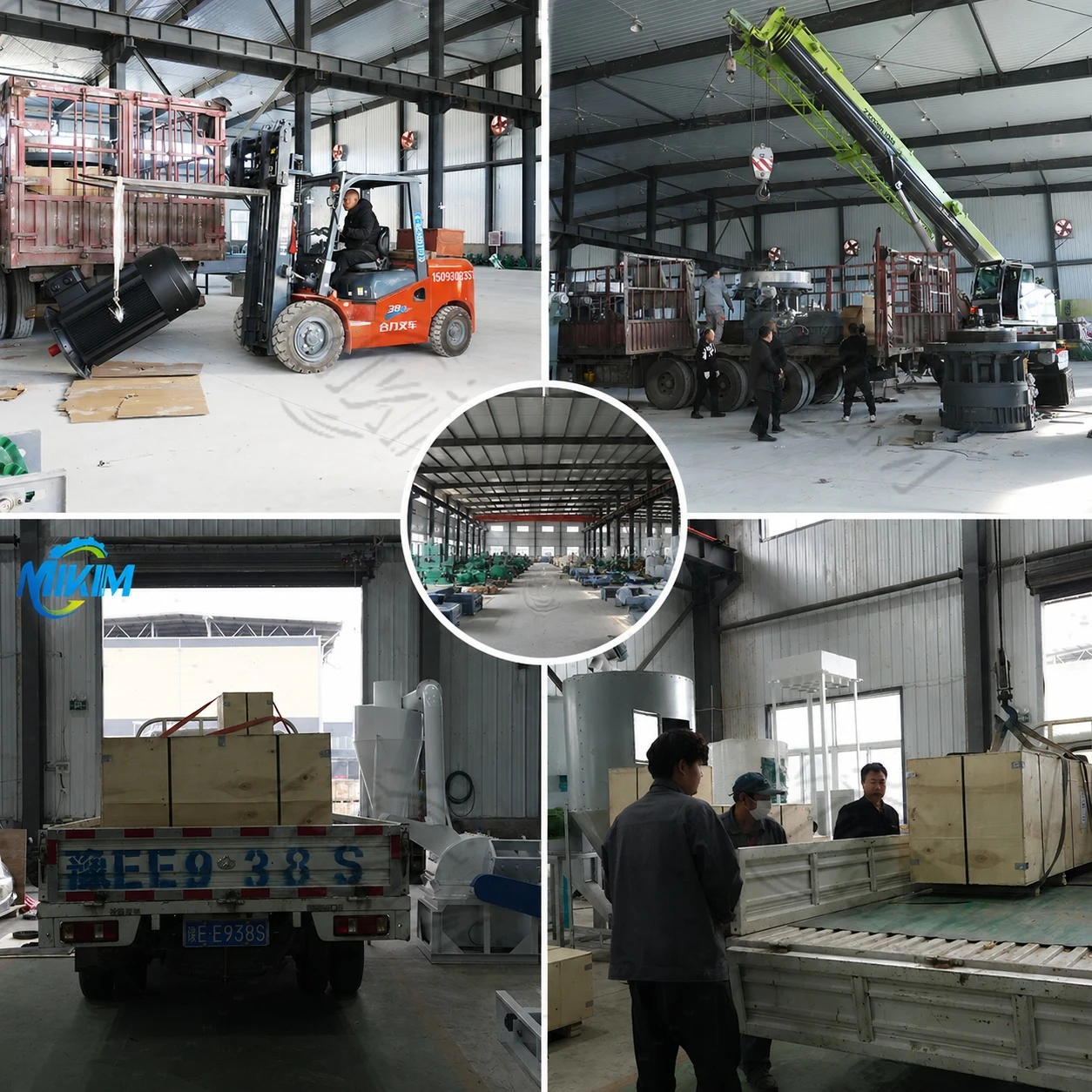
Packing and Shipping
Certificate of Honor

Hot Tags: 500-2000 kg/h charcoal briquette extruder machine, China 500-2000 kg/h charcoal briquette extruder machine manufacturers, suppliers, factory, charcoal forming demand for powder, Coal Powder Briquette Machine, charcoal forming market for powder, charcoal powder extrusion installation, charcoal forming installation for powder, charcoal powder extrusion delivery
You Might Also Like


Send Inquiry
