

Products


RDF waste fuel rod briquetting machine
RDF Briquette Machine: Convert Biomass & Industrial Solid Waste Into RDF Fuel Sticks
Features
An RDF waste fuel rod briquetting machine (also called a solid-waste briquetting press) is a densification unit that compresses shredded combustible waste into rod-shaped RDF (Refuse-Derived Fuel) sticks. It uses a ring-die structure: under controlled temperature and pressure, biomass and industrial solid waste are formed into uniform sticks with a density significantly higher than the loose feedstock.
After briquetting, the material volume is reduced to roughly one quarter of its original size. This reduces storage and transport cost and gives the fuel a more stable, continuous combustion behavior. The same press family can also produce straw briquette feed (see below) when agricultural residues are used.
Plastic biomass rdf briquette briquetting making machine test in our factory
I am interested in this product
The MKYK briquetting line is composed of four main parts:
-
Feeding belt conveyor - transports prepared material to the press inlet.
- Main press (ring-die) - compresses material under suitable temperature and pressure.
- Discharge belt conveyor - carries finished sticks out of the machine.
- Electric control cabinet - coordinates the line.
The process flow is:
- Pretreatment: shred/granulate the feedstock to a length of 10–100 mm and a moisture content of 15–30%.
- Feeding: the belt conveyor sends material into the press inlet.
- Forming: the main press compresses it in the die under controlled temperature and pressure.
- Discharge: finished sticks drop onto the discharge conveyor and are conveyed out.

- Horizontal ring-die structure. The press uses a horizontal (rather than vertical) ring die. The rotating action distributes material evenly to all die holes via centrifugal force, avoiding localized clogging and reducing specific energy consumption.
- Multi-stage sealing. Seals keep dust away from bearing lubrication points, extending service life.
- Die-and-roller interaction. The combination of compressive, frictional, and shear forces between the die and rollers gives a high forming rate with smooth discharge and stable throughput.
- Cooling / heating options. Depending on feedstock, the die can be cooled (engine-cooling principle to lower die temperature) or heated (thermocouple heating to raise die temperature) to improve output and keep continuous operation stable.
- Higher efficiency than flat-die presses. The ring-die layout offers higher working efficiency and lower fault rate than traditional flat-die briquetting machines.
From the fuel side, the resulting biomass briquettes are characterized by:
- Low sulfur/phosphorus: combustion is essentially smokeless and odorless, with no sulfur dioxide or phosphorus pentoxide formed; CO₂ is near net-zero on a biogenic basis.
- Higher bulk density: smaller volume and higher specific gravity simplify storage, handling, and continuous feeding.
- Clean combustion: no slag, smoke, chlorine, or sulfur-dioxide-type emissions during burning.
- Renewable and locally available: feedstock is widespread and renewable, and the process is simple enough for commercial production.


The MKYK press accepts a broad range of combustible feedstocks:
- Agricultural & forestry residues: old clothing (textile), sawdust, wood chips, peanut shell, leaves, rice husk, cattle manure, corn straw, cotton stalk, edible-fungus residue, herbal-medicine residue.
- Industrial solid waste: paper-mill rejects, textile/clothing offcuts, combustible general solid waste, and other combustible industrial rejects.
- Other: household combustible MSW and other flammable solid wastes.

- Biomass stoves, heating stoves, hot-water boilers, steam boilers, drying furnaces, biomass gasifiers.
- Household cooking and heating; drying grain, wood, fruit, and tea; district heating; power-generation fuel; industrial hot water and steam.
- Feedstock for anaerobic (biogas) fermentation.
- Straw briquette feed for ruminants (see below).

| Model | Power | Die holes | Capacity - biomass (t/h) | Capacity - industrial solid (t/h) | Stick size* |
|---|---|---|---|---|---|
| MKYK-360 | 55 kW | 36 | 1.0–1.5 | 0.5–1.0 | 32–100 mm |
| MKYK-480 | 75 kW | 48 | 1.5–2.5 | 1.0–1.5 | 32–100 mm |
| MKYK-720 | 110 kW | 72 | 2.5–3.5 | 2.0–2.5 | 32–100 mm |
| MKYK-900 | 132 kW | 90 | 3.5–5.0 | 2.5–3.0 | 32–100 mm |
| MKYK-1200 | 200 kW | 120 | 4.0–6.0 | 3.0–4.0 | 32–100 mm |
| MKYK-1500 | 250 kW | 150 | 6.0–10.0 | 4.0–6.0 | 32–100 mm |
* Stick size is set by the die holes and is adjustable within the indicated range. The exact die-hole specification should be confirmed against the current datasheet before ordering. Capacities are reference values and vary with feedstock type, moisture, and particle size.


Compared with coal, biomass/wood-waste RDF has the following characteristics:
- Cleaner combustion: low moisture and easy air adjustment give high combustion efficiency; it can substitute for city gas in suitable equipment.
- Easier ignition: ignites more readily than coal, shortening startup time.
- Safer handling: derived from natural biomass/wood with no fissionable or explosive chemicals; no poisoning, explosion, or leakage risk in normal use.
- Space saving: high-temperature compression greatly reduces storage volume and eases transport.
- Lower emissions: very low sulfur, nitrogen, and ash; typically meets clean-fuel limits without desulfurization/denitrification; no "three-waste" (waste water, gas, residue) in production and use.
- Lower cost/time: reference figures quoted by the manufacturer - boiler fuel cost and burning time about 11% and 34% lower than coal respectively; a 0.5 t boiler runs about 10% lower cost and 10% shorter time than coal.
- Stable burning: continuous burning time is about 8–10× that of soft raw material, holding a steady combustion state.
- Comparable usable heat: calorific value is about 10% below medium-grade coal, but RDF burns more completely (coal leaves 10–15% combustible in slag), so practical heat is comparable. Flue gas contains no particulate carbon or SO₂; SO₂/CO are near zero and smoke opacity is below Ringelmann level 1.


Figures such as the 11%/34% cost-and-time comparison are manufacturer-stated reference values. Real-world results depend on feedstock, boiler type, and operating conditions; we recommend a sample run on your own material before scale-up.
- When agricultural residues are used, the same press can produce straw briquette feed - commonly called "cattle cookies" - a densified roughage for ruminants (cattle, sheep).
- Compression heat (around 100 °C) gives a slight toasted aroma; palatability is high and intake reaches near 100%.
- Density is about 0.7–1 t/m³, 20–30× the original straw, which simplifies transport and stacking.
- Crude protein 8–12%, digestibility 60–65%, roughly equivalent to medium-grade meadow hay; no harmful substances, no pathogens, low moisture, no mold.
- Reference feeding results cited by the manufacturer: beef cattle weight gain +15%, dairy cow milk +16.4% and milk-fat rate +0.2%, with about 20% lower overall roughage cost.

What is an RDF briquette machine used for?
It compresses shredded biomass and industrial solid waste into dense, rod-shaped RDF fuel sticks. Briquetting reduces volume to about one quarter, easing storage/transport and improving combustion stability.
What raw materials can the MKYK RDF waste fuel rod briquetting machine process?
Agricultural residues (corn/wheat straw, cotton stalk, rice husk, peanut shell, leaves, sawdust), animal manure, industrial solid waste (paper-mill rejects, textile offcuts, waste plastic, combustible MSW), and other combustible solids. Pretreatment: 10–100 mm length, 15–30% moisture.
How does the Waste Cloth Paper Plastic Biomass RDF Machine work?
It consists of a feeding belt, the ring-die main press, a discharge belt, and a control cabinet. Shredded material in range is conveyed to the press and compressed under controlled temperature/pressure, then discharged as finished sticks.
Is RDF fuel environmentally better than coal?
Biomass/wood RDF is very low in sulfur, nitrogen, and ash; it usually meets clean-fuel limits without desulfurization/denitrification, with near-zero SO₂/CO. Calorific value is close to medium coal but burns more completely, so usable heat is comparable. Actual emissions depend on feedstock and combustion equipment.
What is the production capacity of the MKYK series?
Biomass capacity runs from ~1.0 t/h (MKYK-360, 55 kW) to 6.0–10.0 t/h (MKYK-1500, 250 kW). Industrial-solid-waste capacity at the same model is lower - e.g. 0.5–1.0 t/h for MKYK-360 and 4.0–6.0 t/h for MKYK-1500.
About us

Machining and Testing Workshop

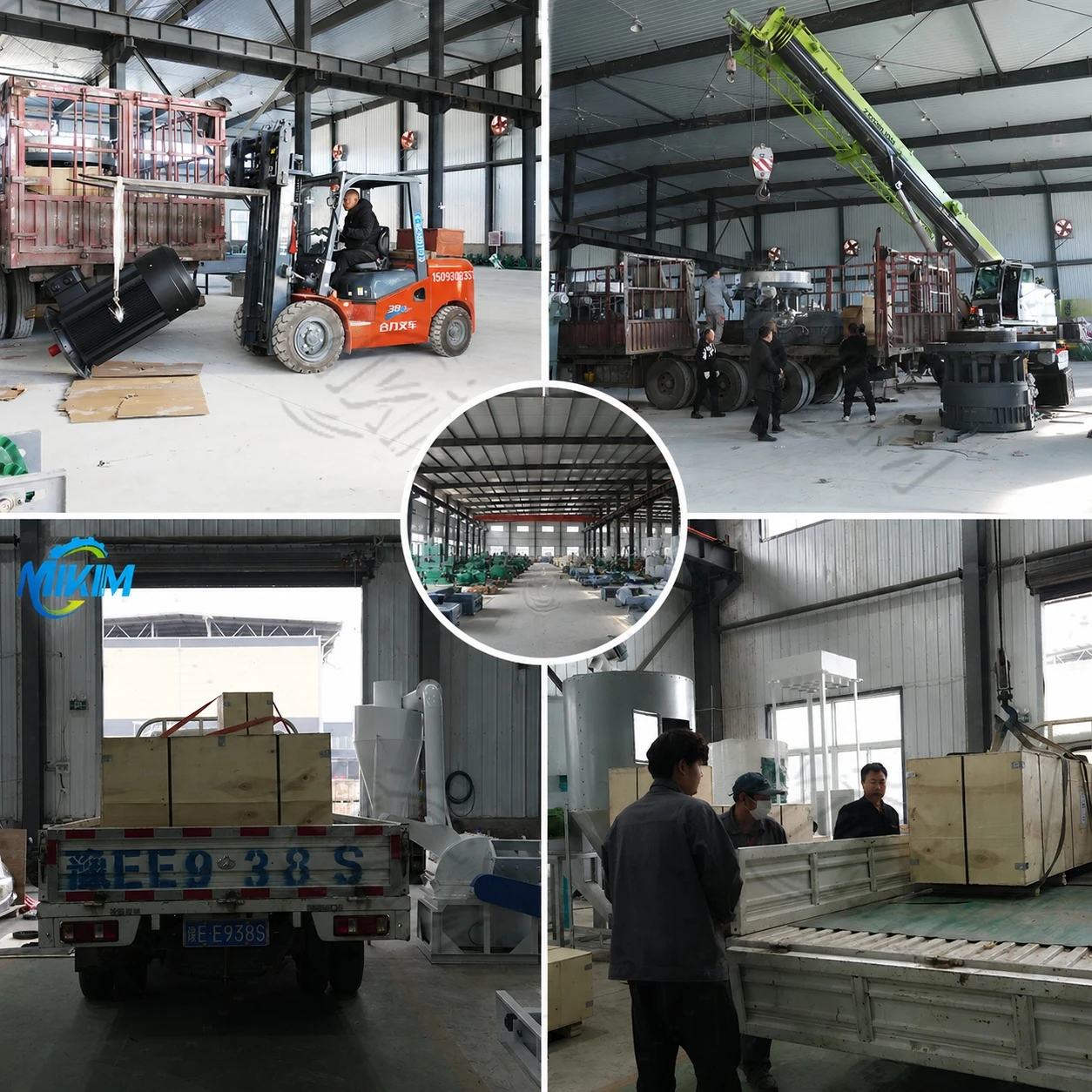
Packing and Shipping
Certificate of Honor

MIKIM designs and supplies biomass and solid-waste densification equipment, including the MKYK Series RDF briquette machine. For project references, certifications, and factory photos that support this page, contact our team or see the homepage.
Hot Tags: RDF waste fuel rod briquetting machine, China RDF waste fuel rod briquetting machine manufacturers, suppliers, factory, Automatic bark briquetting machine, biomass briquettes machine factory, biomass briquettes machine with pneumatic drive, briquetting press, biomass briquettes machine with quality inspection device, Biomass Briquetting Plant
You Might Also Like


Send Inquiry
