

Products


Wood Chip Briquette Molding Machine
A wood chip briquette molding machine is a press built for sawdust, shavings and joinery chips, producing 32 mm square briquettes at high bulk density. Mikim MKYK hydraulic and MKYK screw press (wood sawdust briquette machine)es run 0.5 to 6.0 t/h with 0 to 1 percent binder, because wood lignin softens at the the natural lignin softening temperature sleeve temperature.
Features
A Biomass Charcoal Briquette Making Machine is a press built specifically for the fibrous, lignin-rich material that a general biomass briquetter handles poorly. Mikim's MKYK hydraulic piston press (biomass briquette machine) and MKYK screw press (wood sawdust briquette machine) are sized for the sawdust, shavings and wood chips that come from a sawmill, a furniture workshop or a joinery - material that is too coarse for a pellet mill and too fibrous for a charcoal extruder, but ideal for a wood briquette. The MKYK is the right choice for a sawmill with a 2 to 5 ton per day waste stream; the MKYK is the right choice for a furniture workshop with a 1 to 2 ton per day stream. Both presses turn a wood waste disposal cost into a heating fuel that the sawmill or the workshop can burn in its own boiler.

Key Takeaways
- ✓ Wood carries 25 to 35 percent lignin, which softens at 130 to 180 C and binds the briquette without added binder.
- ✓ Planer shavings run 2 to 10 mm thick, too coarse for a MKYK screw press (wood sawdust briquette machine) but ideal for the MKYK piston.
- ✓ A MKYK sleeve lasts 1 500 or more hours on clean softwood and only fewer hours on bark-rich wood.
- ✓ A 500 kW wood-fired boiler burns about 150 kg of briquettes an hour, which a MKYK-48 covers with margin.
On This Page
- What Is a Wood Chip Briquette Molding Machine Used For?
- MKYK presses Wood Chip Briquette Molding Machine Models Compared
- Which Wood Chip Briquette Molding Machine Fits Your Sawmill?
- How a Wood Chip Briquette Molding Machine Runs in Four Stages
- Wood Chip Briquette Molding Machine Layout for a 1 tph Plant
- Wood Chip Briquette Molding Machine Buyers Also Compare These
- Wood Chip Briquette Molding Machine FAQs on Binder and Density
01What Is a Biomass Rod Brick Press Machine Used For?
A biomass biofuel briquette press machine is a compactor designed for clean wood waste - sawdust, shavings, offcuts, planer shavings, joinery chips.
- • The output is a 32 mm square briquette with bulk density between 800 and 1 000 kg per cubic metre, similar to a general biomass briquette but with a different binder requirement.
- • Wood has enough natural lignin to act as its own binder at high pressure and high temperature, which is why the Mikim MKYK hydraulic piston press (biomass briquette machine) and MKYK screw press (wood sawdust briquette machine) can run with 0 to 1 percent binder addition instead of the 1 to 3 percent required for agricultural residue briquettes.
Why Wood Is Different From General BiomassWood has a lignin content of 25 to 35 percent. Lignin is a natural thermoplastic that softens at 130 to 180 degrees C and re-hardens on cooling, which is exactly what a briquette needs. Agricultural residue (straw, bagasse, cotton stalk) has a lignin content of 10 to 20 percent and needs added binder. The Mikim MKYK presses are tuned for wood: the press sleeve is heated to the natural lignin softening temperature, the lignin softens, and the briquette binds on cooling without added binder. The same machine running on agricultural residue would produce a crumbly briquette at best. |
What the Briquette Is Used ForMost wood briquette presses are installed at the sawmill or the workshop that produces the wood waste. The briquette is burned in the site boiler for space heating, kiln drying, or hot water. A 1 tph wood briquette press produces about 18 t of briquettes per 24 hour day, which is enough to heat a 1 000 square metre industrial building through a European winter. The briquette that is not burned on site is sold into the local boiler fuel market at the local briquette market price. |
02MKYK presses biomass biofuel briquette press machine Models Compared
Mikim offers two wood briquette press technologies: the MKYK Hydraulic Piston Wood Briquette Machine (biomass briquette machine) for batch operation on clean wood, and the MKYK screw-type wood dust charcoal briquetting machine (wood sawdust briquette machine) for continuous operation on sawdust and shavings.


| Model | Power (kW) | Die Hole | Stick Size (mm) |
|---|---|---|---|
| MKYK-36 | 45 | 36 | 32x32x50-100 |
| MKYK-48 | 75 | 48 | 32x32x50-100 |
| MKYK-72 | 110 | 72 | 32x32x50-100 |
| MKYK-90 | 132 | 90 | 32x32x50-100 |
| MKYK-120 | 200 | 120 | 32x32x50-100 |
| MKYK-150 | 250 | 150 | 32x32x50-100 |
A MKYK-48 hydraulic press is the most common configuration in a small sawmill or a joinery workshop.
- • A MKYK-48 screw press is the right choice for a furniture factory that produces only sawdust, not chips or shavings.
- • The MKYK is more flexible on feedstock; the MKYK is more compact and cheaper.
When to Pick the Hydraulic Press and When to Pick the Screw PressThe MKYK piston stamping Biomass Briquette Making Machine (biomass briquette machine) takes a wider range of feedstock - sawdust, shavings, offcuts, planer chips - because the piston compresses the material in a single stroke regardless of particle size. The MKYK screw-type wood shavings briquette maker machine (wood sawdust briquette machine) requires the feedstock to be uniformly fine sawdust; shavings and chips block the screw. If the sawmill or workshop produces mixed waste, the MKYK is the right choice. If the waste is uniformly fine sawdust from a single dust collection system, the MKYK is cheaper and easier to maintain. |
03Which Biomass Briquette Making Machine Fits Your Sawmill?
The press is sized backwards from the boiler fuel consumption or the wood waste production rate, whichever is larger. The right sizing is the one that uses the sawmill's own wood waste without buying extra raw material.
Sizing From the Wood Waste StreamA small sawmill cutting 20 m3 of softwood per day produces about 5 to 7 tons of sawdust, shavings and chips. A MKYK-72 at 2.0 to 2.5 t/h consumes this waste in a single 8 hour shift and produces 6 to 9 tons of briquettes. The briquettes are burned in the site boiler for kiln drying, and the surplus is sold into the local market. |
Sizing From the Site BoilerA 500 kW wood-fired boiler consumes about 150 kg of wood briquettes per hour at full load. A MKYK-48 at 1.0 to 1.5 t/h is the right size, with a margin to allow for moisture drift. The press is typically installed adjacent to the boiler to avoid briquette handling and transport costs. |
Sizing From the Local MarketIf the briquettes are sold into the local market instead of burned on site, the press is sized to the market demand. A MKYK-120 at 3.0 to 4.0 t/h produces about 25 to 35 t of briquettes per 24 hour day, which is enough to supply a small district heating network or a regional boiler fuel distributor. |
04How a Wood Chip Briquette Molding Machine Runs in Four Stages
A MKYK-72 1 tph wood briquette press is a four-stage process. The four stages and the operating parameters are listed below.
Stage 1: Collect the Wood WasteSawdust, shavings and chips are collected from the dust collection system, the planer, the saw and the offcut bin. The waste is conveyed to a buffer bin above the press. The buffer bin should hold at least 4 hours of production to allow the sawmill to run when the press is down for maintenance. |
Stage 2: Dry if NecessaryGreen wood waste is 40 to 60 percent moisture; kiln-dried wood waste is 8 to 12 percent. The MKYK-72 requires 8 to 15 percent moisture. A simple rotary dryer is needed for green waste; kiln-dried waste can go straight to the press. |
Stage 3: Press the BriquettesThe MKYK-72 press compacts the wood waste into 32 mm square briquettes at 2.0 to 2.5 t/h. The press sleeve is heated to the natural lignin softening temperature to soften the lignin. The hydraulic pressure is the key operating parameter; an experienced operator reads the pressure gauge and adjusts the feed. |
Stage 4: Cool and StoreThe briquettes leave the press at 100 to 150 degrees C and must be cooled to within 5 degrees C of ambient before storage. A natural-conveying cooling belt of 15 m is sufficient. The cooled briquettes are stored under cover or fed directly to the site boiler. |
| Stage | Equipment | Target Parameter | Common Mistake |
|---|---|---|---|
| Collection | Dust collection + buffer bin | 4-hour buffer | No buffer - sawmill downtime stops the press |
| Drying | Sawdust Pipe Dryer | 8-15% moisture | Skipping the dryer for green waste - press seizes |
| Pressing | MKYK-72 hydraulic press | 2.0-2.5 t/h | Cold sleeve - lignin does not soften, briquette crumbles |
| Cooling | Natural cooling belt | Ambient +5 C | Bagging hot briquettes - moisture and self-ignition risk |
Hydraulic Piston Press Wood Briquette Machine test in our factory
05Wood Chip Briquette Molding Machine Layout for a 1 tph Plant
A MKYK-72 1 tph plant needs a 12 m by 8 m single-storey building at 5 m eaves height.
- • The buffer bin and dryer are at one end, the press in the middle, and the cooling belt and briquette storage at the other end.
- • A 3 m by 3 m control room and a 3 phase 380 V supply are sufficient.
- • The plant is usually installed inside an existing sawmill or workshop building, adjacent to the dust collection system and the site boiler, to minimise material handling.
-


06Wood Chip Briquette Molding Machine Buyers Also Compare These
Buyers comparing wood chip briquette molding machines also look at the Mikim equipment upstream and downstream - the shredder for the larger wood pieces, the alternative biomass briquetter, and the carbonization furnace for biochar production.
Further reading: ISO 17225-3 graded wood briquettes
07Wood Chip Briquette Molding Machine FAQs on Binder and Density
If you are evaluating a wood chip briquette molding machine for a sawmill, a furniture workshop, or a joinery shop, these are the questions our sales engineers actually receive. Each answer is based on what the Mikim team has seen on the operating MKYK presses lines.
Can a Stamping Biomass Briquette Press machine run on planer shavings?
Yes, on the MKYK hydraulic piston press (biomass briquette machine). Planer shavings are 2 to 10 mm thick and 20 to 50 mm long, which is too coarse for a MKYK screw press (wood sawdust briquette machine) but ideal for a MKYK hydraulic piston press (biomass briquette machine). The MKYK-48 and MKYK-72 are both rated for planer shavings. The briquette density is slightly lower than a sawdust briquette (high bulk density versus 850 to 1 000 kg/m3) but still suitable for the site boiler.
What is the binder addition on a wood briquette?
0 to 1 percent. Wood has enough natural lignin to act as its own binder at high pressure and high temperature. The Mikim MKYK presses presses run binder-free in most cases, which is one of the reasons wood briquettes are cheaper to make than agricultural residue briquettes. If the wood waste contains a high share of bark, the binder addition may be increased to 1 to 2 percent because bark has less lignin than heartwood.
What is the briquette density from a piston Stamping wood briquette press machine?
high bulk density for sawdust briquettes, high bulk density for shavings briquettes, high bulk density for chip briquettes. The MKYK-72 is the densest of the MKYK range; the MKYK-48 is slightly lower. The MKYK screw press (wood sawdust briquette machine) produces high bulk density on sawdust, which is the densest of the wood briquette range.
What is the sleeve life on a MKYK piston Stamping biomass brick press machine?
The press sleeve on a MKYK-72 piston Stamping biomass briquette press machine lasts about 1 500 or more hours on clean softwood, 1 000 to 1 500 hours on hardwood, and fewer hours on bark-rich wood. The piston seal is replaced every 1 000 to 1 500 hours. The hydraulic oil is changed every 4 000 hours. Mikim keeps sleeves, piston seals and hydraulic oil in stock at the Tianjin warehouse.
What is the payback period for a 1 tph piston Stamping biofuel briquette press machine?
For a MKYK-72 installed at a sawmill where the wood waste is currently a disposal cost, the briquettes are burned in the site boiler, and the displaced heating oil or gas is valued at the local heating fuel price, the typical payback is a few years. For a buyer who sells the briquettes into the local market at the local briquette market price, the payback is a few years. Mikim includes a payback worksheet in every quotation.
Get a Quote for a piston Stamping biomass briquette making machine
Tell us what your sawmill or workshop throws away (sawdust, shavings, chips, offcuts), the daily tonnage, the output you want and the destination port. Mikim replies within one working day with a MKYK or MKYK model, the matched buffer bin and cooling belt, and an indicative CIF price. An engineer spends 3 to 5 days on site. The 12 month warranty covers the press, hydraulics and motor.
Get a Quotation →Our factory

Machining and Testing Workshop

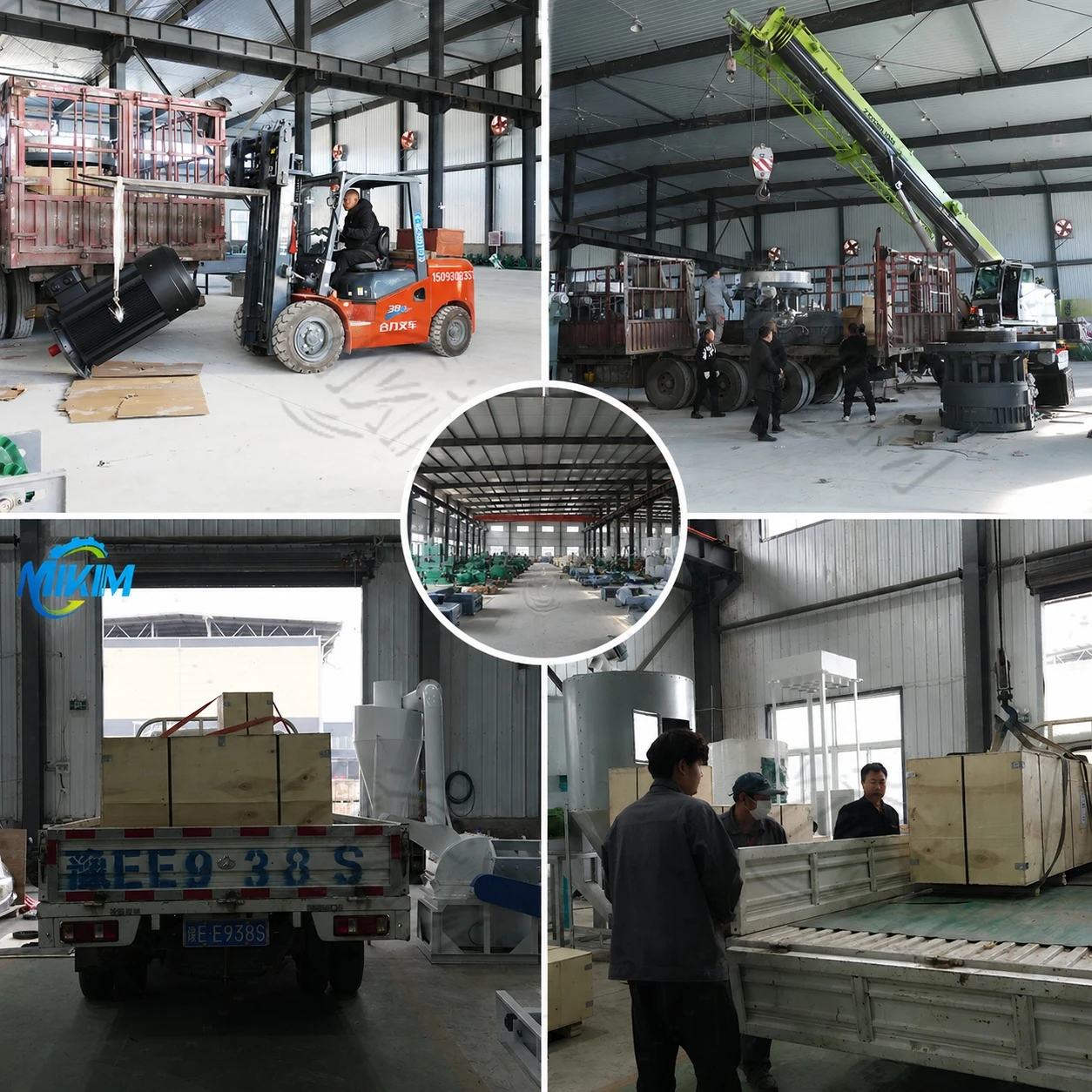
Packing and Shipping
Certificate of Honor

Hot Tags: wood chip briquette molding machine, China wood chip briquette molding machine manufacturers, suppliers, factory, Multifunction Briquette Machine, biomass briquettes machine for waste fans, High quality briquetting machine, Briquette press, biomass briquettes machine with manual control, Sawdust Briquette Making Machine
You Might Also Like


Send Inquiry
