

Products


0.25-4T/H Sawdust Biomass Fuel Briquette (Piston Press Stamping Biomass Briquette Press 、screw Type Briquette Machine)
Pellet Size:50-100mm
Main Powe:Customized
MOQ: 1 set
Lead time (days): 7-15
ODM/OEM: Available
Installation:Factory guidance available
Features
Types of Biomass Biofuel Briquette Press Machines
We offer two high-efficiency biomass briquette machines: the Screw Type Rice Husk Wood Sawdust Straw Biomass Briquette Machines and the Piston Stamping Biomass Pellet Briquette Making Machine.
Charcoal briquette press machine
Capacity: 1-4T/H
Raw material: All kinds of coal powder,charcoal powder,biomass materials.It can be coal powder, charcoal powder, coke powder, carbon black powder, brown coal, many mineral powder, etc.
Pellet diameter: 50-100mm
Type: screw type briquette machine
Raw material Moisture:>20%
Motor: Electric
Binder Requirement:Yes
Customizable machine: Yes
Available shape:cylindrical, plum blossom, four ribbed, six arrises, granular, strip, solid hollow etc.
Finished products: carbon rods, coal briquettes, etc.
WhatsApp:+86 136 7305 0773
Email:wood@mikimz.com
Our charcoal briquette extruder machine price typically ranges from $1,500 to $8,500, depending on the configuration, capacity, and level of automation.
24 hours to reply to technical inquiries
Wood briquette press machine
Capacity: 200-350 kg/h
Raw material: bamboo, wood, fruit shells, straw and other granular waste (length ≤5mm, diameter ≤3mm).
Pellet diameter: 50-100mm
Type: screw type briquette machine
Raw material Moisture:<10%
Binder Requirement:No
Customizable machine: Yes
Available shape: cylindrical, square, hexagonal, hollow quadrangular, pentagon, pentagon with edge, hexagon with edge.
Finished products: solid rod with a central hole(Surface carbonization).
WhatsApp:+86 136 7305 0773
Email: wood@mikimz.com
Our sawdust briquette maker machine price typically ranges from $1,500 to $8,500, depending on the configuration, capacity, and level of automation.
Sawdust Biomass Fuel Briquette Piston Press Machine
Capacity: 0.4-2.2 T/H
Raw material: Crop stalks, wood shavings, peanut shells, cattle manure, sheep manure, and other agricultural and forestry biomass waste.
Pellet diameter: 50-100mm
Type: Mechanical stamping briquette press
Raw material Moisture:12%-18%
Binder Requirement:Optional (binder may be used depending on raw material conditions)
Customizable machine: Yes
Available shape: Cylindrical
Finished products: Solid wood rod
WhatsApp:+86 136 7305 0773
Email: wood@mikimz.com
Our Cow Dung Briquette Making Machine machine price typically ranges from $10,500 to $250,500, depending on the configuration, capacity, and level of automation.
Technical Comparison: screw briquette extruder machine vs. Piston Stamping Press Biochar Briquettes Making Machine
| Feature | Screw-type Briquette Press | Mechanical Piston (Stamping) Press |
| Working Principle | Continuous screw extrusion with heating. | Reciprocating piston/ram high-pressure impact. |
| Final Product Shape | Hollow sticks (Pini-kay), usually hexagonal. | Solid cylinders or disks (pucks). |
| Briquette Density | Extremely high (1.2–1.4 g/cm³) with carbonized surface. | High (1.0–1.2 g/cm³), uniform density. |
| Binder/Heating | Requires Heating Rings to soften lignin. | No heating needed; relies on mechanical force. |
| Maintenance & Wear | High. Screw propeller needs repair every 30-80 hours. | Low. Die and piston last for 500-1000+ hours. |
| Production Scale | Small to Medium (150kg/h - 450kg/h per unit). | Large-scale (500kg/h - 3000kg/h per unit). |
| Primary End Use | Premium BBQ Charcoal (after carbonization). | Industrial Boiler Fuel or home heating. |
| Raw Material Size | Must be fine sawdust (< 5mm). | Can handle larger chips and diverse biomass. |
| Moisture Requirement | Strict (<10%). | Flexible (12%-18%). |
Technical Comparison: wood charcoal briquette press machine vs. charcoal rod making machine
| Feature | Wood dust charcoal briquetting machine | Charcoal rod making machine |
| Raw Material | Raw Biomass (Sawdust, rice husk, wood chips). | Carbonized Powder (Charcoal/coal dust, carbon black). |
| Carbonization Order | Briquetting FIRST, then carbonizing. | Carbonizing FIRST, then briquetting. |
| Binder Requirement | No Binder. Uses natural lignin in wood. | Requires Binder (e.g., starch, liquid binder). |
| Heating System | Equipped with Heating Rings (250-350°C). | No Heating System (Cold extrusion). |
| Final Product | Biomass Briquettes (Pini-Kay logs). | Finished Charcoal Rods (BBQ or industrial sticks). |
| End Product Usage | Needs carbonization to become charcoal. | Ready to use after drying. |
| Wear Parts | Screw propeller, heating rings, forming sleeve. | Screw propeller, mold (die). |
| Market Value | Industrial fuel or raw material for charcoal. | Direct-to-consumer BBQ charcoal or industrial coal. |
How to Choose the Right Biomass Briquette Manufacturing Machine for Your Needs?
1. Product Quality and Market Value
The choice between technologies depends heavily on the intended market application of the biomass fuel:
⑴ Screw Press (Pini-Kay Briquettes): This technology utilizes an external heating system to achieve lignin plasticization, creating a semi-charred, high-density surface. The resulting "Pini-Kay" briquettes are characterized by a hollow center, which increases the surface area for efficient combustion. Due to their high density and water-resistant surface, these are the industry standard for premium BBQ charcoal production post-carbonization.This is the only choice if your goal is to produce high-end charcoal for the BBQ market.
⑵ Piston Press (Solid Industrial Logs): Mechanical stamping relies on high-pressure impact without external heat, producing solid cylindrical logs. These are primarily positioned as a renewable coal substitute for industrial boilers and power plants. While they lack the charred protective layer of Pini-Kay sticks, they offer a high calorific-to-volume ratio suitable for bulk thermal energy.The Piston Press produces solid logs mainly used as a direct replacement for coal in industrial boilers.
2. Operational Costs and Expertise
Maintenance Intensity (Screw Type): The screw propeller is a high-wear component due to constant friction and heat. From an operational standpoint, this requires a maintenance-heavy approach, involving regular "hard-facing" welding to restore the screw's geometry every 40–80 operating hours. This technology necessitates on-site technical expertise in welding and metal surfacing.
Automation and Reliability (Piston Type): In contrast, the piston press follows a "heavy-duty industrial" logic. The mechanical components (die and ram) have a significantly longer service life, often exceeding 500–1,000 hours before requiring attention. This reduces downtime and labor costs, making it a more reliable solution for automated, 24/7 industrial production lines.
3. Scalability
⑴ Small-to-Medium EnterpriseEntry: The screw briquette extruder machine offers a low entry barrier , making it ideal for decentralized production or small-scale waste recycling projects where initial investment is a primary constraint.
⑵ Industrial Scalability: For large-scale operations (e.g., >5 tons per hour), the piston press biomass briquette extruder machine is the more economically viable option. Despite the higher initial CAPEX, its lower OPEX, reduced labor dependency, and massive throughput capacity provide a faster payback period in high-volume industrial energy markets.
Contact us to help you choose the right briquette machine
Specifications of the biomass briquette making machine
Honey Comb Charcoal Briquettes Machine

| Product Name | Model | Dimensions (LWH mm) | Weight (kg) | Power (kW) | Capacity (t/h) |
| Coal Briquette Machine | Model 140 | 1950 * 1260 * 1080 | 650 | 11 | 1 - 2 |
| Coal Briquette Machine | Model 160 | 2150 * 1260 * 1080 | 720 | 15 | 1 - 2 |
| Coal Briquette Machine | Model 180 | 2320 * 1600 * 1150 | 1260 | 22 | 2 - 4 |
application of the coal dust briquetting machine
- BBQ & Grilling:Premium Briquette Charcoal: Especially the Hexagonal Charcoal Sticks (Pini-kay type), which dominate the high-end BBQ markets in Southeast Asia, the Middle East, and China.
- Shisha/Hookah Charcoal: Specific small-bore extruders are used to produce Finger Charcoal (slender rods) preferred for shisha smoking.
- Industrial Fuel:Boiler Fuel: Efficiently convert coal fines or coke breeze into extruded coal rods to replace expensive lump coal, significantly reducing fuel costs and improving combustion efficiency.
- Chemical/Fertilizer Plant Feedstock: High-density coal rods serve as an ideal substitute for lump coal in gasification processes.
- Home Heating:Eco-friendly Fireplace Fuel: Used as a clean, long-burning substitute for traditional wood or coal in modern fireplaces and heating stoves.
Finished product:

Wood Waste Charcoal Briquette Making Machine

|
Model |
BC-50 |
BC-80 |
|
Briquette Diameter |
50mm |
80mm |
|
Capacity |
200-250 kg/h |
300-350kg/h |
|
Power (kw) |
18.5kw |
22kw |
|
Weight kg |
550 kg |
700kg |
|
Dimension mm |
1800*600*1600mm |
1800*700*1600mm |
|
raw material Moisture |
5%-12% |
5%-12% |
application of the wood shavings charcoal briquette maker machine
1. High-End BBQ Charcoal Production (Primary Application)
The most common and profitable use of a wood briquette machine is as the essential first step in making machine-made charcoal.
2. Residential Home Heating (Fireplace Logs)
In regions like Europe and North America, the raw (uncarbonized) briquettes are sold directly to consumers as premium fireplace logs.
3. Industrial Boiler and Furnace Fuel
For factories looking to reduce their carbon footprint, wood briquettes serve as a high-density coal substitute.
Boiler Co-firing: Many industrial boilers in the textile, food processing, and paper industries use these briquettes. Their uniform shape allows for automated feeding systems, reducing labor costs compared to using loose wood chips.
Consistent Burn: The density of the briquettes (1.2–1.4 g/cm³) ensures a steady, intense heat that is easier to regulate than raw biomass waste.
4. Feedstock for Gasification Plants
Modern biomass gasification power plants require feedstock with consistent density and moisture levels to produce syngas efficiently.
Optimized Gasification: Wood briquettes provide the structural integrity needed in downdraft gasifiers to prevent clogging, ensuring a continuous and clean gas output for electricity generation.
Finished product:

Automatic Hydraulic Piston Press Big Capacity Wood Briquette Machine

| Parameters | FTZBJ-800 | FTZBJ-1500 | FTZBJ-2500 |
| Main Motor Power | 22.0 kW | 45 kW | 55 / 75 kW |
| Feeding Screw Power | Ø180*4000 (2.2 kW) | Ø180*4000 (2.2 kW) | Ø219*5000 (3.0 kW) |
| Force Feeder Power | 1.1 kW | 1.5 kW | 1.5 kW |
| Lubrication Pump Power | 0.75 kW | 1.1 kW | 1.1 kW |
| Discharge Rack Length | 3 m | 3 m | 3 m |
| Raw Material Size | 1 - 10 mm | 1 - 10 mm | 1 - 10 mm |
| Raw Material Moisture | 12% - 18% | 12% - 18% | 12% - 18% |
| Capacity | 0.4 - 0.8 t/h | 1.0 - 1.5 t/h | 1.5 - 2.2 t/h |
| Dimensions (LWH) | 450034002800 mm | 588539703070 mm | 724140673072 mm |
| Machine Weight | 3.0 tons | 4.0 tons | 6.5 tons |
| Briquette Diameter | Ø50 - Ø60 mm | Ø60 - Ø80 mm | Ø80 - Ø100 mm |
| Briquette Density | 0.7 - 1.3 g/cm³ | 0.7 - 1.3 g/cm³ | 0.7 - 1.3 g/cm³ |
| Calorific Value | 3000 - 5500 kcal | 3000 - 5500 kcal | 3000 - 5500 kcal |
application of the biomass brick press machine
- Industrial Coal Substitute: Its most significant use is producing solid biomass logs to replace fossil fuels in industrial boilers, kilns, and furnaces. This provides a carbon-neutral energy source for textile, paper, and food processing plants.
- Power Plant Co-firing: Energy utilities utilize stamping presses to convert diverse agricultural residues-such as wheat straw, corn stalks, and cotton stalks-into high-density fuel "pucks" for co-firing, helping meet national renewable energy mandates.
- Municipal District Heating: It serves as the core equipment for large-scale heating hubs, transforming bulky forest waste and bark into uniform, energy-dense logs for municipal heating systems.
Finished product:


FAQ
Q1: Can I use a coal dust briquetting machine to process raw sawdust?
A: No. A charcoal stick-making machine is a "cold extrusion" machine designed specifically for pre-carbonized powder and requires a binder to form shapes. Raw sawdust contains lignin that must be "plasticized" by the high-temperature heating rings found only in a screw-type wood briquette machine. If you have raw sawdust, you must use a wood briquette machine; if you have charcoal dust, you use an extruder.
Q2: What is the ideal moisture content for biomass briquetting?
A: The "Golden Zone" for moisture is 8% to 12% for screw-type wood dust charcoal briquetting machines and 10% to 15% for piston stamping Biomass Rod Brick Press Machine.
- If too wet: You will experience "steam explosions" and cracked briquettes.
- If too dry: The briquettes will not bond properly, resulting in a low-density product that crumbles easily.
Q3: Why does the screw propeller of a briquette machine wear out so fast?
A: The screw propeller is a high-wear part because it endures extreme friction and temperatures (up to 350°C). In industrial operations, a propeller typically requires hard-facing welding (repair) every 30 to 80 hours of operation. To maximize lifespan, we recommend using high-manganese alloy electrodes for the tip and ensuring your raw material is free of sand or metal contaminants.
Q4: Which machine is better for making premium BBQ charcoal: screw-type wood briquette press machine or piston stamping Briquette Making Machine Biomass?
A: The screw-type wood shavings briquette maker machine is the undisputed choice for premium BBQ charcoal. It produces a hollow-center briquette (Pini-Kay). This hollow core is critical during the carbonization process as it allows for uniform heat distribution, resulting in a charcoal stick that burns longer, hotter, and without sparking compared to solid piston-pressed logs.
Q5: Do I need to add a binder when using a charcoal briquette extruder machine?
A: Yes. Unlike wood briquette machines that use natural wood lignin, Coal Powder Briquette Stick Making Machine has no natural bonding agents. You must add a binder-typically 3% to 5% corn starch mixed with water-to create the necessary plasticity for extrusion. For industrial coal rods, chemical binders or lime may also be used depending on the end-use requirements.
Q6: What are the main advantages of a Stamping Biomass Briquette Press over a Screw Press?
A: The Mechanical Piston Stamping Press is designed for industrial scale and low maintenance.
- Capacity: It can produce up to 2,000-3,000 kg/h , whereas screw presses are usually limited to 300-450 kg/h .
- Durability: The piston dies last for hundreds of hours, significantly reducing labor costs and downtime for repairs.
- Versatility: It can process coarser materials (up to 15-20mm), while screw presses require fine sawdust (<5mm).
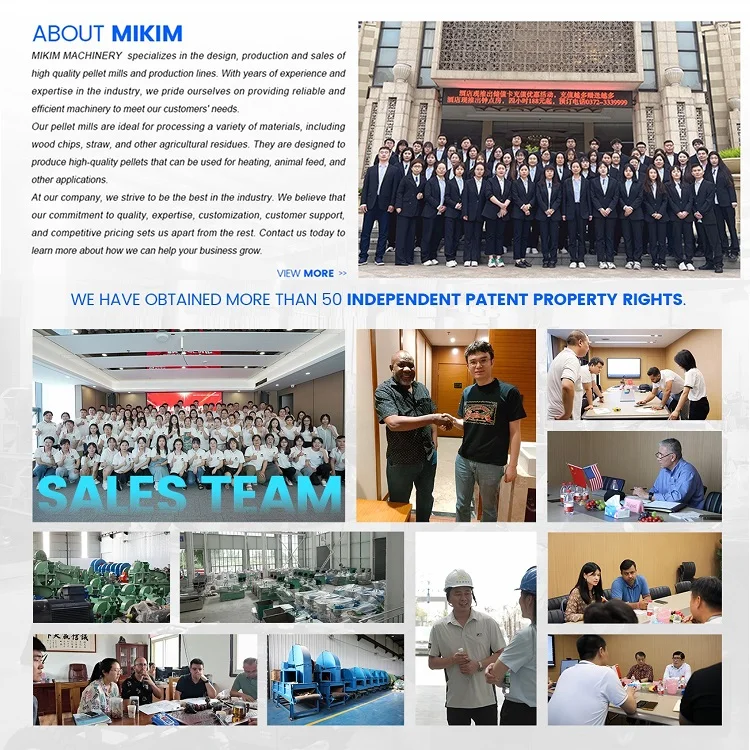
Our factory
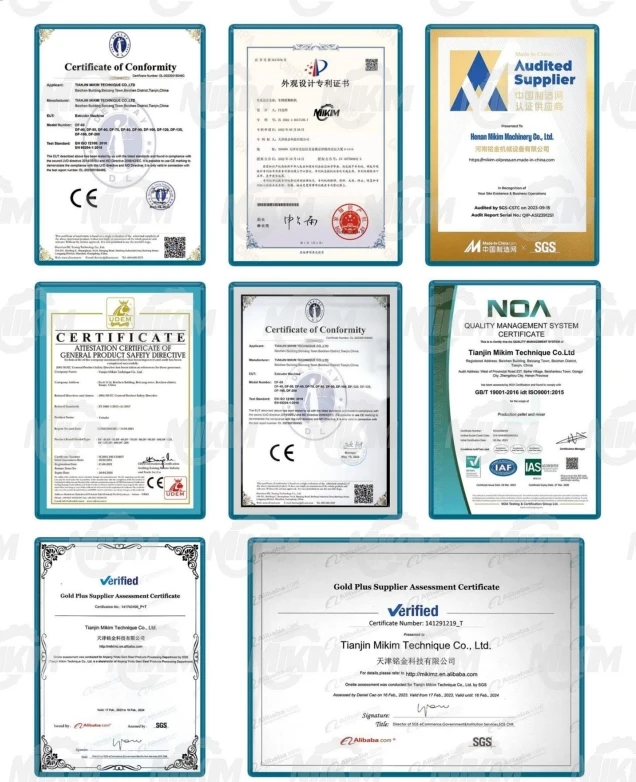
Company Profile

Packaging and shipping


Hot Tags: 0.25-4t/h sawdust biomass fuel briquette (piston press stamping biomass briquette press 、screw type briquette machine), China 0.25-4t/h sawdust biomass fuel briquette (piston press stamping biomass briquette press 、screw type briquette machine) manufacturers, suppliers, factory, biomass briquettes machine for waste batteries, biomass briquettes machine with weighing device, customized biomass briquettes machine, Firewood briquetting machine, mechanical stamping briquetting plant, Peanut shell briquetting machine
No Information
You Might Also Like


Send Inquiry
