

Products


Wood Stove Pellet Making Machine
Production Capacity: 80–1000 kg/h
Pellet Diameter: 6-8 mm (Customizable)
Power: 7.5–55 kW
Voltage: 220V / 380V / 450V (Customizable)
Frequency: 50 Hz / 60 Hz (Customizable)
Suitable Raw Materials: Wood sawdust, pine sawdust, bamboo shavings, peanut shells, rice husks, straw, and other biomass materials.
Features
Products Description
The Wood Stove Pellet Making Machine, also known as a rotary-roller pellet machine, uses a stationary flat die rather than a rotating die. The main shaft drives two rollers that revolve around the center while simultaneously rotating on their own axes. This motion generates high pressure, compressing the raw materials and forcing them through the die holes. It also ensures even material distribution, resulting in consistent pellet quality and stable production.
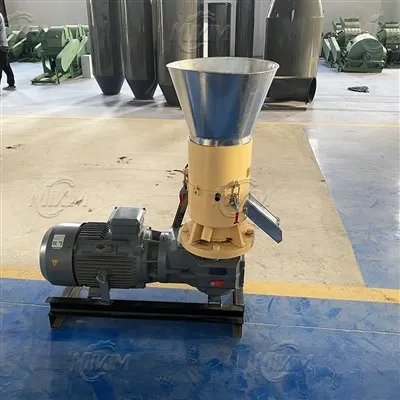

small home use wood pellet maker machine for sale
Our wood stove pellet machine (BH-Series) is specifically engineered for homeowners, small workshops, and small farms. Whether you are looking to lower your winter heating costs or find a sustainable way to recycle wood waste, this compact pellet mill offers an industrial-grade solution in a portable package.
Designed for efficiency, this machine compresses loose sawdust and wood shavings into consistent, high-calorific 6mm or 8mm pellets that meet the strict requirements of modern wood-burning stoves.
How Does a wood stove pellet-making machine Work?
The rotary roller pellet mill operates by combining mechanical compression with frictional heat. Raw materials are fed vertically into the pelletizing chamber, where rotating rollers driven by the main shaft press against a stationary flat die. The resulting high pressure forces biomass materials, such as sawdust, straw, and wood shavings, through the die holes.
During pelletizing, friction between the rollers and the die raises the material temperature to approximately 80–100°C. This heat softens the natural lignin in the wood, allowing it to act as a natural binder that holds the fibers together without the need for chemical additives. As the material exits the die, adjustable cutting knives cut it into uniform lengths, producing dense, durable pellets ready for cooling, packaging, and use.
wood stove pellet-making machine test in our factory
I am interested in this product
rotary-roller Small Pellet Mill for Sales


Roller & Die of the Wood Pellet Machine
Wood chip pellet machine Technical Data
| Model | Capacity (kg/h) | Power (kW) | Packing Size (mm) | Packing Weight (kg) | Remarks |
| 230 | 80 - 100 | 7.5 | 1080 * 550 * 1130 | 300 | No oil pump or electric control |
| 250 | 100 - 200 | 15 | 1120 * 440 * 1060 | 400 | Incl. oil pump, no electric control |
| 300 | 200 - 300 | 22 | 1280 * 560 * 1220 | 800 | Incl. oil pump & electric control |
| 350 | 300 - 400 | 30 | 1300 * 530 * 1220 | 900 | Incl. oil pump & electric control |
| 400 | 400 - 600 | 37 | 1390 * 650 * 1290 | 1000 | Incl. oil pump & electric control |
| 450 | 600 - 800 | 45 | 1620 * 700 * 1600 | 1500 | Incl. oil pump & electric control |
| 550 | 700 - 1000 | 55 | 1700 * 700 * 1600 | 1800 | Incl. oil pump & electric control |
wood stove pellet-making machine features:
- The rotating roller pellet mill features a stationary flat die and rotating rollers driven by the main shaft. As the rollers rotate, they compress the feedstock and force it through the die holes, producing dense, uniform wood pellets.
- It is particularly suitable for processing hardwoods such as cypress, elm, hickory, oak, lignum vitae, and birch.
- Compared with conventional designs, the rollers offer a service life of up to 2,000 hours, reducing maintenance costs and downtime.
- The machine operates with low noise and excellent vibration absorption for stable performance.
- Diesel-powered models are also available for areas with limited electricity.
- The number of rollers can be customized to suit different production capacity requirements.
- Optimized for standard 220V home outlets-no upgrades needed.
- High torque with a soft-start system to prevent tripping breakers.
Applicable Raw Materials for wood stove pellet making machine
Wide Range of Applications: Suitable for processing a variety of lignocellulosic biomass materials, including peanut shells, sugarcane bagasse, castor shells, rice straw, sawdust, spent coffee grounds, rice husks, sunflower seed shells, cotton stalks, tobacco waste, mustard stalks, bamboo, jute waste, tea residue, wheat straw, palm shells, bean husks, coconut shells, wood scraps, and other agricultural and forestry residues.


How Much Can You Save with a Home use Sawdust Pellet Machine?
Heating a typical home for one winter requires approximately 5 tons of wood pellets. Let's look at the "Winter Savings" comparison:
| Cost Comparison | Buying Retail Pellets | DIY with Mikim Pellet Mill |
| Raw Material Cost | Included in price | $0 (Using waste/residue) |
| Operational Costs (Power/Parts) | Included in price | $50 per ton |
| Average Price per Ton | $350 | $50 |
| Total Winter Cost (5 Tons) | $1,750 | $250 |
| TOTAL ANNUAL SAVINGS | - | $1,500 |
Conclusion: With an annual saving of $1,500, your Mikim Pellet Mill pays for itself in just one heating season. Beyond the financial gain, you achieve true energy independence and a guaranteed fuel supply.
How to Correctly Shut Down a Wood Pellet Machine: A Step-by-Step Guide
Wood pellet machine is a mechanical equipment for processing wood pellets. In order to ensure the normal operation of the equipment and extend its service life, there are many aspects that need to be paid attention to. Shutdown is one of the important aspects that requires our attention. So, how to shut down the wood pellet machine correctly? First of all, we need to know that the shutdown sequence is opposite to the startup sequence, and shut down the relevant equipment from front to back according to the process flow. When the level indicator at the bottom of the pelletizing bin shows no material, open the manual feeding door of the pelletizer and observe the material flow at the inlet.
Secondly, when the material flow is significantly reduced, let the cooler manually discharge the material to increase the return material flow, so that the material flow at the pelletizer inlet increases to ensure the pelletizing quality. At this time, pay attention to whether the return material pipe is blocked. If the return material pipe is blocked, stop the manual discharge of the cooler and open the return material. If the return material pipe is not blocked, wait and observe the feeding situation at the inlet.
After discharging the material in the return pipe, wait for a few minutes, and then discharge the material in the cooler. This will keep only a small amount of return material in the return pipe, which can reduce pollution to the next production.
In addition, stop the steam or water supply and stop the cooler discharge, turn off the feeder and conditioner, and then use oily materials, bran or soybeans to clean the ring die, and then turn off the pelletizer main motor.
FAQ
Q1: What is the most critical factor for making a durable pellet?
A: Moisture control is critica. Your material must be between 12% and 15% moisture. If it's too dry, the pellets won't bind; if it's too wet, they will explode into steam as they exit the die. A simple hand-held moisture meter is your best friend.
Q2: Do I need to add any glue or chemicals to hold the pellets together?
A: No. Our machines generate enough natural heat and pressure to melt the lignin (a natural binder) inside the wood. This lignin acts as a natural glue, creating a glossy, professional finish without any toxic additives.
Q3: Can the machine run on my standard garage power outlet?
A: Yes! Our Home use Sawdust Pellet maker Machines (MK-120 and MK-150) are specifically engineered for 220V single-phase electricity. They are "plug-and-play," meaning you can use your existing household power without expensive electrical upgrades.
Q4: How much maintenance does a Home use Sawdust Pellet making Machine require?
A: Maintenance is simple: grease the roller bearings every 8 hours of use and check the gearbox oil level regularly. Our alloy steel dies are designed for durability, typically lasting for 800–1,000 hours of production before needing replacement.
Q5: Will DIY pellets damage my expensive pellet stove?
A: Actually, they can be safer. By making your own, you ensure there are no hidden plastics, glues, or high-silica sand in your fuel. As long as your pellets are dense and low-moisture, your stove will burn cleaner and more efficiently.
Ready to Start Saving on Heating Costs?
Tell us your material and power requirements, and we will prepare a complete ROI analysis and machine quotation for your home or farm pellet project. Let's build your energy independence today.
Or email wood@mikimz.com · WhatsApp +86 199 1372 6062
Our Factory


Packaging & Shipping

Quality Certificate

Hot Tags: wood stove pellet making machine, China wood stove pellet making machine manufacturers, suppliers, factory, flat die wood pellet machine, biomass pelletizer for capacity, pellet making machine for pellet stove, pelletizer for wood pellet size control, pellet press for biomass pellet safety, pellet mill for sawdust
You Might Also Like


Send Inquiry
