


What Is The Energy-saving And Emission-reduction Effect Of The Biomass Pellet Production Line?
Biomass pellet production line
Biomass pellet machines compress wood chips, rice husks, and other materials into high-density fuel, improving combustion efficiency by 15%-20% and reducing carbon emissions by 10%-15%. Combining environmental and economic benefits, they are a key technology for energy transition.
With growing energy demand and increasing attention to environmental protection, biomass energy is becoming a crucial component of sustainable development. Biomass pellet production lines, which convert various biomass feedstocks into high-density pellets that are easy to store and transport, offer the potential for energy conservation and emission reduction.
The entire production line includes raw material preparation, pelletizing, drying, cooling, screening, and packaging.


The core operating principle of the biomass pellet fuel production line is to compress different types of biomass raw materials, such as sawdust, rice husks, and corn cobs, into dense, small pellets through mechanical pressure. During this process, the high temperature and high pressure within the equipment remove moisture and impurities from the raw materials, while a certain degree of pyrolysis reaction occurs, forming pellets with a certain degree of cohesion.

| Model | Power | Mold Hole | Capacity for industrial solid | Capacity for biomass | Pellet size(mm) |
| MKYK-36 | 45kw | 36 | 0.5-1.0 | 1.0-1.5 | 32*32*50-100 |
| MKYK-48 | 75kw | 48 | 1.0-1.5 | 1.5-2.5 | 32*32*50-100 |
| MKYK-72 | 110kw | 72 | 2.0-2.5 | 2.5-3.5 | 32*32*50-100 |
| MKYK-90 | 132kw | 90 | 2.0-2.5 | 3.5-5.0 | 32*32*50-100 |
| MKYK-120 | 200kw | 120 | 3.0-4.0 | 4.0-6.0 | 32*32*50-100 |
| MKYK-150 | 250kw | 150 | 4.0-6.0 | 6.0-10.0 | 32*32*50-100 |
Specific manifestations of energy conservation and emission reduction
In terms of energy conservation, the use of biomass pellet machines can effectively reduce energy waste. Traditional biomass utilization methods mostly rely on direct combustion, which has problems such as low energy efficiency and large fuel loss. However, the use of pelletization technology improves the combustion efficiency of pellet fuel, increases the heat energy conversion rate generated during the combustion process, and significantly reduces overall energy consumption.
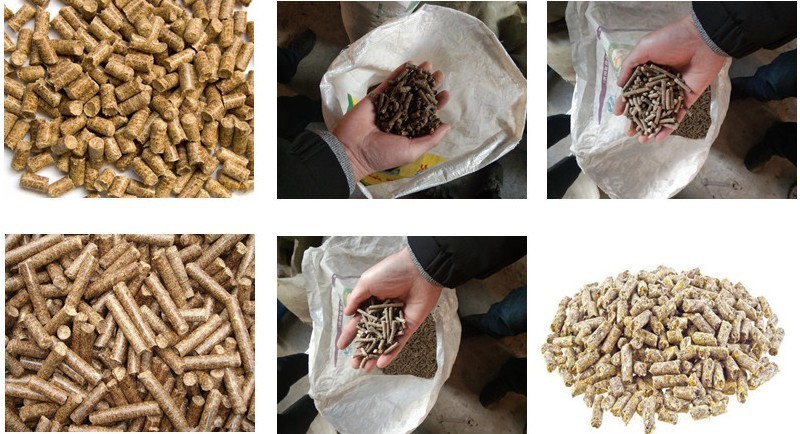
Finished product display
Effect evaluation in practical applications
Companies using biomass pellet fuel have seen significant energy cost savings, with energy efficiency increasing by approximately 15% to 20%. Carbon dioxide emissions are 10% to 15% lower than those from traditional coal-fired equipment.
By optimizing energy efficiency and reducing pollutant emissions, biomass pellet production lines provide practical technical support for achieving green development.
For more information on process design, equipment layout, plant construction plan, single machine equipment quotation, turnkey quotation, etc., please feel free to contact us.
Factory equipment photos and certificates of honor


