What Is the Structure of a wood stove pellet making machine?
🧠 Quick Answer
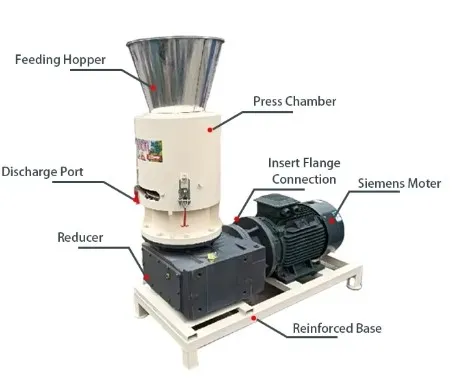
A wood stove pellet maker machine mainly consists of a feeding system, conditioner (optional), pelletizing chamber (die and rollers), transmission system, motor, lubrication system, and discharge system. These components work together to compress biomass materials into high-density pellets through pressure and heat.
Straw Pellet Mill Internal Structure – Real Photos
🔍 Why Understanding wooddust pellet making machine Structure Matters?
Many production issues are not caused by raw materials, but by misunderstanding the machine structure.
Common problems include:
- Low pellet quality
- Frequent machine failure
- High maintenance costs
- Unstable production
👉 Knowing how each part functions helps operators optimize performance and troubleshoot effectively.
⚙️ Main Structure of a wood fuel pellet making machine
🧩 1. Feeding System (Raw Material Input)
The feeding system is the entry point of the machine:
- Includes hopper and feeder
- Controls material flow into the pelletizing chamber
- Ensures stable and continuous feeding
👉 Stable feeding = stable production
🔄 2. Conditioner (Optional but Important)
In advanced systems, a conditioner is used to:
- Adjust moisture content
- Preheat materials
- Improve pellet bonding
👉 Especially useful for difficult materials like straw or biomass waste.
🔩 3. Pelletizing Chamber (Core Component)
This is the heart of the machine, including:
✔ Die (Ring Die or Flat Die)
Determines pellet size
Controls compression ratio
✔ Rollers
Apply pressure to compress material into pellets
👉 This is where raw material becomes solid biomass pellets.
⚙️ 4. Transmission System
The transmission system transfers power from the motor:
- Gearbox or belt drive
- Ensures stable rotation of die and rollers
👉 A stable transmission system = consistent output
⚡ 5. Motor (Power Source)
The motor provides the energy required for pelletizing:
- Electric motor (most common)
- Diesel engine (for off-grid use)
👉 Power stability directly affects production efficiency.
🛢️ 6. Lubrication System
This system reduces wear and extends machine lifespan:
- Supplies oil to bearings and moving parts
- Prevents overheating and damage
👉 Proper lubrication = longer machine life
📤 7. Discharge System
After pellet formation:
- Pellets are cut and discharged
- Cooling may be required afterward
👉 Ensures smooth output and pellet integrity
★ Explore the Straw Pellet Making Machine
🔄 How These Components Work Together
- The working process follows a clear sequence:
- Raw materials enter through the feeding system
- Materials are conditioned (optional)
- Rollers compress material through the die
- Heat and pressure form pellets
- Pellets are discharged
👉 This integrated system ensures efficient and continuous production.
📊 ring model biomass granulator vs flat model biomass granulator Structure Comparison
| Component | ring model biomass granulator | flat model biomass granulator |
|---|---|---|
| Structure complexity | High | Simple |
| Pressure level | High | Medium |
| Production capacity | Large scale | Small scale |
| Suitable materials | Wide range | Limited |
🌍 Real Application Insight
A biomass plant improved production efficiency after upgrading from a Flat die biomass fuel Pellet making Machine to a ring die system:
- Output increased by 40%
- Pellet density improved significantly
- Maintenance frequency reduced
👉 The upgrade in machine structure directly improved performance.
🧠 Key Takeaways
- A Wood Chip Pellet maker Machine includes feeding, pelletizing, power, and discharge systems
- The die and rollers are the most critical components
- Proper structure ensures stable production and high pellet quality
- Advanced systems include conditioning and lubrication for better performance
❓ FAQ:
❓ What are the main parts of a wood pellet processing equipment?
The main parts include the feeding system, die and rollers, motor, transmission system, lubrication system, and discharge system.
❓ Which part is most important in a wood stove pellet making machine?
The pelletizing chamber (die and rollers) is the most critical component for pellet formation.
❓ What is the difference between ring die wood pelletize machine and Flat die sawdust pellet mill structure?
Ring die machines have a more complex structure with higher pressure and capacity, while flat die machines are simpler and suitable for small-scale use.
❓ Does a wood biomass pellet mill need a conditioner?
Not always, but a conditioner improves pellet quality and is recommended for difficult materials.
❓ How does the structure affect pellet quality?
A well-designed structure ensures proper compression, stable feeding, and consistent pellet formation.
🚀 Final Conclusion
Understanding the structure of a biomass pellet maker machine is the foundation for achieving efficient production, high-quality pellets, and long equipment lifespan. Each component plays a critical role, and optimizing their coordination is key to successful biomass pellet production.
For more details, please contact us 👉 Contact us for more details
Company Profile