


How To Choose The Right Model For A biomass sawdust pellet machine?
Methods to increase production capacity
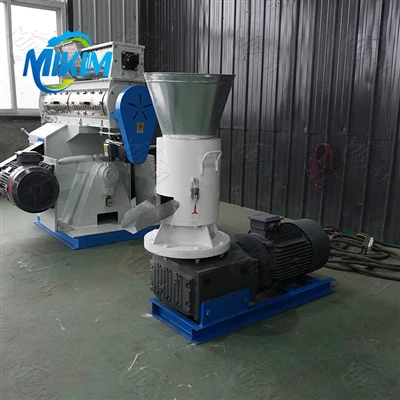
First, clarify the capacity classification standards. Within the industry, biomass pellet machines are typically divided into three categories based on hourly output: small machines (0.2-1 ton/hour), medium machines (1-5 tons/hour), and large machines (5 tons/hour and above). The core configurations and applicable scenarios differ significantly between these different capacity models. Let's first consider small-scale household/farm scenarios. If the capacity requirement is 0.2-0.5 tons/hour, mainly for home heating or livestock heating, a small flat-die biomass pellet machine is the preferred choice. The advantages of this type of machine are its small size, small footprint (approximately 2-3 square meters), simple operation, low investment cost (10,000-30,000 RMB), and strong adaptability to raw materials, processing both wood chips and straw. Important Note: The motor power of small machines is generally 15-22kW. It is necessary to confirm whether your home power grid load can match, and to choose a model with overload protection to avoid raw material blockage leading to motor burnout.
For small and medium-sized workshops/cooperatives with a capacity requirement of 0.8-3 tons/hour for mass production of pellet fuel for external sale, a medium-sized ring die biomass pellet machine is recommended. Compared to flat die machines, ring die machines offer advantages such as stable capacity, high forming rate (≥95%), and low energy consumption (10-15 kWh less per ton of pellets), making them more suitable for large-scale production. Key parameters to consider: motor power of 37-75 kW, die diameter selected according to requirements (6-8 mm for residential heating, 8-10 mm for industrial boilers). It is recommended to choose a model with interchangeable die holes to improve raw material adaptability.
Finally, for large-scale factories with a capacity requirement of 5 tons/hour or more for large-scale industrial production, a large sawdust pellet making machine is necessary, or even multiple production lines in parallel. These types of machines have higher core configuration requirements: they employ dual-motor drives with a power output of 110-250kW, equipped with an intelligent control system that enables automated feeding, temperature control, and discharging, reducing manual intervention; the molds and pressure rollers use high-strength, wear-resistant materials (such as Cr12MoV) to extend the service life of vulnerable parts and reduce maintenance costs. Important considerations: Large machines have high requirements for site conditions and voltage stability, necessitating the planning of a dedicated production workshop (≥50㎡) equipped with voltage stabilizers and professional dust removal and cooling equipment; it is also crucial to choose a manufacturer with comprehensive after-sales service to ensure timely repair of equipment malfunctions and minimize production downtime.
Key reminders: When selecting a machine model, reserve 10%-20% capacity redundancy to avoid insufficient capacity due to increased orders or changes in raw material characteristics; do not blindly pursue large capacity, but rather make a comprehensive judgment based on your own financial strength and sales channels to ensure equipment utilization and reduce investment risk.
Related equipment


about us
Customer visit

Certificate of Honor

FAQ
1.What is the price of equipment for the homemade sawdust pellet machine?
It costs approximately US$1,500.00 - 25,000.00
2. If equipments have some quality problem, how would you deal with?
We will responsible for all the quality problems. Change all the parts for free.


