


Differences in Application Scene Between small flat die wood pellet making machine and ring die Wood pellet machine
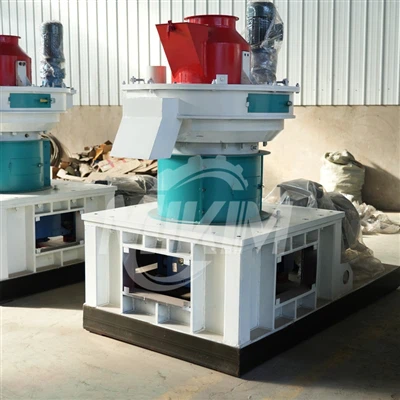
In large-scale feed production, ring die wood pellet making machines are the preferred equipment. Large feed mills typically have a daily capacity of over 10 tons, requiring high stability and uniformity in pellet quality. The high capacity, low energy consumption, and continuous operation of ring die machines meet the needs of large-scale feed production. For example, a large beef cattle feed mill uses three 160kW ring die wood pellet machines, achieving a daily capacity of 60 tons. The produced feed pellets have uniform density, good palatability, and a pass rate exceeding 98%. Furthermore, ring die machines can produce pellets of various sizes (3-10mm) by changing the ring die with different apertures, adapting to the feed needs of different livestock such as cattle, pigs, and chickens, offering high flexibility.
In biomass energy processing, where high calorific value and density of pellets are required, small ring die wood pellet making machines are also more advantageous. Biomass energy companies need to process large quantities of raw materials such as sawdust and straw to produce high-density energy pellets (density ≥ 1.1g/cm³). Ring die equipment offers high compression pressure, extruding raw materials into high-density pellets with a calorific value exceeding 4500 kcal/kg and high combustion efficiency. A biomass power plant uses ring die equipment to process wood pellets, with an annual processing capacity of 50,000 tons. The pellet combustion efficiency is 15% higher than that produced by flat die equipment, resulting in significant annual coal savings. Small flat die wood pellet making machines produce energy pellets with lower density (typically 0.9-1.0 g/cm³) and a calorific value below 4200 kcal/kg, suitable only for small-scale heating users.
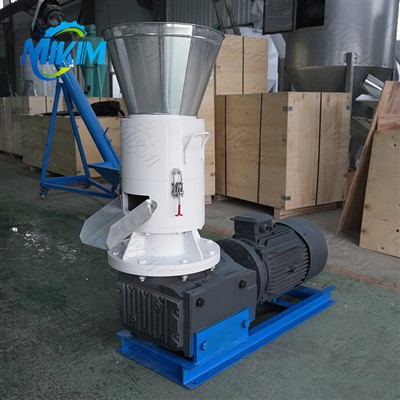
For small-scale processing households and rural cooperatives, flat die wood pellet machines are a better choice. These users have small production scales, typically less than 1 ton per day, and their production is often intermittent. They also have lower requirements for equipment price and maintenance difficulty. Flat die equipment costs only 50%-60% of the price of ring die equipment of the same power, has a simpler structure, and operators can master maintenance methods with simple training. A rural cooperative uses a 30kW flat die wood pellet machine to process local corn stalks into feed pellets, with a daily capacity of 0.5 tons. This meets its own livestock needs while also selling a small amount externally. The equipment investment can be recovered in six months.
Special raw material processing scenarios also require equipment selection based on the characteristics of the raw materials. For raw materials with high fiber content (such as straw and reeds), the forced feeding system and multi-pressure roller structure of ring die equipment can prevent raw materials from tangling and achieve higher pressing efficiency. For hard raw materials (such as hardwood chips), the high pressing pressure of ring die equipment ensures pellet formation, while small flat die wood pellet machines are prone to pellet loosening. For small-batch, diverse raw material processing (such as small pet food and specialty livestock feed), flat die equipment is more advantageous due to its easy disassembly and low die replacement costs. Furthermore, mobile production scenarios (such as straw processing in the fields) are suitable for small, mobile flat die equipment, which is small in size and lightweight, facilitating transportation and movement; while large-scale production in fixed factory buildings is suitable for large ring die equipment to improve production efficiency.
Related equipment


about us
Customer visit

Certificate of Honor

FAQ
1.What is the price of equipment for a Hay pellet machine?
It costs approximately US$1,500.00 - 28,600.00
2. If equipments have some quality problem, how would you deal with?
We will responsible for all the quality problems. Change all the parts for free.
If you don't how to choose the right hay pellet mill, need flat die type or need ring die type. Just tell us your requirements, budget and more detailed information, our professional experts will help you to choose a hay pellet machine that suits you most.


