


What Are the Differences Between ring die Wood pellet machine and Flat Die Pellet Mill?
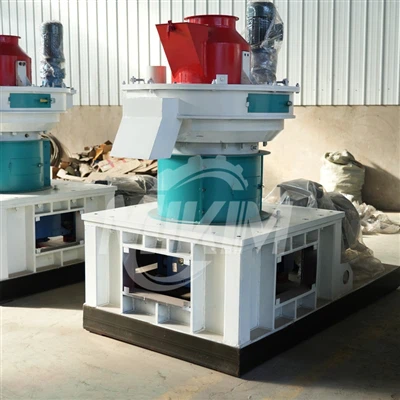
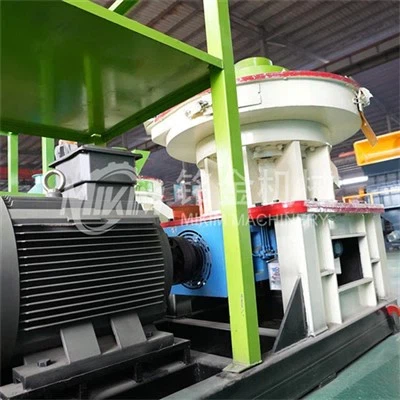
The ring die wood pellet mill boasts a significant capacity advantage, making it particularly suitable for large-scale production. Taking a common 110kW machine as an example, a ring die wood pellet mill can achieve an hourly capacity of 2-3 tons, and a daily capacity (based on 8 hours) of 16-24 tons; while a flat die wood pellet mill of the same power has an hourly capacity of only 0.8-1.2 tons and a daily capacity of less than 10 tons. This difference stems from the multiple pressure rollers and ring-shaped pressing structure of the ring die machine, resulting in a higher filling rate of raw material within the pressing chamber and more pressing cycles per unit time.
In terms of energy efficiency, the ring die wood pellet making machine has lower unit energy consumption, making it more economical. Processing 1 ton of wood pellets typically requires 80-100 kWh of energy from a ring die machine, while the energy consumption of a flat die machine is 100-120 kWh. This is because the pressing pressure of the ring die machine is more evenly distributed, resulting in less energy loss during the raw material forming process; whereas the pressure of the flat die machine is concentrated in a localized area, with some energy wasted on ineffective extrusion of the raw material.
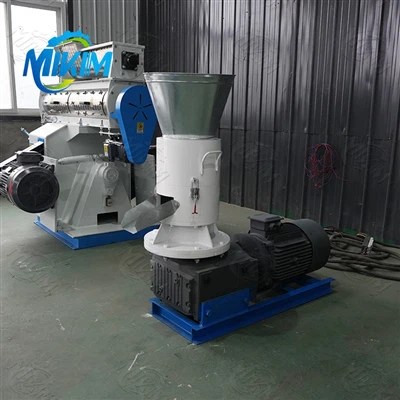
Continuous operating capacity is a key indicator in industrial production, and the continuous operating capacity of a small ring die wood pellet making machine is far superior to that of a flat die machine. The core components of a ring die machine are made of high-strength, wear-resistant materials, with the pressure roller and ring die having a service life of 2000-3000 hours. Its transmission system has a strong load-bearing capacity, enabling 24-hour continuous operation. In contrast, the core components of a small flat die wood pellet making machine wear out faster; the pressure roller and flat die have a service life of only 800-1200 hours, and the transmission system has poor stability. It needs to be shut down for cooling after 8-12 hours of continuous operation to prevent overheating and damage to components, resulting in equipment utilization of less than 60%.
The difference in capacity and efficiency also leads to different applicable scenarios. Ring die wood pellet machines are suitable for large-scale production users such as large feed mills and biomass energy companies, meeting batch production needs and reducing unit production costs. Flat die wood pellet mills are suitable for small-scale users such as small farms and rural cooperatives; although their capacity is lower, the equipment is cheaper, easier to maintain, and can meet intermittent production needs. When making a selection, users need to weigh capacity, efficiency, and cost based on their own production scale and capacity requirements to choose the most suitable type of equipment.
Related equipment

about us
Customer visit

Certificate of Honor

FAQ
1.What is the price of equipment for a biomass wood Pellet mill?
It costs approximately US$1,500.00 - 28,600.00
2. If equipments have some quality problem, how would you deal with?
We will responsible for all the quality problems. Change all the parts for free.
If you don't how to choose the right hay pellet mill, need flat die type or need ring die type. Just tell us your requirements, budget and more detailed information, our professional experts will help you to choose a hay pellet machine that suits you most.


