


What Is The Use Of Raw Materials in Biomass Pellet Production Lines?
| Model No. | Capacity(kg/h) | Power(kw) | Weight(t) |
| RKL-250 | 100-200 | 15 | 0.5 |
| RKL-300 | 150-250 | 22 | 0.65 |
| RKL-350 | 100-300 | 30 | 0.76 |
| RKL-400 | 300-600 | 37 | 2.2 |
| RKL-450 | 500-800 | 55 | 4.3 |
| RKL-550 | 1000-1500 | 90 | 5.5 |
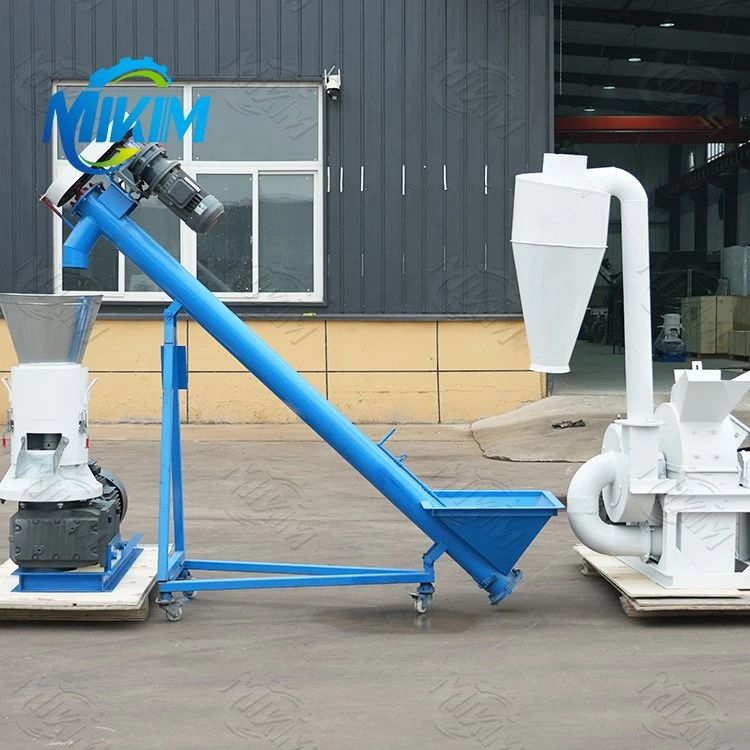
Biomass pellet production line has the advantages of sustainability, high efficiency, economy and broad application prospects. These advantages make the biomass pellet production line an energy production method with broad development prospects, which helps to promote sustainable development and environmental protection.The production line is suitable for the following materials: Wood chips, sawdust, bamboo chips, chippings, shavings, etc. Straw, stalks (e.g. corn stalks, roasted tobacco stalks), bean stalks, potato vines, peanut vines, rice husks, peanut shells, palm shells, corn cobs, etc.
Wood pellet fuel, produced by the wood pellet production line, is an alternative fuel suitable for current environmental needs. It releases the carbon stored in biomass through combustion. Because its acquisition process does not involve the mining of underground fossil fuels, it is regarded as a carbon-neutral energy source for use.
Wood pellet combustion can produce high calorific value, and the low water content after treatment and the uniform size of the particles processed by the mold ensure that efficient combustion and stable heat output can be maintained during use.


