


How To Standardize Operation Of Small Home Use Biomass Wood Pellet Mill ?
content
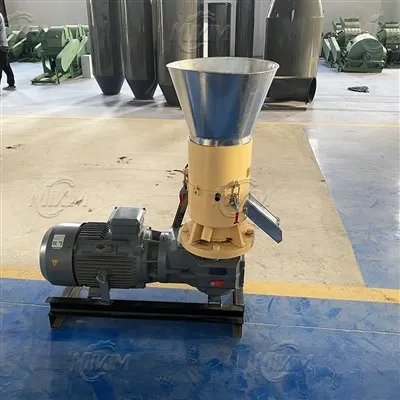
Standardized operation of small wood pellet makers can effectively reduce the impact of human factors on finished product quality. The core principle is to adhere to the rules of "inspection before startup, monitoring during production, and cleaning after shutdown." First, pre-start preparation is fundamental to avoiding production failures and ensuring finished product quality. Key operational points include: checking the gap between the pressure rollers and the die, the lubrication level, and the tightness of bolts to ensure normal equipment condition; cleaning residual raw materials from the equipment, especially clumps in the die holes to prevent blockages affecting molding; checking auxiliary equipment (crusher, dryer, screening machine) for proper function to ensure stable raw material pretreatment; and running the equipment idle for 3-5 minutes to preheat, observing for smooth operation and abnormal noise before feeding materials.
Standardized operation of the small biomass pellet making machine during production is crucial for improving finished product quality. Firstly, feeding must be uniform. Adjust the feeding speed via a frequency converter or manually to avoid overloading the equipment by adding too much material at once, or causing the equipment to idle due to insufficient feeding. Uneven feeding can lead to large fluctuations in finished product density and even loose pellets. Secondly, key indicators must be monitored in real time. During production, close attention must be paid to motor current, equipment temperature, and finished product status: excessive current indicates overfeeding, requiring immediate reduction of the feed rate; excessively high equipment temperature (above 90℃) can easily lead to raw material carbonization, necessitating accelerating the feed rate or stopping the machine for cooling; if the finished product is found to be loose or cracked, the raw material moisture content or pressure roller clearance must be checked promptly and adjusted accordingly. Thirdly, frequent machine starts and stops should be avoided. Frequent starts and stops can cause raw material to accumulate in the pressing chamber, affecting the molding effect and accelerating equipment wear, leading to fluctuations in finished product quality.
Post-shutdown cleaning is crucial for ensuring the quality of the next production run. After production, residual raw materials inside the electric wood pellet maker must be thoroughly cleaned: use a brush to clean residue from the feed inlet, pressing chamber, and discharge outlet; use a fine steel rod to unclog clumps in the die holes; clean residual raw materials from auxiliary equipment to prevent deterioration affecting future use; wipe the equipment surface with a clean cloth to keep the equipment clean. After cleaning, check the condition of vulnerable parts and record the results to prepare for the next production run.
Related equipment



| Model | Power | Mold Hole | Capacity for industrial solid | Capacity for biomass | Pellet size(mm) |
| MKYK-36 | 45kw | 36 | 0.5-1.0 | 1.0-1.5 | 32*32*50-100 |
| MKYK-48 | 75kw | 48 | 1.0-1.5 | 1.5-2.5 | 32*32*50-100 |
| MKYK-72 | 110kw | 72 | 2.0-2.5 | 2.5-3.5 | 32*32*50-100 |
| MKYK-90 | 132kw | 90 | 2.0-2.5 | 3.5-5.0 | 32*32*50-100 |
| MKYK-120 | 200kw | 120 | 3.0-4.0 | 4.0-6.0 | 32*32*50-100 |
| MKYK-150 | 250kw | 150 | 4.0-6.0 | 6.0-10.0 | 32*32*50-100 |
about us
customer visit

certificates of honor

certificates of honor

certificates of honor
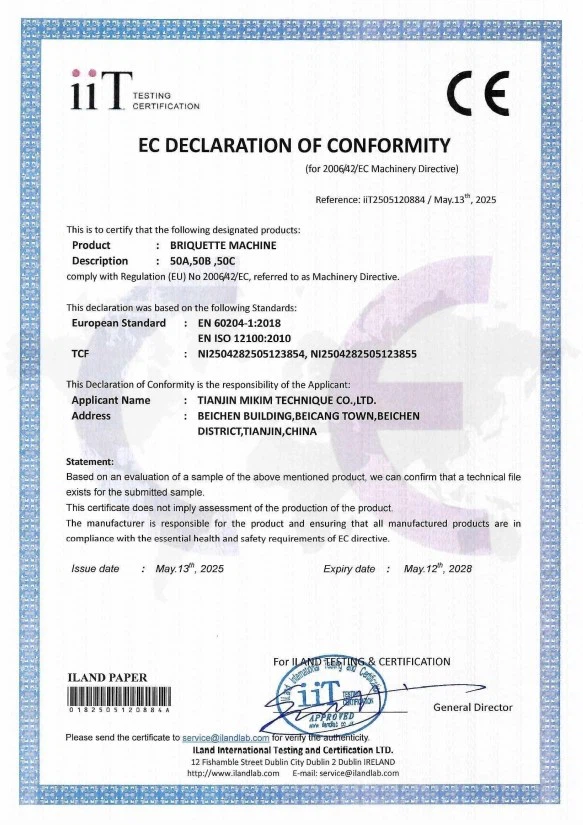
certificates of honor


