


What Economic Advantages Does Buying a small Wood pellet machine Bring to Feed Mills?
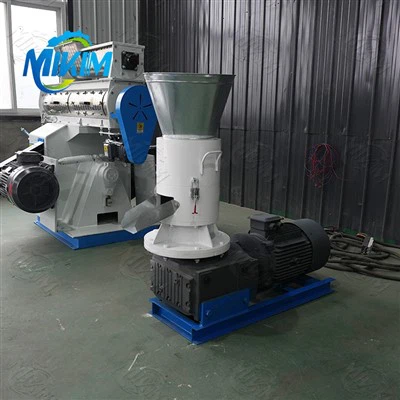
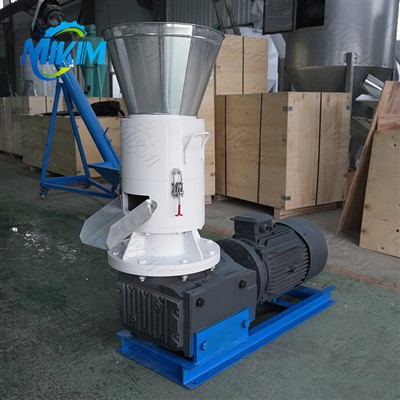
The most direct economic advantage of purchasing a biomass wood pellet machine is a significant reduction in raw material costs. Traditional feed production relies heavily on purchased finished raw materials, whose prices are highly susceptible to market fluctuations. Wood pellet machines, however, can transform agricultural waste such as corn stalks, wheat straw, and sawdust into high-quality feed ingredients. Rural areas in my country have abundant resources of these biomass raw materials, with procurement costs of only 200-400 yuan/ton, and in some areas even free, far lower than the 800-1200 yuan/ton price of purchased finished feed ingredients.
The increased production efficiency further amplifies economic benefits. Wood pellet machines employ an automated production process, achieving integrated processing of "crushing-mixing-forming," increasing efficiency by over 60% compared to traditional segmented production equipment. A single 55kW wood pellet machine can process 1.2-1.5 tons of feed pellets per hour, equivalent to the manual work of 15-20 workers, significantly reducing labor costs. Based on a monthly cost of 5000 yuan per person, this feed mill can save 900,000-1.2 million yuan in labor costs annually. Meanwhile, automated production reduces human error, increasing the yield rate of feed pellets from 85% in traditional production to 98%, reducing raw material waste and further compressing costs.
High-quality pelleted feed products can be sold at a premium, increasing overall profitability. Feed pellets processed by wood pellet machines have uniform density and precise nutrient ratios. Low-temperature pressing maximizes the retention of vitamins, proteins, and other nutrients in the raw materials, resulting in palatability and digestibility far superior to traditional powdered feed. One feed mill's straw pellet feed, due to its superior quality, commands a price 200 yuan/ton higher than traditional powdered feed, yet demand still exceeds supply. Furthermore, pelleted feed is easier to store and transport. Mold loss during storage is reduced from 10% to below 3% of traditional feed, and spillage loss during transportation is reduced from 8% to 2%, saving hundreds of thousands of yuan in losses annually.
In the long term, the low energy consumption of the Industrial wood pellet machine further reduces operating costs. Modern energy-saving wood pellet mills consume only 80-100 kWh of energy to process one ton of feed. Based on an industrial electricity price of 0.8 yuan/kWh, the energy cost per ton of feed is only 64-80 yuan. Compared to the 120-150 kWh/ton energy consumption of traditional equipment, this translates to tens of thousands of yuan in energy cost savings annually. Overall, purchasing a wood pellet mill can generate economic benefits from multiple aspects, including cost control, efficiency improvement, and product premium. Most medium-sized feed mills can recoup their equipment investment within 6-12 months.
Related equipment


about us
Customer visit

Certificate of Honor

FAQ
1.What is the price of equipment for a Hay pellet machine?
It costs approximately US$1,500.00 - 28,600.00
2. If equipments have some quality problem, how would you deal with?
We will responsible for all the quality problems. Change all the parts for free.


