


Step-by-Step Guide: How to Make Wood Pellets at Home with a Pellet Mill?
content
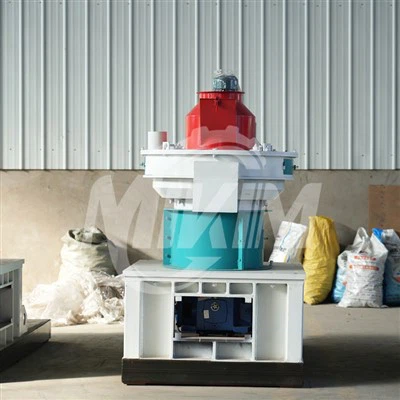
Step 1: Pre-start Preparation – This is crucial for preventing malfunctions. First, check the homemade sawdust pellet machine: Confirm the gap between the pressure roller and the flat die is 0.1-0.3mm (test by inserting a thin piece of paper into the gap; it should be able to be pulled but with resistance). A gap that is too large will not generate sufficient extrusion force, while a gap that is too small will cause dry grinding and wear. Check the lubrication level (ensure the pressure roller bearings and reducer have adequate oil levels). If the oil level is insufficient, add high-temperature grease promptly. Check that the safety guard is securely installed to prevent accidents during operation. Next, confirm that the raw material pretreatment is in place: moisture content 12%-15%, particle size 2-5mm, free of impurities. Place the pretreated raw material next to the feed hopper for easy addition.
Step 2: Preheating and Feeding – Turn on the power and start the motor. Let the machine idle for 3-5 minutes to preheat. Most biomass pellet making machines have one-button start and are easy to operate. During idle operation, observe the machine for any abnormal noise or vibration. Once confirmed to be normal, begin adding raw material at a uniform speed. Feeding Techniques: Initially, low-speed feeding is recommended. The feeding speed can be controlled via the adjusting baffle of the feed hopper to avoid excessive material buildup and blockage. Feeding should be done evenly. If slight blockage occurs at the feed inlet, gently clear it with a wooden stick. Never touch the inside of the feed inlet with your hands.
Step 3: Molding Observation and Parameter Fine-tuning. After entering the equipment, the raw material is compressed by the pressure rollers and flat die. Frictional heat softens and binds the lignin, eventually extruding it from the die holes and being cut into uniform granules by the cutter. During this process, two key aspects need to be observed: First, the granule forming state. If the granules are loose and crumble easily, the moisture content is too high or the extrusion pressure is insufficient. Reduce the feeding speed or fine-tune the gap between the pressure rollers and flat die (reduce it by about 0.05mm). If the granule surface is smooth and of moderate hardness, the parameters are appropriate. If the granule surface is black and has a burnt smell, the temperature is too high. Increase the feeding speed to prevent excessive frictional heat generation. Second, regarding the operation of a home-use pellet mill/wood pelletizer: If the motor current exceeds the rated value (as indicated in the equipment manual), it indicates overloading due to excessive feeding, and the feeding should be reduced immediately. If severe vibration occurs, it is highly likely that there are impurities in the raw material, and the machine should be stopped immediately for cleaning.
Fourth step: Finished product collection and natural cooling. The formed pellets fall naturally from the discharge port. Place a collection bag or box at the discharge port to collect the finished product directly. Home-use small machines have low capacity and do not require additional cooling equipment. Spread the collected pellets in a ventilated, dry place and allow them to cool naturally to room temperature for 2-4 hours. Cooling will further increase the hardness of the pellets, making them easier to store.
Step 5: Shutdown, Cleaning, and Maintenance. After production is complete, follow the procedure of "stop feeding first, then idle for 2-3 minutes, and finally shut down": First, stop adding raw materials and let the equipment idle for 2-3 minutes to process any remaining raw materials in the pressing chamber; then, turn off the motor power and disconnect the main power supply; finally, clean the machine: use a brush to clean the feed inlet, pressure rollers, and the surface of the die, and use a special tool (such as a thin steel rod) to unclog any blockages in the die holes, ensuring that there are no residues inside the small home use biomass wood Pellet mill. After cleaning, add a small amount of grease to the pressure roller bearings and cover them with a dust cover to prevent the equipment from getting damp and rusting.
Related equipment


about us
Customer visit

Certificate of Honor

FAQ
1.What is the price of equipment for the biofuel sawdust pellet machine?
It costs approximately US$1,500.00 - 25,000.00
2. If equipments have some quality problem, how would you deal with?
We will responsible for all the quality problems. Change all the parts for free.


