


How Does the Ring Die Pellet Mill for Wood Pellets Work?
content
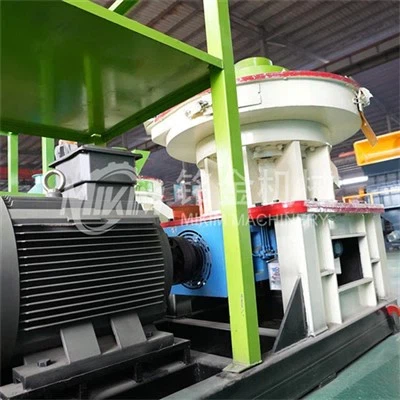
The core working principle of the small ring die wood pellet making machine remains "extrusion molding," but through a structural design of "ring die rotation + multi-pressure roller extrusion," it achieves higher production capacity and stability. The entire working process is divided into five core stages. The first stage is raw material conditioning and pretreatment, a key difference between ring die machines and flat die machines. After pretreatment, the wood pellets enter the equipment and first go into the conditioning unit. The stirring paddle in the conditioning unit thoroughly mixes the raw material with an appropriate amount of steam (or water), stabilizing the moisture content of the raw material at 13%-16%, while simultaneously raising the temperature to 80-95℃. Conditioning further softens the lignin, increases the viscosity of the raw material, and reduces wear on the die orifices, extending the equipment's lifespan.
The second stage is uniform material distribution and pre-pressing. The conditioned raw material enters the pressing chamber and is evenly distributed between the inner wall of the ring die and the pressure rollers by a rotating feed disc. Ring die presses typically feature 2-4 pressure rollers symmetrically distributed within the ring die. The rotational speed of the feed disc is precisely matched to the speeds of the ring die and pressure rollers, ensuring uniform force on each roller and sufficient raw material supply, preventing localized material accumulation or wear from idle rotation. During pre-compression, the raw material is initially compressed, expelling some air to prepare for subsequent high-pressure extrusion.
The third stage is high-pressure extrusion and deep densification. A motor drives the ring die to rotate at high speed (typically 20-50 rpm) via a gearbox. The pressure rollers rotate passively under the frictional force of the ring die, generating a powerful extrusion force (up to 15-25 MPa, significantly higher than that of flat die presses). Under high pressure, the lignin in the raw material softens considerably, and the voids between particles are completely eliminated, resulting in a substantial increase in density (up to 1.1-1.3 g/cm³). Simultaneously, the frictional heat generated during extrusion, combined with the temperature from the initial conditioning process, further enhances the viscosity of the raw material, ensuring firmly formed particles.
The fourth stage is die forming and continuous discharge in the ring die wood pellet making machine. Under high pressure, the raw material is forcibly pushed into the die holes on the inner wall of the ring die. The die holes are a through-hole design, and the raw material forms a continuous columnar shape within the die holes, which is then extruded from the outside of the ring die. Because the ring die rotates continuously, the raw material can continuously enter the die holes and be extruded, achieving continuous production. This is the core reason for the high capacity of the ring die machine. The extruded columnar shape is of uniform length, requiring no additional cutter (some models are equipped with cutters for fine-tuning the length according to requirements).
The fifth stage is finished product cooling and screening. The continuously extruded pellets are at a high temperature (80-100℃) and need to enter a matching cooler to be rapidly cooled to room temperature by cold air to prevent the pellets from absorbing moisture. After cooling, the pellets pass through a screening device to remove a small number of loose, cracked, and unqualified pellets, resulting in a high-quality finished product. The high efficiency of the ring die machine relies on the precise coordination of its core components. The ring die is made of high-strength, wear-resistant material with high die hole precision; the pressure roller surface undergoes special treatment for strong wear resistance; and the entire transmission system uses a hardened gearbox, ensuring high transmission efficiency and strong stability. Understanding its working principle allows for more efficient operation of the equipment, improving production efficiency and particle quality.
Related equipment


about us
Customer visit

Certificate of Honor

FAQ
1.What is the price of equipment for the ring die Biomass pellet machine?
It costs approximately US$1,500.00 - 25,000.00
2. If equipments have some quality problem, how would you deal with?
We will responsible for all the quality problems. Change all the parts for free.


