

Products


Complete 2 TPH Wood Briquette Production Line for Bio Fuel
Biomass briquette machine can save energy and reduce emissions, and has good economic and social benefits.
Features

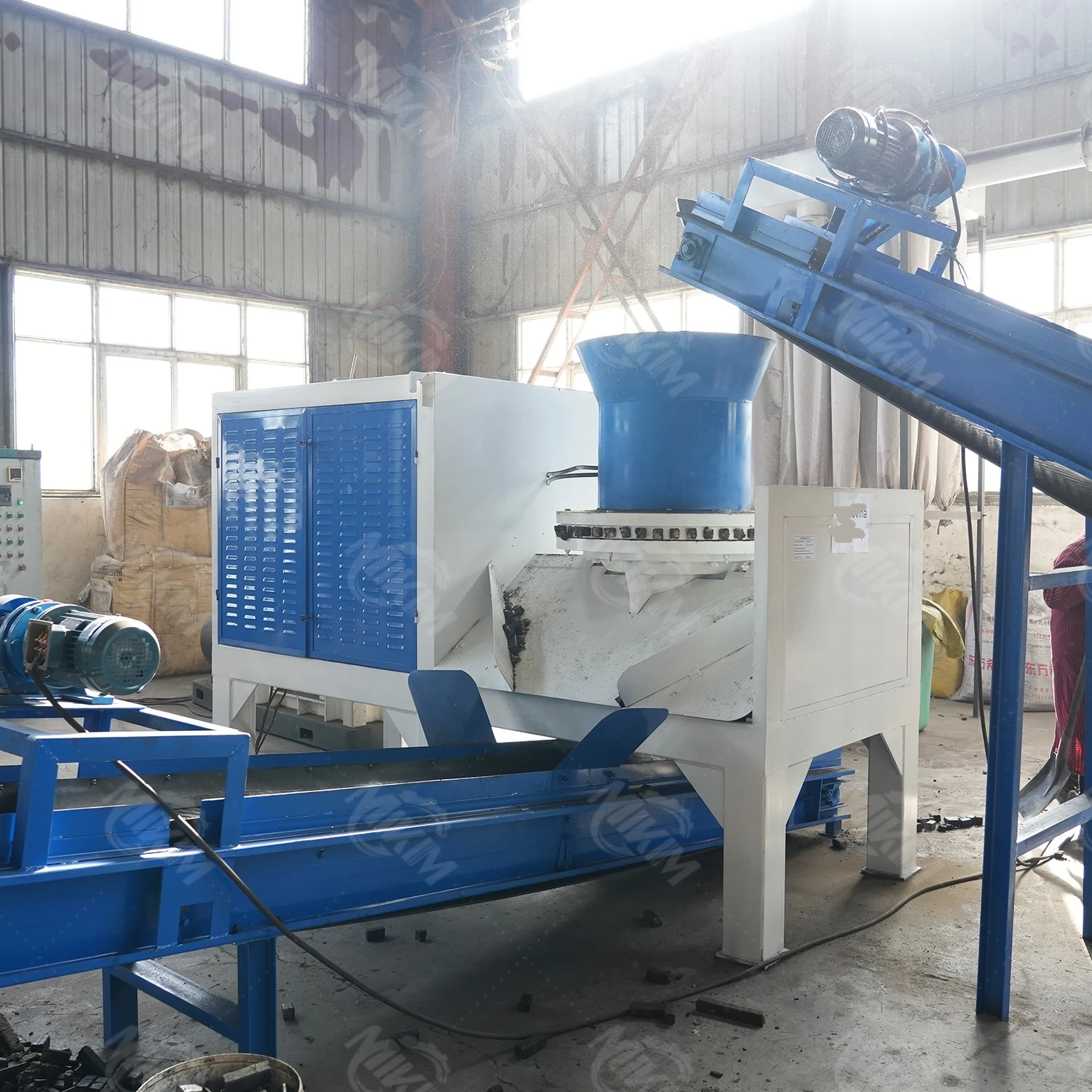
Briquetting press with the flat-laid ring die that feeds every mould evenly.

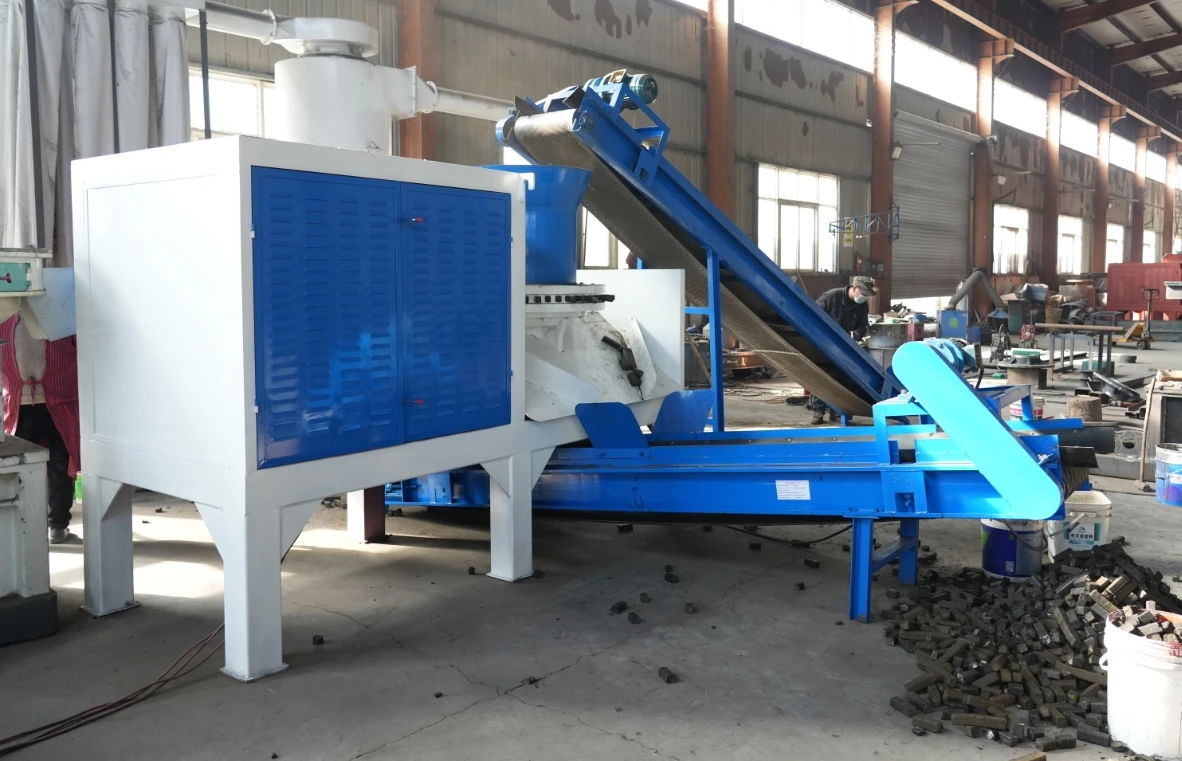
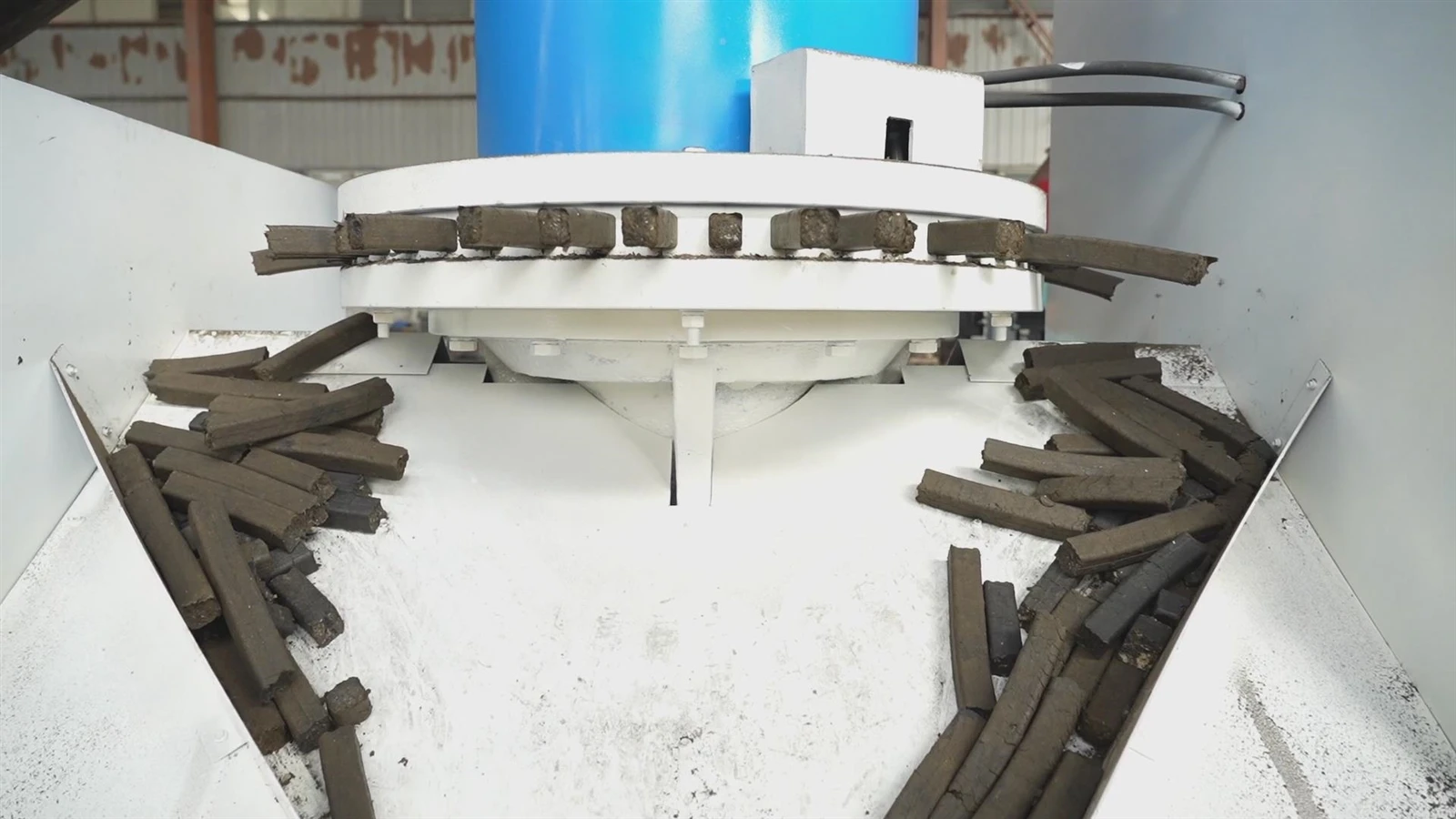
Discharge end of the press: formed rods leaving the die and the take-off conveyor.
01 What Is a Complete 2 TPH Wood Biomass Briquette Production Line?
A complete wood briquette production line takes loose forestry residue at rough moisture and delivers dense, uniform fuel rods ready to bag. The chipper sizes it, the mill grinds it, the dryer pulls the water out, and the press compresses what is left into a briquette with no binder.
At 2 TPH the plant is industrial rather than farm-scale. The bottleneck is almost never the press; it is drying. A press rated at two tonnes an hour only delivers that if the material reaching it is already at the right moisture, so the dryer is sized first and the press matched to it.
How the flat-lay ring mold press forms briquettes without binder
The press uses a flat-lay ring mold rather than a vertical ring. Laying the mold flat lets centrifugal force spread material evenly across every hole, so no zone is starved or overloaded, which prevents the localised clogging that stops other presses and lowers energy per tonne.
Bonding comes from pressure, friction and shear between mold and rollers, not from glue, giving a forming rate of effectively 100% with smooth discharge. The press runs either engine-style cooling to hold the mold disc temperature down, or a thermocouple to heat it quickly, so output stays steady across the shift.
Why biomass briquettes are called green coal
Compressed biomass burns like coal without its problems. The briquette carries no sulphur or phosphorus, so it burns without smoke or odour and produces no SO2 or P2O5, with CO2 emissions near zero. That is where the "green coal" name comes from.
Compression also shrinks the material to roughly a quarter of its loose volume, so the same truck carries more energy and the same shed holds more stock - useful for a fuel stored through a season.
02Which MKYK Briquetting Machine Reaches 2 TPH, and What Are Its Specs?
| Model | Power (kW) | Mold holes | Capacity, biomass (t/h) | Capacity, industrial solid (t/h) | Pellet size |
|---|---|---|---|---|---|
| --- | --- | --- | --- | --- | --- |
| MKYK-360 | 55 | 36 | 1.0-1.5 | 0.5-1.0 | 32*32*50-100 mm |
| MKYK-480 | 75 | 48 | 1.5-2.5 | 1.0-1.5 | 32*32*50-100 mm |
| MKYK-720 | 110 | 72 | 2.5-3.5 | 2.0-2.5 | 32*32*50-100 mm |
| MKYK-900 | 132 | 90 | 3.5-5.0 | 2.5-3.0 | 32*32*50-100 mm |
| MKYK-1200 | 200 | 120 | 4.0-6.0 | 3.0-4.0 | 32*32*50-100 mm |
| MKYK-1500 | 250 | 150 | 6.0-10.0 | 4.0-6.0 | 32*32*50-100 mm |
For a 2 TPH target the 480-mold press is the anchor: 75 kW, 48 mold holes and a 1.5-2.5 t/h biomass rating, which places 2 tonnes per hour inside its band rather than at its ceiling. The 720-mold unit at 110 kW and 2.5-3.5 t/h is the headroom option, the right choice if the plant expects to grow, if the material is harder to press, or if you want a second press for redundancy.
Note the two capacity columns. The biomass column is for forestry and agricultural residue; the industrial solid column is lower because denser waste such as paper-mill plastic or garment offcuts presses more slowly. On a mixed feed, plan the waste share on the industrial solid column. The wood briquette pressing equipment page covers the press family.
03Can the Line Guarantee 2,000 kg/h of Finished Wood Briquettes?
The 480-mold press is rated 1.5-2.5 t/h on biomass, so 2,000 kg/h sits inside the rated band and is a fair target for a well-fed line. We will not call that a flat guarantee on any material, because a finished-product figure depends on three things the press cannot control.
The first is moisture: the press needs material inside its working band, and wet feed will not hold the rate whatever the motor says. The second is the material: soft sawdust presses easily, while shavings and chips need consistent milling to feed evenly. The third is the line around the press: if drying or conveying cannot keep up, the press runs starved and tonnage falls to whatever the front end delivers.
Here is the position: the catalogued biomass rating for the 480-mold press is 1.5-2.5 t/h, and 2,000 kg/h of finished briquettes is achievable on a forestry residue mix once the material is dried into the press's working band. We confirm the guaranteed finished figure for your specific mix in the offer, against the moisture you can actually deliver. For certainty at 2 TPH on a difficult mix from day one, the 720-mold press gives the reserve.
Send us your material mix and moisture figures and we will state the guaranteed finished tonnage for your line.
04Can You Make 30 mm x 150 mm Cylindrical Briquettes on Standard Tooling?
Standard tooling produces a briquette with a 32 x 32 mm section and a length of 50-100 mm. A 30 mm round briquette at 150 mm long is not a standard specification. We would rather tell you now than ship a press that cannot hold it.
Reference: ISO 17225-3 graded wood briquettes
A round 30 mm die is a custom item, and a 150 mm length needs the cutting and setting worked out for that product. Both are possible, but as a bespoke configuration rather than a catalogue option: the mold must be made to the 30 mm round profile, and the forming and cutting parameters confirmed against your material before the die is built. A standard machine from the catalogue cannot produce a 30 mm by 150 mm briquette.
If the 30 mm round size is fixed by your market or your boiler, the practical route is to send the exact finished specification with a sample of your material, and we confirm the custom die and the setting parameters as a defined part of the offer. If the size can flex, the standard 32 x 32 mm section at 50-100 mm length is a proven product with tooling on the shelf and a shorter lead time.
05Drying 40% Inlet Moisture Forestry Residue: Dryer Sizing and Evaporation
Residue arriving at roughly 40% moisture cannot go straight to the press: it must be dried into the working band first. That makes the dryer the sizing decision for the whole line, and it is where a 2 TPH plant stands or falls.
| Model | Power | Curves | Dimensions (m) | Reference Price (RMB) |
|---|---|---|---|---|
| 219 Airflow Dryer | 4 kW | 2-curve | 7.5 × 1.5 × 3.0 | 7,000 |
| 325 Airflow Dryer | 7.5 kW | 3-curve | 13.0 × 1.5 × 3.5 | 10,000 |
| 400 Airflow Dryer | 7.5 kW | 4-curve | 17.0 × 1.5 × 3.5 | 17,000 |
On evaporation: what matters is kilograms of water removed per hour, and that is not a fixed number per dryer model. It is calculated from your inlet moisture, required outlet moisture and throughput, so we size the dryer from your figures rather than a headline rate. What is fixed and quotable is the equipment data: layer count, heating type, heater and air-circulation power for the box unit, drive motor power, and steam pressure for the steam units. The offer states the evaporation duty for the matched dryer.
On the moisture itself: the press works a defined incoming band, and drying from about 40% down into that band is the dryer's job. The offer states the maximum inlet moisture the line accepts, the guaranteed outlet moisture and the matching heat source, so the drying duty is a number you can hold us to.
06What Does the Complete Line Scope Include, From Chipper to PLC?
The line is supplied as a scope, not as a press with optional extras. The order is not arbitrary: each stage feeds the next at a steady rate, and because the dryer sets how much dried material the press can receive, drying fixes the tonnage the line can hold. Below is the sequence and what each stage does.
| Stage | Equipment | Job |
|---|---|---|
| --- | --- | --- |
| 1 | feeding system | delivers residue to the line at a controlled rate |
| 2 | chipper and crusher | reduces chips and shavings to a workable size |
| 3 | hammer mill | grinds to a consistent particle size |
| 4 | magnetic separator | removes tramp metal before the press |
| 5 | conveyors, screw conveyors and elevators | move material between stages |
| 6 | industrial dryer for 40% inlet | dries residue into the press's working band |
| 7 | cyclones and bag filters | dust collection and air cleaning |
| 8 | hoppers and silos with dosing | buffers and meters feed to the press |
| 9 | briquetting press | forms the briquette under pressure |
| 10 | cooling | stabilises the hot briquette |
| 11 | automatic cut-length control | holds the finished briquette length |
| 12 | finished-product conveyors and packing | takes out and bags the product |
| 13 | main electrical cabinet and PLC | controls and sequences the line |
| 14 | safety, emergency stop and fire and explosion protection | protects operators and plant |
The RDF briquetting production line page shows how the same stages are configured when the feedstock is industrial solid waste rather than forestry residue, and the RDF briquetting machine covers the press itself.
For the front end, an industrial wood chipper is the usual first reduction stage, and a biomass rod brick press machine is the press family this line is built around.
07Which Raw Materials Suit an Industrial Wood Briquette Line?
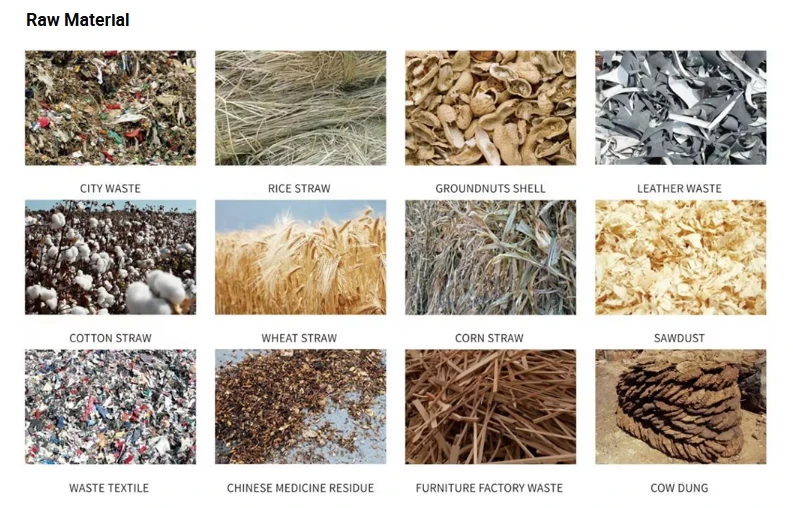
The line is built around forestry residue, but the press family handles a wider range of agricultural and industrial feedstock.
| Feedstock group | Materials | Why this group is hard to press |
|---|---|---|
| --- | --- | --- |
| Forestry residue | wood sawdust, wood shavings and chips | sawdust presses easily, but shavings and chips must be milled to a consistent size first |
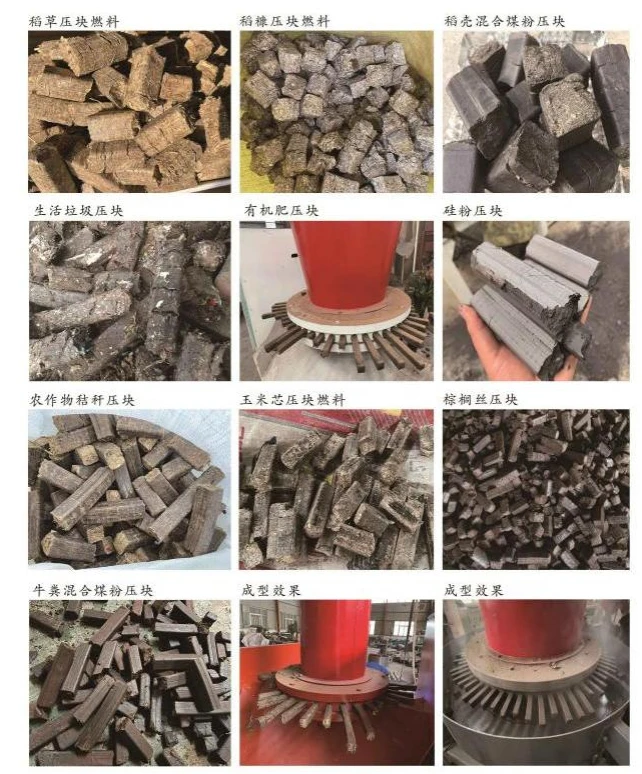
| Straw | maize straw, wheat straw, rice straw | seasonal, so storage moisture varies and the feed is checked before pressing |
| Husks, shells and stalks | rice husk, peanut shell, cotton stalk, cattle and sheep manure | abrasive or coarse, so expect faster die wear, a robust chipper stage and drying before pressing |
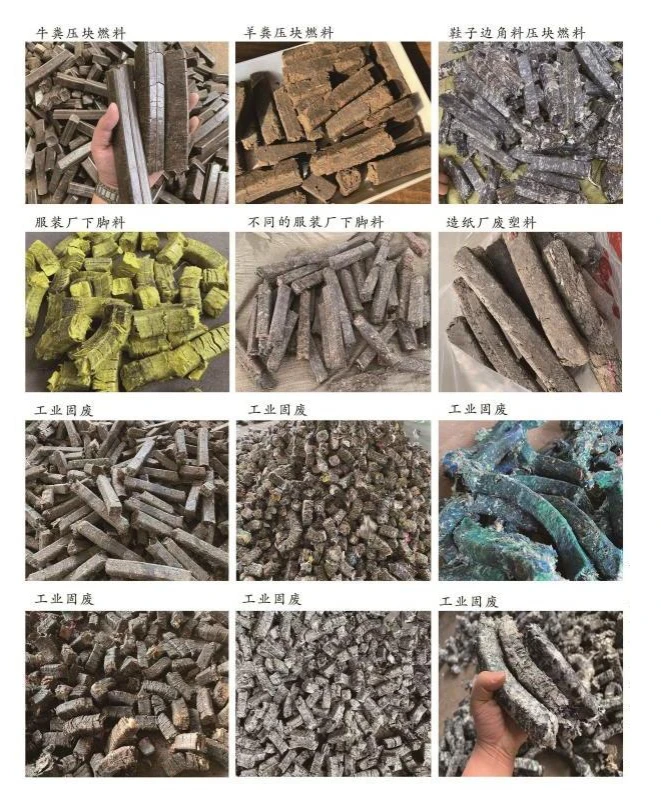
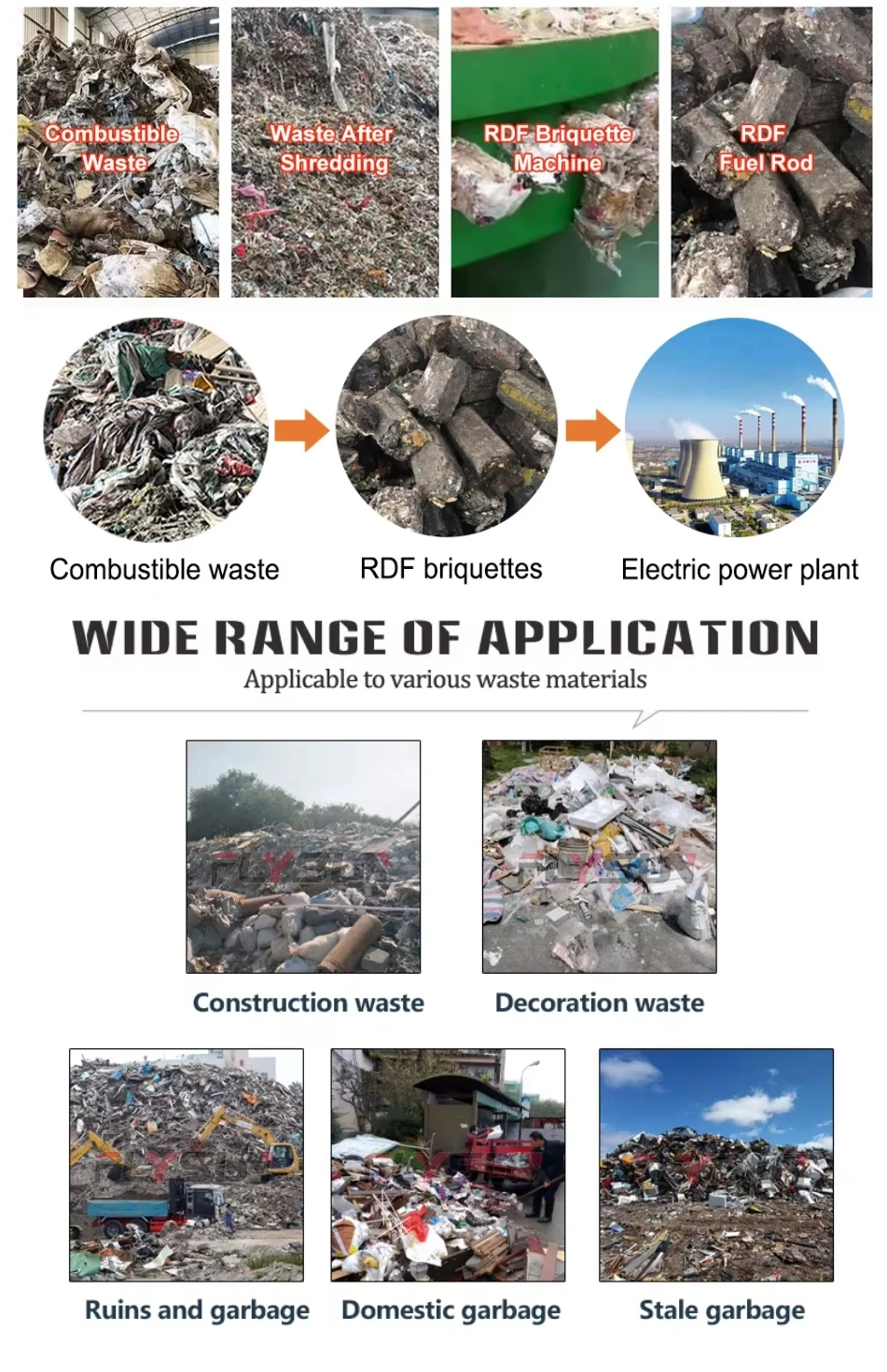
| Industrial solid waste | paper-mill waste plastic, garment offcuts | denser than biomass, so it presses more slowly and yields the RDF rod |
Preparation is the same whatever the material. Residue is shredded and crushed to a length between about 10 mm and 100 mm, and held at a moisture between about 15% and 30% before pressing. Material outside that band either will not bond or will clog, so the chipper, mill and dryer bring the feed into that window. A biomass straw briquette machine covers the straw side, and the wider biomass briquette machine range shows how the straw and wood variants differ.
08Where Biomass Briquettes Are Used: Boilers, RDF Rods and Coal Replacement
The main outlet is combustion. Briquettes feed industrial boilers, replacement burners and district heat plants, where low moisture and easy air control give a high combustion efficiency that can stand in for town gas. They ignite more readily than coal and burn without the smoke and odour of sulphur.
Industrial solid waste presses to a different product: the RDF fuel rod, used where the plant needs a consistent, dense solid. Because the same press forms both, a plant that starts on forestry residue can add a waste stream later without replacing the machine.
Safety and storage round out the case against coal. The briquette contains none of the explosive chemistry of coal, so it carries none of its poisoning, explosion or leakage risks, and high-temperature compression cuts storage and transport volume sharply. Where a plant also wants a carbonised product, a sawdust charcoal making line covers that route.
09Dust Collection, Fire and Explosion Protection and Chile Environmental Rules
Wood dust is a recognised explosion hazard, and an industrial briquetting line has to be designed around that from the first drawing. We follow the recognised dust-hazard approach of minimising accumulation, controlling ignition sources, providing explosion venting where the hazard analysis calls for it, and bonding and grounding conductive equipment so static cannot become the spark.
Reference: NFPA 652 combustible dust standard
On emissions, the line includes cyclones and bag filters to capture particulate from drying, milling and conveying, and the dryer's combustion gases are handled separately from the process dust. The stack flow and temperature, recommended stack dimensions, dust-removal efficiency and expected noise level in dB(A) are stated in the offer for your configuration. They depend on the dryer and the fuel or heat source you choose.
On Chilean compliance: the offer addresses the particulate and combustion-emission rules that apply to your permit application, and lists any optional environmental equipment as a separate line. Where a certification document is required for import or permitting, we state exactly what is available for the specific machine. We do not list certificates we cannot supply.
10Plant Layout, Footprint and Civil Foundation Requirements
A 2 TPH briquette plant is laid out in a line, with an L-shape or double row used when the building is narrower than the ideal run. The sequence sets the layout: receiving, chipping and milling, drying, the press, then cooling, cutting and packing at the outlet.
The layout drawing supplied with the offer shows the overall length, width and height, each machine's position, the maintenance aisles, where the dryer and its heat source sit, where dust collection is placed, and the briquetting and finished-product areas. That drawing is what your builder works from, so it is issued before civil work begins rather than after the machines arrive.
Foundations are driven by the press: the heaviest, most dynamic machine in the line, so it gets a reinforced, isolated foundation sized to its mass, while conveyors and the dryer sit on lighter pads. The offer states the minimum recommended building dimensions and the foundation loadings per machine, so civil and equipment design agree.
11Customer Requirements Addressed: The Chile Inquiry with Itemized Pricing
Chile's brief is the most demanding of the five, and its finished-product spec does not match standard tooling. That point is answered first, and stated as it is.
Finished spec, drying and individual pricing (points 1-3)
- Confirmation of a continuous 2,000 kg/h of finished briquettes at 30 mm round by 150 mm. The 480-mold press is rated 1.5-2.5 t/h on biomass, so 2 TPH sits inside its band, and the finished figure is confirmed for your material mix in the offer. The 30 mm round by 150 mm size is not standard tooling, however: standard output is a 32 x 32 mm section at 50-100 mm. The 30 mm round die is a custom mold and the length requires confirmed forming and cutting parameters, so we quote it as a defined bespoke item rather than promising it from stock.
- Drying from about 40% inlet moisture, with maximum inlet, guaranteed outlet, evaporation in kg water per hour, heat source, and thermal and electrical consumption. The dryer is sized on your throughput and moisture rather than quoted from a single headline rate, because evaporation depends on how much water your residue carries at 40% inlet and what final moisture your market accepts. The offer then states the maximum inlet moisture accepted, the guaranteed outlet moisture, the evaporation duty in kg water per hour, the heat source, and the thermal and electrical consumption for the selected dryer.
- Individual pricing per machine plus a line total. We quote each machine separately with its name, model, quantity, capacity, installed power, unit price and line price, and then give the line total, on an FOB or CIF basis with the currency stated. No list prices are published.
Environmental, warranty, FOB/CIF and layout (points 4-8)
- Environmental compliance for Chile. These figures depend on the dryer and heat source you select, so they are not fixed in advance. The offer addresses particulate and dust emissions, dryer and combustion-gas handling, cyclone and bag-filter performance, stack flow and temperature, recommended stack size, noise in dB(A), dust-removal efficiency, fire and explosion protection, process waste and any certification paperwork, with optional environmental equipment priced separately.
- At least a 24-month line warranty, excluding wearing parts. You asked for at least 24 months on the main line. For a turnkey industrial line the term is fixed in the offer, against the spares and service package we can actually back, rather than left open. The offer states the term applied and exactly which parts are excluded. Wearing parts such as molds, rollers, bearings, hammers, knives, sensors and hydraulic and electrical items are listed in the spare-parts schedule with their expected service life.
- FOB and CIF San Vicente, split into equipment, freight and insurance. We quote the equipment value, the sea freight and the marine insurance as three separate figures, on an FOB basis with the port of loading named, and as a CIF figure for San Vicente Port, Biobio Region.
- Shipping: container count and type, gross weight, volume, largest single machine, packing and rust protection. These are stated per machine in the offer, with the container plan, the total gross weight and volume, the largest single item, the export packing method and the rust-prevention treatment.
- Plant layout, footprint, machine positions, aisles, dryer and heat-source position, dust collection, briquetting and finished areas, minimum building size and foundations. The layout drawing and foundation loadings are issued with the offer, and installation supervision, commissioning, operator training and maintenance training are listed as separately priced items.
To start the itemised quotation, send us your raw material, moisture and finished briquette specification.
12Warranty, Spare Parts, Packing and FOB/CIF San Vicente Basis
Warranty and spare parts are where a briquette plant's real cost of ownership lives, so both are set out explicitly. The offer states the proposed warranty term and exclusions, and prices one-year and two-year spare parts packages separately, as requested.
| Spare part | Expected service life | One-year package | Two-year package |
|---|---|---|---|
| --- | --- | --- | --- |
| Mold and die set | wear part, life set by material abrasiveness | one set | spare set plus refurbishment |
| Press rollers | wear part, tracked against tonnage | service kit | replacement set |
| Hammers and knives | wear part, life set by throughput | replacement set | two replacement sets |
| Bearings | planned replacement item | critical bearings | full bearing set |
| Sensors | planned replacement item | common sensors | full sensor set |
| Hydraulic and electrical parts | planned replacement item | seals and contactors | full hydraulic and electrical spares |
Packing follows the same discipline. Each machine is export packed, rust protected and marked for the container plan, with packing dimensions and shipping weight stated per item so your freight forwarder can plan without guesswork.
Quotation basis: itemised per machine with a line total, on an FOB basis with the port of loading named, and as a separate CIF figure for San Vicente Port. Equipment value, sea freight and marine insurance are shown as separate lines, so the three costs can be read independently.
On-site installation and commissioning in Chile
Installation supervision, commissioning, operator training and maintenance training are quoted as separate items so you can decide how much support to take. Commissioning is where the press is set to your material: die clearance, roller pressure and cut length are tuned on your first batches. That tuning turns the catalogued band into your delivered tonnage, worth having on site rather than by telephone.
Ready to turn the specification into an itemised line quotation? Send us your material list, moisture and target briquette size and we will return the machine-by-machine pricing and the layout drawing.
13FAQ: 2 TPH Wood Briquette Production Line for Bio Fuel
Q1: Which press do I need for 2,000 kg/h of finished briquettes? A: The 480-mold press at 75 kW is rated 1.5-2.5 t/h on biomass, so 2 TPH sits inside its band. The 720-mold press at 110 kW and 2.5-3.5 t/h adds headroom if the material is difficult or you expect to grow.
Q2: Can the line make 30 mm round by 150 mm briquettes as standard? A: No. Standard output is a 32 x 32 mm section at 50-100 mm long. A 30 mm round die is a custom mold and the 150 mm length needs confirmed forming and cutting parameters, so it is quoted as a defined bespoke item rather than promised from stock.
Q3: Can the line handle residue at 40% moisture? A: Not directly. The residue is dried into the press's working band first, and the dryer is sized from your inlet moisture, outlet moisture and throughput. The offer states the maximum inlet moisture, the guaranteed outlet moisture and the evaporation duty in kg water per hour.
Q4: Do you quote each machine separately? A: Yes. Each machine is quoted with its name, model, quantity, capacity, installed power, unit price and line price, followed by the line total, on an FOB or CIF basis with the currency stated.
Q5: How is fire and explosion protection handled for wood dust? A: The line is designed around recognised dust-hazard practice: minimising accumulation, controlling ignition sources, explosion venting where the hazard analysis requires it, and bonding and grounding conductive equipment. Dust collection uses cyclones and bag filters.
Q6: How are FOB and CIF San Vicente quoted? A: As three separate figures: equipment value, sea freight and marine insurance. The FOB figure names the port of loading, and the CIF figure is for San Vicente Port, Biobio Region, Chile.

Certification and honour records held for the briquetting series.

Buyers inspecting a briquetting press before shipment.
Hot Tags: Complete 2 TPH Wood Briquette Production Line for Bio Fuel, China Complete 2 TPH Wood Briquette Production Line for Bio Fuel manufacturers, suppliers, factory, biomass briquettes machine retailer, biomass briquettes machine with die, Briquette Press Machine, biomass briquettes machine with mechanical drive, Stamping Biomass Briquetting, Biomass fuel forming machine
You Might Also Like


Send Inquiry
