


How to Reduce Wear of small biomass wood Pellet machine and Electric wood pellet mill?
The pressure rollers and molds are the most easily worn core components of a biomass wood pellet machine, and their service life directly affects the equipment's operating costs and efficiency. Pressure roller wear mainly stems from impurities in the raw materials, improper moisture content, and unreasonable pressure adjustment. During routine maintenance, the surface wear of the pressure rollers should be checked regularly. If obvious grooves, cracks, or uneven wear appear, they should be repaired by grinding in a timely manner.
Pressure rollers with severe wear should be replaced. It is recommended to choose pressure rollers made of high-strength wear-resistant alloy material, with a hardness of HRC55 or higher, and a service life 2-3 times that of ordinary materials. Die wear in a small biomass wood pellet machine mainly manifests as die hole blockage, enlarged hole diameter, and surface wear. During maintenance, residual material in the die holes should be cleaned regularly, and specialized cleaning tools can be used to unclog blocked die holes. For severely worn dies, if the die hole diameter enlarges by more than 0.5mm, or the pellet forming rate drops below 80%, the die should be replaced promptly. Test data from a certain equipment manufacturer shows that properly maintained pressure rollers and molds can extend their service life by more than 30%.
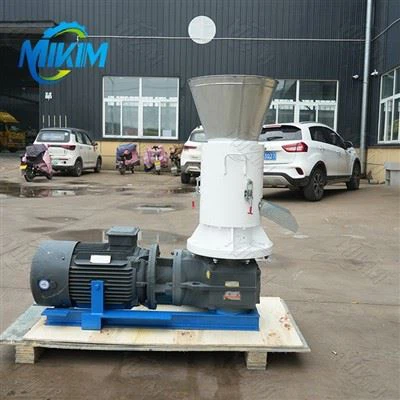
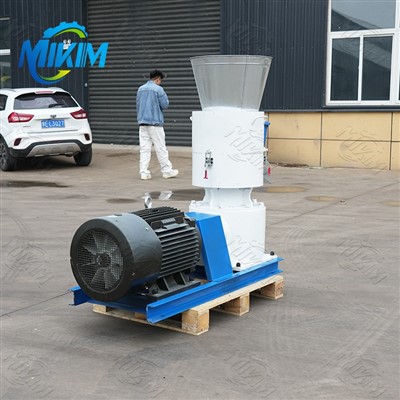
The motor is the core power source of the equipment, and its normal operation ensures the stable operation of the Industrial Wood Pellet Machine. Motor losses mainly come from overload operation, poor heat dissipation, and circuit faults. To protect the motor, it is necessary to avoid prolonged overload operation of the equipment. The feed rate should be reasonably controlled according to the equipment's capacity. If the motor current continuously exceeds the rated value, the feed rate should be reduced immediately or the machine should be stopped for inspection. At the same time, good motor heat dissipation must be ensured. Dust on the motor heat sink should be cleaned regularly, and the cooling fan should be checked for proper functioning to prevent motor damage due to overheating. The maintenance of the electrical system is also crucial. Regularly check whether the wiring terminals are loose and whether the wire insulation is damaged to prevent short circuits, leakage, and other faults. It is recommended to conduct a comprehensive overhaul of the motor annually, testing its insulation performance and operating efficiency, and replacing aging motor components promptly.
The transmission system consists of components such as the reducer and coupling. Its main losses are gear wear and bearing damage. During routine maintenance, the lubricating oil level and quality of the reducer should be checked regularly. Replenish the lubricating oil when it is insufficient, and replace it completely when the oil quality deteriorates (e.g., it becomes black or contains impurities). The elastic pads of the coupling are wear parts. If they show signs of aging or cracking, they must be replaced promptly to prevent unstable power transmission due to loose coupling connections, which could exacerbate equipment vibration. Simultaneously, pay attention to the operating noise of the transmission system. Abnormal gear meshing noises may indicate gear wear or insufficient lubrication, requiring machine shutdown for inspection and repair.
In addition to the aforementioned core components, other wear parts such as seals, cutters, and conveyor belts also require regular inspection and replacement. Aging seals can lead to lubrication leaks, affecting component lubrication; worn cutters can cause uneven particle lengths, increasing equipment load; and damaged conveyor belts can affect feeding efficiency. It is recommended to establish a maintenance log for core components, recording the installation time, maintenance details, and wear level of each component. A replacement plan should be developed in advance based on the component's lifespan to avoid equipment downtime due to sudden component failure. Precise protection of core components can significantly extend the service life of the small biomass wood pellet mill and improve the equipment's reliability and stability.
Related equipment


about us
Customer visit

Certificate of Honor

FAQ
1.What is the price of equipment for a Best electric wood pellet mill?
It costs approximately US$1,500.00 - 28,600.00
2. If equipments have some quality problem, how would you deal with?
We will responsible for all the quality problems. Change all the parts for free.
If you don't how to choose the right hay pellet mill, need flat die type or need ring die type. Just tell us your requirements, budget and more detailed information, our professional experts will help you to choose a hay pellet machine that suits you most.


