


How to Make Wood Sawdust Pellets: A Complete Guide to Biomass Pellet Production
As global demand for renewable energy continues to grow, wood sawdust pellets and biomass pellets have become one of the most practical alternatives to fossil fuels. They are compact, energy-dense, easy to transport, and widely used in industrial boilers, power plants, and residential heating systems.
This article explains how wood sawdust and other biomass materials are processed into high-quality pellets, covering raw materials, production steps, equipment selection, and key parameters that directly affect pellet quality.
What Are Wood Sawdust Pellets and Biomass Pellets?
Wood sawdust pellets are cylindrical fuel pellets made by compressing sawdust under high pressure and temperature.
Biomass pellets are a broader category that includes pellets produced from:
- Wood sawdust and wood chips
- Agricultural residues such as straw, rice husk, and corn stalks
- Forestry waste and other organic biomass materials
Through pelletizing, loose biomass is converted into a standardized fuel with higher bulk density and stable combustion performance.


Applications of Biomass Pellets
Biomass pellets are widely used in multiple energy scenarios:
- Industrial and commercial boilers
- Biomass power generation plants
- Residential pellet stoves and heating systems
- Combined heat and power (CHP) systems
Their uniform size and low moisture content make them suitable for automated feeding and efficient combustion.
Wood Sawdust Pellet Production Process
The biomass pellet production process follows a clear and proven workflow. Each step directly influences pellet durability, output capacity, and energy efficiency.

Step 1: Raw Material Preparation
Wood sawdust is one of the most ideal raw materials for pelletizing due to its natural lignin content.
Key requirements:
- Particle size should be uniform
- Foreign materials such as metal, stones, and plastic must be removed
- Initial moisture content should be evaluated before drying
Clean and consistent raw materials ensure smooth pelletizing and reduce equipment wear.
Step 2: Crushing and Grinding
If the raw material contains oversized wood chips or irregular pieces, crushing is required.
Recommended particle size:
- Typically 3–5 mm for wood sawdust pellets
Proper grinding improves compression efficiency and pellet strength while reducing energy consumption during pelletizing.

Step 3: Drying Process
Moisture control is one of the most critical factors in biomass pellet production.
- Ideal moisture content before pelletizing: 8–15%
- Excessive moisture leads to soft or cracked pellets
- Too little moisture reduces bonding and causes poor pellet formation
Rotary dryers or belt dryers are commonly used in industrial pellet production lines.

Step 4: Pelletizing with a Biomass Pellet Machine
This is the core step where sawdust is compressed into pellets using a biomass pellet machine or wood pellet mill.
During pelletizing:
- High pressure forces material through die holes
- Friction generates heat, activating natural lignin as a binder
- No chemical additives are required for wood-based pellets
Pellet mill types:
Flat die pellet machines: suitable for small-scale production
Ring die pellet machines: designed for industrial and continuous operation
Proper die compression ratio and stable feeding are essential for consistent pellet quality.
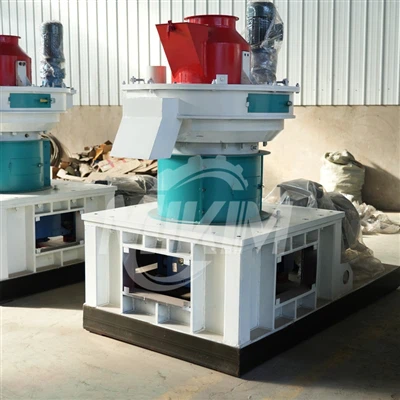
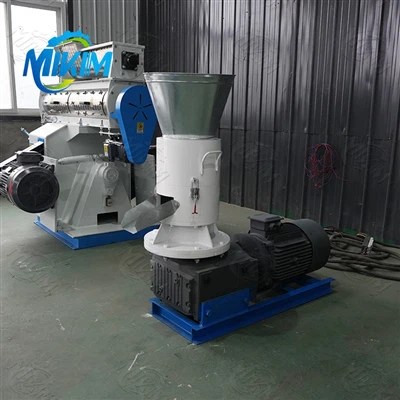
Wood chip pellet machine
Step 5: Cooling and Screening
Fresh pellets exit the pellet mill at high temperature and are relatively soft.
Cooling is required to:
- Reduce pellet temperature
- Increase hardness and durability
- Prevent deformation during storage
After cooling, fines and broken pellets are screened out and recycled back into production.

Step 6: Packing and Storage
Finished wood sawdust pellets should be stored in a dry, well-ventilated environment.
Best practices:
- Use moisture-proof packaging
- Avoid long-term exposure to humidity
- Store pellets off the ground
Proper storage maintains calorific value and prevents pellet degradation.

Key Factors Affecting Wood Sawdust Pellet Quality
Several technical parameters determine whether biomass pellets meet commercial standards:
- Moisture content of raw materials
- Die compression ratio of the pellet machine
- Raw material composition and fiber structure
- Operating temperature and pressure
- Operator experience and machine maintenance
Optimizing these factors improves pellet density, durability, and combustion efficiency.
Small-Scale vs Industrial Biomass Pellet Production
| Item | Small Pellet Machine | Industrial Pellet Production Line |
|---|---|---|
| Output capacity | Low to medium | Medium to high |
| Investment cost | Relatively low | Higher initial investment |
| Automation level | Manual or semi-automatic | Fully automated |
| Suitable users | Farms, workshops, startups | Commercial pellet plants |
Choosing the right configuration depends on production scale, raw material availability, and market demand.
Common Problems and Solutions in Biomass Pelletizing
Pellets are too soft or break easily
→ Check moisture content and die compression ratio
Pellet mill blockage
→ Improve raw material consistency and reduce impurities
Low production efficiency
→ Optimize feeding speed and machine parameters
Systematic troubleshooting helps ensure stable and continuous operation.
Conclusion
Producing wood sawdust pellets and biomass pellets is a mature and reliable process when proper equipment and parameters are used. From raw material preparation to pelletizing and cooling, each step plays a vital role in final pellet quality.
For investors and manufacturers, selecting a suitable biomass pellet machine and designing a reasonable production line layout are key to long-term success in the biomass energy industry.
If you are unsure how to choose the right biomass pellet mill for you, please press the button below for a free consultation. We look forward to receiving your email!


