


How to Improve domestic wood pellet machine Production Capacity Through Raw Material Pretreatment
Methods to increase production capacity
First and foremost is precise control of the raw material moisture content, which is fundamental to increasing production capacity. The optimal moisture content for a small biomass pellet maker is 12%-15%. Within this range, the raw material has moderate viscosity, ensuring smooth pressing and minimizing equipment jamming. If the moisture content is too high (above 18%), the raw material tends to clump together in the pressing chamber, reducing not only the feeding speed but also increasing the frictional resistance of the pressure rollers, potentially decreasing production capacity by more than 30%. If the moisture content is too low (below 10%), the raw material lacks viscosity, requiring increased pressing pressure, increasing the motor load, and forcing a reduction in the feeding speed.
Optimization method: Equip with a fully automatic hot air dryer. Set drying parameters according to the initial moisture content of the raw material. For example, for high-moisture sawdust (25% moisture content), set the drying temperature to 90℃ and the drying time to 30 minutes to ensure a stable and compliant moisture content after drying. After drying, promptly seal and store the material to prevent secondary moisture absorption. One user improved raw material processing efficiency by 20% through precise humidity control, increasing the capacity of their second-hand biomass pellet machine from 1.2 tons/hour to 1.5 tons/hour.
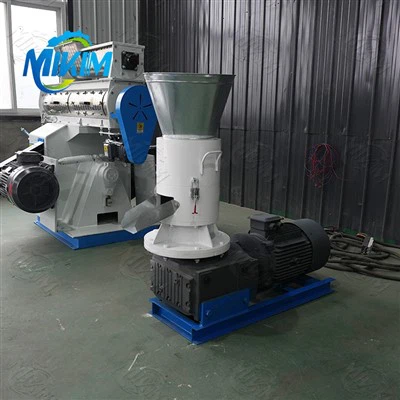
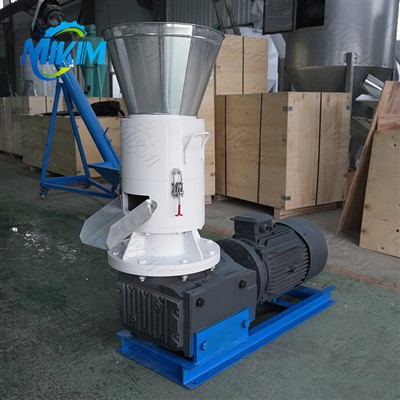
Secondly, the impurity removal process was optimized to reduce equipment downtime. Impurities such as nails, stones, and sand in the raw materials cause frequent equipment shutdowns for cleaning, severely impacting production continuity. The optimized solution involves establishing a "three-stage impurity removal system": a vibrating screen is used for initial screening before raw materials enter the warehouse to remove stones and large particles; a grading screen is used for secondary screening after crushing to ensure uniform particle size; and a high-intensity magnetic separator is used for fine screening before feeding to adsorb metallic impurities. Simultaneously, the impurity removal equipment is regularly inspected to ensure the screens are undamaged and the magnetic separation effect is good. Previously, some users experienced 2-3 downtimes per day due to incomplete impurity removal; after optimizing the impurity removal process, the number of downtimes was reduced to once a week, effectively improving production continuity.
Finally, the raw material particle size was adapted to reduce the equipment's processing load. The raw material particle size needs to be controlled between 2-5mm. This range allows the raw material to be quickly heated and softened in the pressing chamber, resulting in uniform extrusion and reducing the probability of die blockage. If the particle size is too large (over 5mm), it will increase the load on the crushing process and make it difficult for the raw material to pass through the die orifice, resulting in a slower feeding speed. If the particle size is too small (below 2mm), it will increase dust, reduce the bulk density of the raw material, and decrease feeding efficiency.
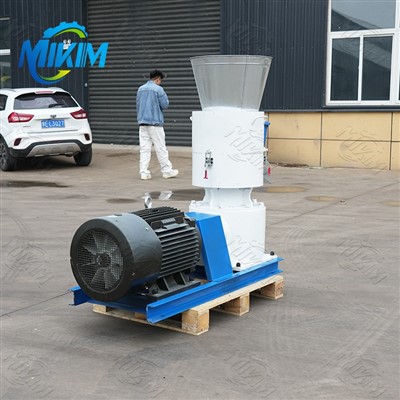
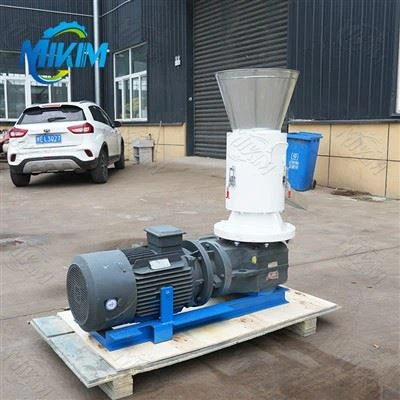
Optimization methods: Select a suitable crusher based on the hardness of the raw material. For hardwood chips, use a two-stage crushing process, first coarsely crushing and then finely crushing to ensure uniform particle size. Equip with an adjustable aperture grading screen to precisely control the particle size according to production needs. For example, when processing hardwood chips, through two-stage crushing and grading screening, the particle size compliance rate increases from 75% to 95%, and the feeding speed of the domestic wood pellet machine increases by 15%.
Additional reminder: Different raw materials need to be pre-treated separately to avoid uneven particle size and moisture content caused by mixing softwood, hardwood, straw, etc. Pre-treated raw materials should be processed within 24 hours to prevent moisture absorption from affecting production capacity.
about us
Customer visit

Certificate of Honor

FAQ
1.What is the price of equipment for the Best electric wood pellet mill?
It costs approximately US$1,500.00 - 25,000.00
2. If equipments have some quality problem, how would you deal with?
We will responsible for all the quality problems. Change all the parts for free.


