


Biomass Pellet Machine vs. Wood Pellet Machine:Which One Should You Choose?
content
The most crucial difference between the two lies in their raw material compatibility. The biomass wood pellet machine boasts greater "compatibility," processing raw materials across multiple sectors including agriculture, forestry, and animal husbandry, such as straw, hay, sawdust, rice husks, livestock manure, and mushroom residue. It can handle any biomass material with a moisture content of 10%-25%. Its feeding system employs forced feeding and anti-winding design, enabling it to handle long-fiber materials like straw and hay, as well as wet materials like livestock manure. In contrast, the wood pellet machine's raw material range is relatively limited, primarily focusing on woody materials like sawdust, bark, and branches. For non-woody materials like straw and manure, its processing efficiency is low, and it is prone to clogging. One processing plant attempted to process corn stalks using a wood pellet machine, but the machine experienced feed blockage after only 30 minutes of operation, with a pellet formation rate of only 50%. After switching to a biomass pellet machine, the formation rate increased to over 90%.
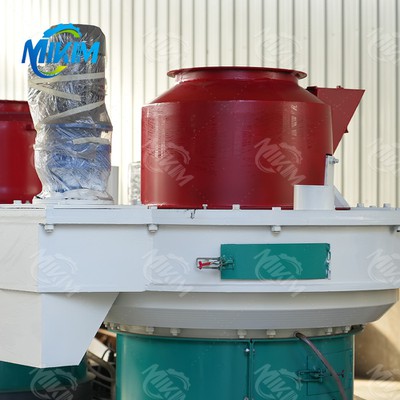
The difference in structural design is to adapt to the characteristics of different raw materials. The biomass wood pellet mill features an "elastic pressure" design for its pressure rollers, automatically adjusting pressure according to the hardness of the raw material to prevent unstable pellet quality caused by fluctuations in raw material hardness. Its detachable die structure facilitates replacement with dies of different apertures, adapting to various product needs. Some models are also equipped with a dual-pressure roller structure to improve pressing efficiency. The wood pellet manufacturing process, on the other hand, uses a "fixed pressure" design for its pressure rollers, with a narrower pressure adjustment range, making it more suitable for wood raw materials with stable hardness. Its dies are mostly integrated, making replacement more difficult, and typically only adaptable to 1-2 aperture specifications. Furthermore, biomass pellet mills have more powerful drying systems, capable of handling raw materials with high moisture content, while wood pellet mills' drying systems focus more on removing moisture from the wood raw materials, with relatively lower power.
The differences in application scenarios and product types are also significant. Small biomass wood pellet machines can produce various products such as feed pellets, energy pellets, and organic fertilizer pellets, achieving "one machine for multiple uses," suitable for the diversified production needs of feed mills, biomass energy companies, and organic fertilizer plants. For example, an agricultural complex uses a single biomass pellet mill to process straw feed for cattle, wood pellets for heating, and livestock manure for organic fertilizer, achieving an annual utilization rate of 90%. Wood pellet mills have a more concentrated application scenario, primarily producing wood pellet fuel and specialty wood feeds (such as pet bedding pellets). Their product range is limited, making them suitable for companies specializing in wood pellet production.
There are also differences in performance parameters and cost. Biomass pellet mills have a wider pressing pressure range (5-15MPa) and a larger temperature control range (60-100℃) to adapt to different raw materials. Due to their more complex structure, they are relatively more expensive, with small models costing around 20,000-50,000 yuan and large models reaching 100,000-500,000 yuan. Electric wood pellet mills have pressing pressures concentrated at 8-12MPa and temperature control at 70-90℃, with a narrower parameter range. Their structure is relatively simpler, and they are cheaper, with small models available for 10,000-30,000 yuan. In terms of energy consumption, biomass pellet machines have slightly higher unit energy consumption (90-110 kWh/ton) because they need to process multiple raw materials, while wood pellet machines have a unit energy consumption of 80-100 kWh/ton. Clearly defining your raw material type and product needs is key to choosing between the two – if the raw material is solely wood, wood pellet machines offer better value; if the raw materials are diverse, biomass pellet machines are the better choice.
Hay pellet machine for sale


about us
Customer visit

Certificate of Honor

FAQ
1.What is the price of equipment for a Industrial wood pellet machine?
It costs approximately US$1,900.00 - 28,600.00
2. If equipments have some quality problem, how would you deal with?
We will responsible for all the quality problems. Change all the parts for free.
3. What services can we provide?
We have professional overseas installers responsible for installation, commissioning, and free training. Professional personnel are waiting for you online 24 hours a day.
If you don't how to choose the right hay pellet mill, need flat die type or need ring die type. Just tell us your requirements, budget and more detailed information, our professional experts will help you to choose a hay pellet machine that suits you most.


